
The Monk gets a bad rap, and honestly, some of it is deserved. You’re stuck with d8 hit dice, MAD across three stats (Dexterity, Wisdom, and Constitution if you’d like to survive past tier 2), and a resource pool that recharges on short rests in a game where most parties take one short rest per day if you’re lucky. Stunning Strike is busted at low levels and gets resisted into oblivion by tier 3 Legendary Resistance. Your damage scales with a martial arts die that tops out at d10, which is fine, not spectacular.
So why play one? Because nothing else in 5e moves like a Monk. Step of the Wind, unarmored movement scaling to 30 feet, Slow Fall, eventually Empty Body and 4 attacks per turn with Flurry of Blows tacked on for a ki point. You become the problem-solver who runs up walls, pins down spellcasters, and disengages without thinking twice. Way of the Shadow drops you into Darkness as a teleport. Way of Mercy lets you heal and poison in the same turn. Astral Self ditches the Dex requirement entirely and turns you into something genuinely weird.
The class rewards players who think in terms of positioning, action economy, and ki budgeting per encounter rather than per day. That’s a different headspace than most martials demand.
This hub is where we’ve parked everything we’ve written on the Monk: subclass breakdowns, ki management, multiclass dips, race picks, and level-by-level build paths. Dig in below.
There is a specific kind of player who gravitates toward Monks, and once you’ve talked dice with enough of them, you start to recognize the type pretty quickly. They tend to be the thoughtful folks at the table, the ones who appreciate elegance and discipline both in their character build and in how they approach the game. When we ask why they chose Monk at the Crit Hit Ceramics booth at conventions, the answer almost always comes back to one word: FLURRY! Monk players love the speed, the mobility, and the satisfaction of stacking up unarmed strikes while everyone else is still figuring out their turn. They also tend to enjoy the philosophical side of the class, leaning into backstories about monasteries, inner balance, and finding their way in the world. Honestly, Monk players are some of the most introspective gamers we meet.
When it comes to dice, Monk players usually drift toward sets that feel grounded and natural, nothing too flashy or chaotic. They like earthy tones, stone-like finishes, and dice that feel meditative in the hand. Our Sandstorm Ceramic Dice Set tends to be a favorite because of its calm, weathered look, and the Mocha Ceramic Dice Set set gets picked up often for its quiet elegance. The dice match the discipline.
Featured Dice for Monk Players
Hand-picked ceramic dice sets from Crit Hit Ceramics that complement Monk characters at the table.
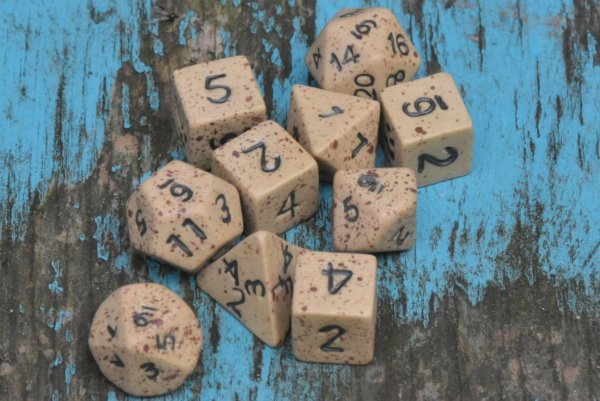
Sandstorm Ceramic Dice Set
112 stoneware clay in sun-baked sandy brown with bold black numbering. A handmade ceramic dice set for desert adventurers and Egyptian-th…
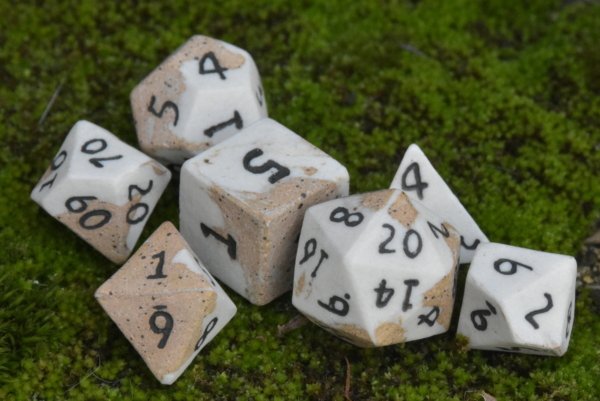
Mocha Ceramic Dice Set
Hand-pigmented white English porcelain blended with 112 stoneware for a coffee-and-cream marbling. Arron's personal favorite — a handma…

Coming Soon
Wintergreen Blue Ceramic Dice
Orc Monk's Wintergreen Blue DND Dice offers an immersive gaming experience with its high-quality ceramic build. The unique Wintergreen Bl…
Monk Core Mechanics
The Monk is a mobile, resource-driven striker that trades heavy armor and weapons for speed, precision, and martial discipline. With a d8 Hit Die and proficiency in Strength and Dexterity saves, monks are nimble but fragile—positioning matters more than soaking hits.
For New Players: The Basics
Your core loop revolves around Martial Arts, which lets you make an unarmed strike as a bonus action whenever you Attack with an unarmed strike or monk weapon. This effectively gives you an extra hit every turn—for free. You’ll also use Dexterity (not Strength) for these attacks, and your damage die scales as you level.
Starting at 2nd level, you gain Ki points equal to your monk level. Ki fuels your signature techniques:
- Flurry of Blows (1 ki): Two extra unarmed strikes as a bonus action after Attacking.
- Stunning Strike (1 ki): Force a Constitution save or stun the target until your next turn—arguably the strongest combat debuff in the game.
- Patient Defense and Step of the Wind for defense and mobility.
Unarmored Movement adds +10 ft. to your speed (scaling to +30 ft.), and once you have no armor or shield, your AC equals 10 + Dex + Wisdom.
For Experienced Players: The Nuances
Monk is famously MAD—you want high Dexterity and Wisdom, with Constitution close behind. Point-buy monks feel stretched until ASIs land.
A few things that surprise even veterans:
- Deflect Missiles can reduce ranged damage to zero and let you throw the projectile back (costing 1 ki).
- Slow Fall is a reaction, not an action—you can use it the turn you’re shoved off a cliff.
- Evasion (7th) turns Dex saves into damage-halving monsters; Diamond Soul (14th) grants proficiency in all saves and lets you reroll failures for 1 ki.
Manage ki carefully—short rests are your lifeline.
Choosing Your Monastic Tradition
Your Monastic Tradition defines how your monk channels ki, transforming them from generic martial artist into something far more specialized. Here’s a quick rundown of every published tradition to help you find your perfect fit.
Way of the Open Hand (PHB) is the quintessential unarmed master, using Flurry of Blows to knock prone, push, or stun enemies. Their Quivering Palm capstone lets you set a delayed explosion of ki damage that can outright kill a creature.
Way of Shadow (PHB) turns you into a ki-powered ninja, casting spells like darkness, pass without trace, and silence. You can teleport between shadows and strike with advantage, making this the go-to infiltrator subclass.
Way of the Four Elements (PHB) lets you spend ki to cast elemental spells like burning hands or fireball. It’s flavorful but mechanically the weakest tradition due to steep ki costs—best for players who prioritize concept over optimization.
Way of the Drunken Master (Xanathar’s) blends Flurry of Blows with extra mobility, redirected attacks, and disengage tricks. You become a slippery battlefield dancer who frustrates enemies and supports allies through positioning.
Way of the Kensei (Xanathar’s) is for monks who love weapons, turning specific martial weapons into monk weapons and granting bow proficiency. Agile Parry and Deft Strike reward you for blending weapon and unarmed attacks each turn.
Way of the Sun Soul (Xanathar’s) trades unarmed reach for ranged radiant bolts and AoE bursts. You can Flurry of Blows at range, making this the best pick for monks who want consistent damage without closing to melee.
Way of Mercy (Tasha’s) wields a Hand of Healing and a Hand of Harm, letting you patch up allies or deal extra necrotic damage on hit. The plague doctor aesthetic makes them one of the coolest monks thematically.
Way of the Astral Self (Tasha’s) projects ghostly ki limbs that change your reach, ability scores, and damage type. By high levels, you’ve manifested a full astral body that fights alongside you.
Way of the Ascendant Dragon (FToD) grants a draconic breath weapon, elemental damage swaps on your strikes, and frightful presence. It’s a fantastic mix of AoE and single-target tools that fixes many of the monk’s traditional weaknesses.
For more guidance, see our full monk build guide covering backgrounds and subclass picks.
Best Race Combinations for Monk
Monks live and die by their Dexterity and Wisdom scores, so choosing a race that boosts both — or compensates with unique mechanical perks — can transform your unarmored brawler into a battlefield menace. Here are the strongest race pairings to consider:
- Tabaxi: The gold standard. Feline Agility doubles your already-impressive Monk speed, letting you kite enemies endlessly. Natural climbing and Dex synergy seal the deal. Read the full Tabaxi Monk guide.
- Halfling: Lucky reroll keeps your fragile d8 frame alive, and Halfling Nimbleness pairs beautifully with Step of the Wind. Halfling Monk build | Tactical Edge deep-dive.
- Goliath: Trades classic Monk fragility for Stone’s Endurance damage reduction and Powerful Build carrying capacity. Goliath Monk guide | Durable Strikes breakdown.
- Aasimar: Wisdom-friendly with built-in healing and radiant damage bursts that complement Stunning Strike control. Aasimar Monk guide.
- Tortle: A natural AC of 17 ignores Unarmored Defense entirely, freeing your stat array. Tortle Monk beginner guide.
- Earth Genasi: Pass Without Trace and difficult-terrain immunity make this Wisdom-flavored option a stealth-focused powerhouse. Earth Genasi Monk guide.
- Air Genasi: Bonus walking speed stacks with Monk movement, and Shocking Grasp adds a reliable ranged option. Air Genasi Monk guide.
- Kobold: Draconic Cry grants advantage on attacks — pure gold for Flurry of Blows damage spikes. Kobold Monk guide.
- Goblin: Fury of the Small adds bonus damage to one attack per short rest, while Nimble Escape enhances mobility. Goblin Monk guide.
- Lizardfolk: Natural armor, swim speed, and bite attacks complement a Wisdom-heavy build with survivability. Lizardfolk Monk tips.
- Centaur: 40 ft. base speed plus Monk bonuses creates the fastest melee striker in the game. Centaur Monk guide.
- Blue Dragonborn: Lightning breath gives an AoE option Monks typically lack. Dragonborn Monk build | painting tips.
Monk Build Archetypes
The Monk class offers wildly different playstyles depending on your subclass choice. Here are four proven archetypes to guide your next character concept, with deeper mechanics covered in our complete Monk build guide.
1) The Open Hand DPS — The Way of the Open Hand turns Flurry of Blows into a damage-stacking machine, knocking enemies prone or shoving them back while piling on bonus action strikes. Pair it with a strong background from our best Monk backgrounds breakdown to round out skills. Key features: Flurry rider effects, Quivering Palm, raw martial damage.
2) The Shadow Mobility — Way of Shadow Monks blink between dim-lit areas via Shadow Step, then unleash advantage-fueled flurries before vanishing again. Tabaxi pairs beautifully here, as explored in our Feline Agility speed guide. Key features: teleportation, stealth synergy, ambush burst damage.
3) The Stunning Striker — This build dumps ki into Stunning Strike against bosses and elites, trivializing legendary threats by stripping their actions. It thrives with high Wisdom and strategic skill coverage from background-driven skill gap filling. Key features: action economy disruption, save-or-suck control, party force multiplication.
4) The Astral Reach — Way of the Astral Self grants longer unarmed reach and Wisdom-based attacks, letting you control space and ignore Strength entirely. It also makes for a haunting villain concept like our Tabaxi Monk villain build. Key features: extended reach, WIS-to-attack, ethereal flavor.
For unconventional twists, try a Warforged Monk/Barbarian multiclass or thematic music-integrated Monk—both refresh the class while preserving its core agility and discipline.
Combat Tactics & Action Economy
Your action economy is the Monk’s real power: Attack action (2 strikes), bonus action Martial Arts strike or Flurry of Blows (2 strikes for 1 ki), plus movement that outpaces nearly every other class. At level 5 with Extra Attack and Flurry, that’s 4 attacks per turn, each a Stunning Strike candidate.
Stunning Strike priority: Target spellcasters and high-damage martials with Con saves below +5. A stunned target auto-fails Dex saves and grants advantage to all attackers until your next turn—coordinate with the party’s AoE and rogue. Don’t burn ki stunning minions; save it for the encounter-defining threat. Lead with your highest-damage attack so you don’t waste ki on a miss.
Ki budgeting: Spend roughly half your pool per encounter assuming two fights per short rest. In a three-encounter day, cap Stunning Strike attempts at 2-3 per fight unless the boss is up. Always reserve 1 ki for Patient Defense if your HP drops below half—imposing disadvantage on all attacks against you and advantage on Dex saves is the best panic button in the game.
Step of the Wind is for positioning, not damage. Use it to disengage from a grappler, jump over a frontline to reach the caster, or close 60+ feet on a fleeing target. If you’ve already used Flurry, the bonus action is gone—plan the sequence before declaring attacks.
Nova vs conserve: Empty the tank on bosses and casters; coast on Martial Arts strikes against trash.
Frequently Asked Questions About Monks
Is Monk good for new players?
Monk can be challenging for new players due to its Multiple Ability Dependency and resource management with Ki points. New players must juggle Dexterity, Wisdom, and Constitution while deciding when to spend Ki on Flurry of Blows, Patient Defense, or Step of the Wind each turn. However, Monks are mechanically straightforward in combat and offer satisfying mobility and action economy. If you enjoy fast-paced martial play and don’t mind tracking resources, Monk is a rewarding class to learn.
Why is Monk MAD?
Monk is considered Multiple Ability Dependent (MAD) because it relies heavily on three ability scores: Dexterity for attack rolls, damage, and AC; Wisdom for AC bonus, Ki save DCs, and Stunning Strike; and Constitution for hit points and concentration-like saves. Unlike classes that can dump stats and focus on one ability, Monks need at least 14-16 in all three to function effectively, making point-buy and ability score improvements particularly precious throughout your character’s progression.
When does Monk get good?
Monks typically come online at level 5 when they gain Extra Attack and Stunning Strike, transforming them into powerful battlefield controllers. Stunning Strike can lock down dangerous enemies, giving allies advantage on attacks. Levels 6-11 continue adding strong features depending on subclass, and level 14’s Diamond Soul (proficiency in all saves) makes Monks incredibly resilient. Early levels (1-4) can feel underwhelming with limited Ki, but patience pays off as the class scales remarkably well into mid-tier play.
Best Monk race?
Wood Elf is often considered the best Monk race, offering +2 Dexterity, +1 Wisdom, 35 feet base speed (stacking with Unarmored Movement), Mask of the Wild for stealth, and Fey Ancestry. Variant Human is another top choice for grabbing Mobile or Resilient (Wisdom) at level 1. Other strong options include Custom Lineage, Tabaxi for incredible burst mobility, Aarakocra for flight, and Hill Dwarf if you want extra durability to offset the Monk’s low hit points.
Should I take Mobile feat?
Mobile is excellent on Monks, though not mandatory. It grants +10 speed (stacking with Unarmored Movement for blistering mobility), ignores difficult terrain when dashing, and prevents opportunity attacks from creatures you’ve attacked. This synergizes perfectly with Monk’s hit-and-run playstyle, letting you strike and retreat to safety without spending Ki on Step of the Wind. However, given Monk’s MAD nature, prioritize maxing Dexterity and Wisdom first. Take Mobile around level 8 or as a Variant Human’s starting feat.
Monk multiclass options?
Monks generally prefer staying single-classed due to delayed Ki progression and Extra Attack timing, but some dips work well. Two levels of Fighter grants Action Surge for nova turns and a fighting style. One level of Rogue adds Expertise, Sneak Attack, and skill proficiencies. Cleric dips (especially Twilight or Peace) offer powerful support features but delay key Monk progression. Generally, dipping more than 2-3 levels significantly weakens your Monk, so commit fully or keep multiclasses minimal and purposeful.
Browse All Monk Content
Our complete library:
By Race Combination (103)
- How to Build a Tortle Monk in D&D 5e
- How to Build a Blue Dragonborn Monk
- How to Build an Aasimar Monk
- How to Build a Tabaxi Monk in D&D 5e
- How to Build a Goliath Monk in D&D 5e
- How to Paint a Dragonborn Monk Miniature
- How to Build an Earth Genasi Monk in D&D 5e
- How to Build a Kobold Monk in D&D 5e
- Goliath Monk: Trading Fragility For Durable Strikes
- How to Build a Halfling Monk in D&D 5e
- How to Build a Goblin Monk in D&D 5e
- How to Build an Air Genasi Monk in D&D 5e
- How to Build a Lizardfolk Monk in D&D 5e
- How to Build a Centaur Monk in D&D 5e
- Halfling Monk: Small Size, Tactical Edge
- Tortle Monk: Why Natural Armor Changes Everything
- How to Build a Grung Monk in D&D 5e
- How to Build a Blue Dragonborn Monk in D&D 5e
- How to Build a Firbolg Monk in D&D 5e
- How to Build a Fire Genasi Monk in D&D 5e
- Kobold Monk: Tactical Advantages Over Sunlight Weakness
- Female Goliath Monk: Stone's Endurance Meets Martial Arts
- How to Play a Blue Dragonborn Monk in D&D 5e
- Blue Dragonborn Monk: Working Around Ability Score Gaps
- Blue Dragonborn Monks: Working Around Suboptimal Stats
- Centaur Monk: Navigating Size And Action Economy
- Centaur Monk Power: Leverage Speed And Hooves
- Centaur Monk: Building Around Strength Instead
- Centaur Monk: Navigating Size and Movement
- Centaur Monk: Mobility and Charge in Harmony
- Centaur Monk: Movement Speed Meets Bonus Action Economy
- Centaur Monk Movement and Positioning Mechanics
- How to Build a White Dragonborn Monk in D&D 5e
- White Dragonborn Monk: Breath Weapon Synergy
- White Dragonborn Monk: Working With Suboptimal Stats
- Lizardfolk Monk: Trading Mobility For Survivability
- Goliath Monk: Reconciling Strength With Discipline
- How to Build a Dragonborn Monk in D&D 5e
- How to Build a Water Genasi Monk in D&D 5e
- How to Build a Tabaxi Monk for Maximum Speed
- How to Stack Speed Mechanics on Your Tabaxi Monk
- How To Stack Feline Agility With Monk Speed
- How to Stack Speed Bonuses on Your Tabaxi Monk
- How to Run a Halfling Monk as a DM
- How to Build a Yuan-Ti Pureblood Monk
- How to Build a Yuan-Ti Pureblood Monk in D&D 5e
- How Setting Impacts Your Yuan-Ti Pureblood Monk
- How to Optimize Yuan-Ti Monks in Combat
- Building a Wood Elf Monk Around Powerful Artifacts
- How to Build a Wood Elf Monk in D&D 5e
- Wood Elf Monk: Mobile Strikers For Tactical Campaigns
- Wood Elf Monk Synergies: Why This Pairing Excels
- How to Build a Kenku Monk in D&D 5e
- Kenku Monk: Building Around The Silent Master
- Kenku Monk: Turning Flightlessness Into Strength
- Kenku Monk: Overcoming The Curse In Play
- Dynamic Movement: Building the Ultimate Tabaxi Monk
- How to Build and Play a Tabaxi Monk in D&D 5e
- How to Play a Tabaxi Monk in D&D 5e
- Tabaxi Monk Encounters: Mastering Mobility Tactics
- Dragonborn Monk: Why This Unusual Pairing Actually Works
- Dragonborn Monk: Why This Unconventional Pairing Works
- Dragonborn Monk: Beyond Optimization Into Roleplay
- How to Build a Green Dragonborn Monk in D&D 5e
- Green Dragonborn Monk: Poison And Mobility
- Green Dragonborn Monk: Poison Breath Beats Optimization
- Green Dragonborn Monk: Poison Control Tactics
- How to Build an Aarakocra Monk in D&D 5e
- Tabaxi Monk: Building D&D's Fastest Assassin
- How to Build a Tabaxi Shadow Monk in D&D 5e
- Tabaxi Monk Speed Build: Maximum Mobility in D&D 5e
- How to Maximize Tabaxi Monk Speed With Feline Agility
- White Dragonborn Monk: Cold Resilience Meets Martial Arts
- How to Build a White Dragonborn Monk for Planar Adventures
- White Dragonborn Monk: Offsetting The Dexterity Gap
- Lizardfolk Monk: Armor-Free Striker Through Natural Weapons
- How to Build a Lizardfolk Monk for Planar Adventures
- Lizardfolk Monk: Survivalist Striker Guide
- Lizardfolk Monk: Natural Armor Vs Unarmored Defense
- Tabaxi Monk Speed Build: Dominating With Movement
- Tabaxi Monk: Mastering Hit-And-Run Tactics
- Tabaxi Monk: The Ultimate Hit-and-Run Striker
- Tabaxi Monk: Mastering Extreme Mobility
- How to Build a Black Dragonborn Monk in D&D 5e
- Green Dragonborn Monk: Poison Breath Battlefield Control
- Fire Genasi Monks: Synergy And Survivability
- Blue Dragonborn Monk: Stat Priorities And Synergies
- How to Build a Dragonborn Monk: Best Backgrounds for D&D 5e
- How to Build a Genasi Monk in D&D 5e
- Halfling Monk: Survivability Over Stat Bonuses
- Genasi Monk Synergy: Elemental Powers in Combat
- Goliath Monk: Tank Mobility and Devastating Power
- How to Build a High Elf Monk in D&D 5e
- Tortle Monk: Trading Speed For Natural Armor
- Water Genasi Monk: Fluid Combat And Utility
- How to Build a Half-Orc Monk in D&D 5e
- How to Build a Yuan-Ti Pureblood Monk for Exploration Campaigns
- How to Build a Silver Dragonborn Monk in D&D 5e
- Tortle Monk: Building a Campaign-Ready Martial Artist
- Best Magic Items for an Orc Monk in D&D 5e
- Building a Halfling Monk: Character Guide and Backstory Ideas
- Elemental Synergy: Building a Genasi Monk
- How to Build a Tortle Monk Sorcerer
By Monastic Tradition (2)
Build Guides & Optimization (8)
- How to Build a Monk in D&D 5e
- How to Build a Warforged Monk/Barbarian Multiclass
- How to Build a D&D Monk: Complete Class Guide
- How to Build a Tabaxi Monk Villain for Your D&D Campaign
- How to Build a Tabaxi Monk Villain for D&D
- How to Leverage Feline Agility for Monk Speed
- Best Monk Backgrounds for D&D 5e
- Filling The Monk's Skill Gaps With Strategic Backgrounds