Metal D&D Dice Sets: What Actually Matters When You’re Buying
Metal dice have quietly become standard equipment for serious players rather than a luxury novelty. You can grab a serviceable set for $20 or drop $150 on precision-milled collectibles, and most game stores now stock both extremes plus everything in between. The real challenge is cutting through marketing claims to figure out which sets actually perform well at your table versus which ones just look impressive in promotional photos.
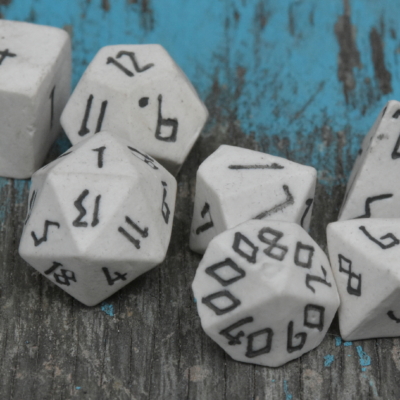
While metal dominates conversations about gaming dice, the Runic Forgotten Forest Ceramic Dice Set demonstrates that material choice matters more than material alone.
If you’re considering metal dice for your table, you need to understand what you’re actually paying for beyond the weight and the Instagram photos. This isn’t about which set looks coolest in the product shot. It’s about durability, balance, readability, and whether that satisfying clatter is worth the premium over a standard Chessex set.
The Real Differences Between Metal and Plastic Dice
The weight difference is obvious the moment you pick up a metal die. A standard plastic d20 weighs about 4 grams. A metal d20 typically weighs 20-30 grams depending on the alloy. That’s not just a number—it changes how the dice roll, how they feel in your hand during tense moments, and how they sound hitting the table.
Zinc alloy is the most common material for gaming dice, offering good weight at reasonable cost. Solid brass and copper dice exist but cost significantly more. Aluminum dice are lighter than zinc but still heavier than plastic, and they’re softer—which matters for durability.
The weight creates momentum. Metal dice roll differently than plastic, with less bouncing and more direct movement. Some players love this; others find it reduces the drama of the roll. There’s no universal right answer, but you should know that metal dice don’t tumble and bounce the way acrylic does.
Durability Isn’t Automatic
Here’s what manufacturers don’t emphasize: metal dice can damage tables, and cheaper metal dice can damage themselves. Zinc alloy dice with poor finishing will show wear on the edges after regular use. The paint or enamel filling the numbers can chip out, especially on cheaper sets.
Quality metal dice use either deeply etched numbers with durable enamel fill, or they’re entirely metal with painted numbers protected by clear coating. The $25 sets on Amazon often use shallow etching with thin paint that won’t survive a year of weekly gaming.
What to Actually Look For in Metal D&D Dice Sets
Balance matters more with metal dice than plastic. The manufacturing process for metal dice involves either casting or machining. Cast dice are cheaper but can have internal air bubbles that affect balance. CNC-machined dice are more expensive but offer better consistency.
Test this if you can: float the d20 in saturated salt water (dense enough that the die floats). Spin it gently. If the same numbers consistently face up, the die has balance issues. Most gaming dice aren’t perfectly balanced—the question is whether the imbalance is significant enough to affect gameplay.
Number Readability
Metal dice with dark finishes and dark number fills look dramatic in photos but are nearly impossible to read at the table. Antique bronze dice with black numbers require good lighting and young eyes. Contrast is everything. The best readable combinations are bright metal bodies with dark number fills, or dark bodies with metallic/white fills.
High-polish mirror finishes also cause readability problems under typical game room lighting. The reflection can obscure the numbers. Satin or matte finishes are more practical.
Material Options and What They Mean
Zinc alloy dominates the market because it’s castable, relatively inexpensive, and takes finishing well. Most sets in the $30-60 range use zinc alloy. These dice are dense, durable if well-made, and available in every finish imaginable.
Solid copper and brass dice cost more ($80-150 for a set) but offer antimicrobial properties and will develop a patina over time. Some players love the aging process; others want their dice to stay pristine. Copper is softer than zinc alloy and will show wear faster on sharp edges.
Aluminum dice are the lightest metal option, sometimes only 2-3 times heavier than plastic. They’re easier on tables but dent more easily. Aluminum doesn’t feel as premium as zinc or brass.
Stainless steel dice exist but are uncommon because they’re expensive to machine and extremely hard on rolling surfaces. Unless you’re rolling on a leather mat, steel dice will damage wooden tables.
Exotic Materials
Titanium dice command premium prices ($200+ for a set) and offer strength-to-weight ratios that don’t particularly matter for dice. You’re paying for the exotic material more than functional superiority. They’re light for metal dice but still heavier than plastic.
Stone dice (not technically metal but often grouped with premium dice) include materials like obsidian, jade, or hematite. These are fragile despite seeming substantial. Drop a stone d20 on a hard floor and you’ll likely chip or crack it.
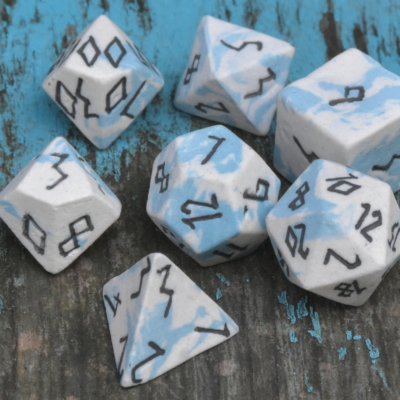
The Gold Caged Forgotten Forest Ceramic Dice Set strikes that balance between aesthetic presence and practical weight that makes critical moments feel appropriately weighty.
The Rolling Surface Question
Metal dice require appropriate rolling surfaces unless you want to damage your table or the dice. A dice tray is essential, not optional. Leather, felt, or foam-lined trays prevent damage and reduce noise.
The sound of metal dice hitting bare wood is satisfying exactly once. By the third session, everyone at the table will be annoyed. Soft rolling surfaces also protect the dice edges from the microfractures that develop when metal repeatedly impacts hard surfaces.
Dice towers work well with metal dice if they’re lined with felt or have padded landing zones. Unpadded wooden dice towers with metal dice sound like you’re throwing ball bearings down a stairwell.
Price Points and What You’re Getting
Budget metal dice ($20-35) are typically cast zinc alloy with basic finishing. They’re heavy and feel premium compared to plastic, but quality control varies. Number fill may chip within a year of regular use. Balance can be inconsistent. These are fine for occasional use or if you want to try metal dice without major investment.
Mid-range sets ($40-80) generally offer better finishing, more durable enamel fills, and better quality control. This is where you find the best value for regular gaming. Brands at this price point usually use better finishing processes and stand behind their products.
Premium sets ($100+) include machined dice, exotic materials, or sets with luxury finishing and packaging. Whether these are worth it depends on your priorities. A $150 set doesn’t roll better than a $50 set, but it might be more precisely balanced and will probably last decades with proper care.
Sets vs. Individual Dice
Standard seven-dice sets (d4, d6, d8, d10, d%, d12, d20) work fine for most players. Spellcasters often want multiple d6s and d8s. Attack-heavy classes might want a few extra d20s for advantage/disadvantage rolls.
Some manufacturers sell dice individually, letting you build custom sets. This costs more but gives you exactly what you need. If you’re playing a fireball-slinging wizard, a set with 8d6 instead of the standard 1d6 makes practical sense.
Maintenance and Longevity
Metal dice don’t require much maintenance, but a few practices extend their life. Store them separately from plastic dice—metal dice will damage softer materials. Padded dice bags or individual compartments prevent the dice from scratching each other.
Clean metal dice with mild soap and water, then dry immediately. Don’t use harsh chemicals or abrasives. For dice with enamel fills, avoid ultrasonic cleaners which can loosen the fill material.
Patina development on copper and brass is natural. Some players enhance it deliberately; others polish their dice to maintain the original finish. Either approach is valid—it’s about your preference.
Are Metal Dice Worth the Investment?
Metal dice aren’t inherently better for gameplay. They don’t roll more random results than quality plastic dice. What they offer is tactile satisfaction, durability, and aesthetic presence.
For players who game weekly and want dice that feel substantial and will last years, metal dice are worth considering in the $40-80 range. Below that price, quality becomes inconsistent. Above it, you’re often paying for luxury rather than functional improvement.
If you game occasionally or frequently try different characters, plastic dice remain more practical. A collection of several plastic sets costs less than one quality metal set and offers more variety.
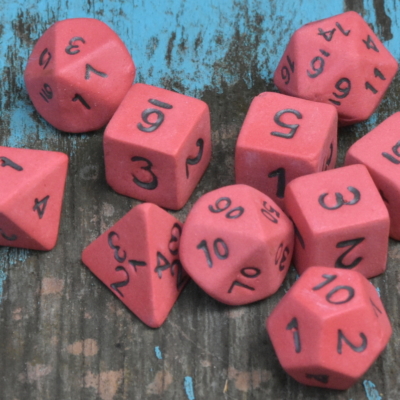
Roll requirements for campaign damage or spell effects make the 10d6 Assorted Ceramic Dice Set a reliable workhorse addition to any table’s dice collection.
Pick dice that feel good in your hand, read clearly under your table’s lighting, and don’t chip after a few months of regular play. Everything beyond that is just preference—and that’s exactly how it should be.