
The Rogue is the class everyone thinks they understand until they actually play one. Sneak Attack, hide, stab, repeat — easy, right? Then you sit down at session three, the party walks into a room with no cover, the wizard already cast Fireball, and your turn is “I dash and shoot for 1d6+3.” That’s the moment you realize Rogues reward planning more than any martial class in 5e, and punish lazy positioning harder than most casters.
What pulls people in is real: you’re the skill monkey with Expertise doubling your proficiency bonus on the things you care about, Cunning Action giving you a bonus-action Dash, Disengage, or Hide every single turn, and Sneak Attack scaling to 10d6 by level 19. Uncanny Dodge at 5 and Evasion at 7 turn you into a surprisingly hard target. Subclass design is also genuinely excellent here — Swashbuckler, Soulknife, Scout, Phantom, and Arcane Trickster play almost like different classes.
The challenges are just as concrete. Hiding RAW is a mess most tables houserule. Getting Sneak Attack reliably means understanding advantage sources, allies within 5 feet, and ranged positioning. You only get one attack per turn, so a missed d20 stings. And action economy management — when to Hide, when to Dash, when to ready an attack — separates the Rogues who carry fights from the ones who whiff and pout.
Everything we’ve written on the Rogue lives here: subclass breakdowns, race picks, multiclass math, feat priorities, and level-by-level build guides. Dig in.
Why do so many players gravitate toward the Rogue when they’re building a new character? The answer we hear most often at conventions, said with a mischievous grin across the Crit Hit Ceramics booth, is one phrase: SNEAK ATTACK! Rogue players love the thrill of dishing out massive damage from the shadows, then slipping away before anyone realizes what happened. But it goes deeper than just the damage dice. The folks who pick Rogue tend to be clever problem-solvers, the ones at the table who want to pick the lock, disarm the trap, or talk their way past the guard instead of kicking down the front door. They love options. They love being the scout, the face, the trickster, or the assassin depending on the day. Rogue players are usually the ones telling us about their character’s elaborate backstory involving thieves’ guilds and stolen identities.
When it comes to dice, Rogue players almost always go for something darker, sneakier, or with a bit of hidden flash. They want sets that feel like they belong in a shadowy alley or tucked into a hidden pocket. Our Runic Assassin's Ghost Ceramic Dice Set set is a frequent pick because of its deep, moody coloring, and the Runic Dark Heart Ceramic Dice Set set tends to catch their eye for that subtle glint that mirrors a dagger in lamplight.
Featured Dice for Rogue Players
Hand-picked ceramic dice sets from Crit Hit Ceramics that complement Rogue characters at the table.
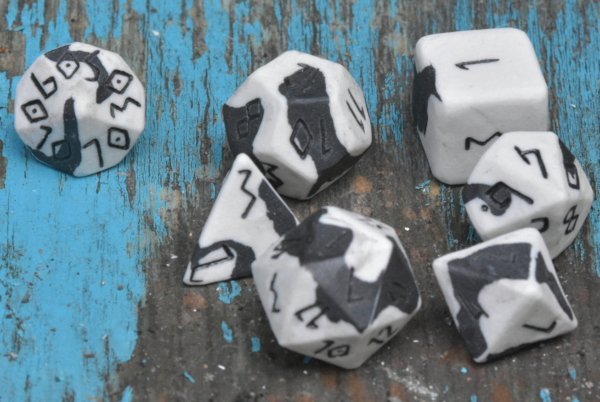
Runic Assassin's Ghost Ceramic Dice Set
The Assassin's Ghost base — hand-pigmented white and black English porcelain with red numerals — finished with our signature runic-st…
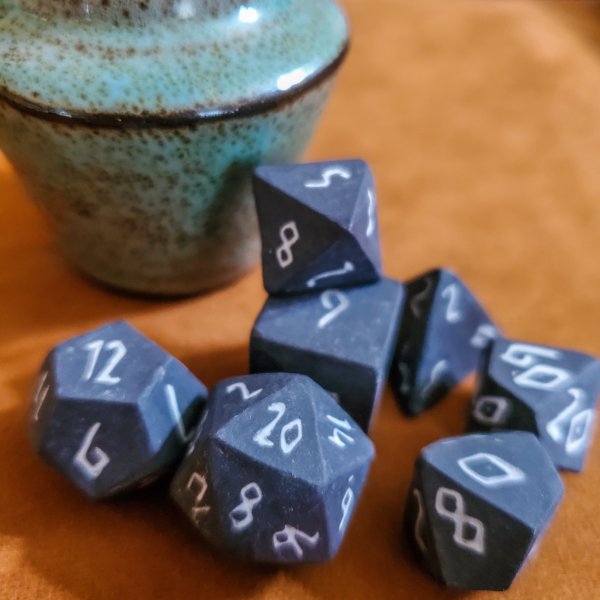
Runic Dark Heart Ceramic Dice Set
The Dark Heart base — pure black hand-pigmented English porcelain with white numbers — finished with our signature runic-style number…

Coming Soon
Duskblade Ceramic Dice Set
Deep twilight blue hand-pigmented English porcelain with bold black numbering. A handmade ceramic dice set for arcane tricksters, eldritc…
Rogue Core Mechanics
The Rogue is built around three interlocking systems that reward clever positioning over raw attack volume. Where a Dexterity Fighter swings more often and absorbs hits, the Rogue makes one decisive strike per turn and slips away before consequences arrive.
Sneak Attack is the engine. Once per turn (not per round—important distinction), you add bonus damage when attacking with a finesse or ranged weapon, provided you either have advantage or an ally is within 5 feet of your target. Damage scales from 1d6 at level 1 to 10d6 at level 19. New players often miss that Sneak Attack works on opportunity attacks too, meaning you can trigger it on someone else’s turn.
Cunning Action (2nd level) is the Rogue’s signature tempo tool: a bonus action Dash, Disengage, or Hide every turn. This solves the Rogue’s biggest problem—getting in, stabbing, and getting out without eating a counterattack.
Expertise doubles your proficiency bonus on two chosen skills at 1st level and two more at 6th. Combined with high Dexterity, this makes Rogues the undisputed masters of Stealth, Perception, Sleight of Hand, and Investigation.
Defensive features stack quickly:
- Uncanny Dodge (5th): reaction to halve damage from one attack per round
- Evasion (7th): on Dex saves, take zero damage on success and half on failure
- Reliable Talent (11th): treat any d20 roll of 9 or lower as a 10 on skills you’re proficient in
Stroke of Luck (20th) lets you turn a missed attack into a hit or a failed ability check into a 20, once per short rest.
What surprises veterans: a Hide attempt as a bonus action only works with cover or obscurement—you can’t simply vanish in an open room. Plan your battlefield accordingly.
Choosing Your Roguish Archetype
At 3rd level, every Rogue selects a Roguish Archetype that defines their specialty beyond stabbing things in the back. D&D 5e offers nine official subclasses, each pulling the Rogue chassis in a distinct direction—from acrobatic burglars to psionic blade-dancers.
The Thief (PHB) is the quintessential cat burglar, using Fast Hands to perform item interactions, Sleight of Hand, or use thieves’ tools as a bonus action, while Second-Story Work makes climbing trivial. It’s the most action-economy-friendly subclass in the game.
The Assassin (PHB) leans into murder-for-hire fantasy, granting automatic critical hits against surprised creatures and advantage on anyone who hasn’t acted yet. When the stars align, an Assassin can delete a target in a single nova round.
The Arcane Trickster (PHB) blends roguery with wizard spells, offering a one-third caster progression focused on enchantment and illusion. Mage Hand Legerdemain turns the cantrip into a sneaky utility powerhouse.
The Inquisitive (Xanathar’s) is a Sherlock-style detective with Ear for Deceit and Eye for Detail, letting them spot tells and trigger Sneak Attack by studying foes as a bonus action. Great for investigation-heavy campaigns.
The Mastermind (Xanathar’s) manipulates social situations, mimicking accents, using Help as a bonus action at range, and eventually turning enemy attacks back on their allies. The ultimate face-and-puppeteer build.
The Scout (Xanathar’s) plays like a Ranger-lite, gaining proficiency in Nature and Survival, a reaction-based movement ability called Skirmisher, and expertise-tier wilderness skills. Reliable, mobile, and frontline-capable.
The Swashbuckler (Xanathar’s) is the dueling pirate or musketeer, gaining Sneak Attack without needing advantage or an ally adjacent—just be alone with your target. Fancy Footwork makes disengaging free after attacking.
The Phantom (Tasha’s) channels restless souls, gaining bonus proficiencies, necrotic Sneak Attack damage via Wails from the Grave, and the ability to interrogate corpses. Spooky and surprisingly tanky.
The Soulknife (Tasha’s) manifests psychic blades for ranged or melee Sneak Attack without needing physical weapons, plus Psionic Power dice that fuel telepathy, skill boosts, and teleportation. It’s the most flavorful and mechanically distinct Rogue option in print.
Best Race Combinations for Rogue
Rogues live and die by Dexterity, so the best race pairings either boost DEX directly, supplement Sneak Attack positioning, or unlock infiltration tools that complement Expertise. Here are the strongest combinations to consider:
Tabaxi Rogue — Feline Agility doubles your movement speed, letting you dart in, Sneak Attack, and Cunning Action away before anyone reacts. Climbing speed and DEX bonuses seal the deal. Read the full Tabaxi Rogue guide.
Kobold Rogue — Pack Tactics is arguably the best Sneak Attack enabler in the game, granting advantage whenever an ally is adjacent. Build guide and play tips.
Lightfoot Halfling Rogue — Naturally Stealthy lets you hide behind larger allies, and Lucky rerolls protect against critical fumbles. Full breakdown here.
Rock Gnome Rogue — INT bonuses fuel Arcane Trickster spell DCs, and tinker tools make for fantastic distractions. Rock Gnome guide.
Forest Gnome Rogue — Innate Minor Illusion creates instant hiding spots for Sneak Attack setups every turn. See the basic build, the detailed guide, or the mastery guide.
Changeling Rogue — Shapeshifting is the ultimate infiltration tool, pairing perfectly with Expertise in Deception. Explore the build guide, infiltration tactics, and beginner mastery.
Kenku Rogue — Expert Forgery and mimicry stack with Rogue skill proficiencies for unbeatable espionage potential. Kenku Rogue guide.
Water Genasi Rogue — A swim speed and amphibious trait open aquatic ambush routes most parties can’t follow. Water Genasi build.
Firbolg Rogue — Hidden Step grants invisibility as a bonus action, guaranteeing advantage for Sneak Attack once per short rest. Check the crafting guide and tactical breakdown.
Wood Elf Rogue — DEX boost, Mask of the Wild for hiding in light obscurement, and 35-foot speed make this a classic skirmisher.
Variant Human Rogue — A free feat at level 1 (Skulker, Lucky, or Alert) accelerates your rogue identity faster than any other race.
Half-Elf Rogue — Flexible ability scores, two free skills, and Fey Ancestry make this the most well-rounded Face-Rogue option available.
Rogue Build Archetypes
1) Swashbuckler Solo Striker: The Swashbuckler is the duelist who doesn’t need a buddy to land Sneak Attack. Fancy Footwork lets you dart in, stab, and disengage freely, while Rakish Audacity adds your Charisma to initiative and grants Sneak Attack when you’re alone with a target. Pair it with a flashy Charlatan background for maximum swagger. Key features: Fancy Footwork, Rakish Audacity, Panache.
2) Assassin Burst: The Assassin is built around the alpha strike: win initiative, hit a surprised foe, and every attack is an automatic crit. With Assassinate triggering massive round-one nova damage, this build rewards careful scouting and stealth setup. For deeper guidance on optimizing burst potential, see the full Rogue building guide. Key features: Assassinate, Death Strike, Infiltration Expertise.
3) Arcane Trickster Caster-Rogue: The Arcane Trickster blends spellcasting with sneak attack, and Find Familiar is the secret sauce—your owl or imp uses Help to grant advantage every turn, guaranteeing Sneak Attack damage. Booming Blade, Mage Hand Legerdemain, and illusions round out a versatile toolkit. Alignment choices can dramatically shape how your trickster uses these powers. Key features: Spellcasting, Mage Hand Legerdemain, Magical Ambush.
4) Soulknife Anywhere-Rogue: The Soulknife manifests psychic blades as weapons, meaning you’re never disarmed, searched, or unarmed—perfect for prisoners, infiltrators, or unarmored characters. Psionic Power dice fuel skill boosts and telepathy, making this the most flexible Rogue subclass. Try it with multiclass concepts like a Goblin Barbarian/Rogue or a Paladin/Rogue split. Key features: Psychic Blades, Psionic Power, Psychic Whispers.
Combat Tactics & Action Economy
Sneak Attack is your damage engine, and it triggers under two conditions: you have advantage on the attack, or an ally is within 5 feet of the target (and you don’t have disadvantage). Stop hunting for advantage when a flanking ally already hands it to you for free. Hide with Cunning Action when no ally is engaged; otherwise, just stab the creature your fighter is hugging.
Cunning Action is what separates rogues from every other striker. Use Disengage when you’re adjacent to a melee threat that will turn you into paste—walk away without provoking, then reposition behind cover. Use Dash when terrain matters more than threats: closing on a backline caster, repositioning to a flank, or escaping a kited fight. Hide is the strongest option when sight lines support it, because it sets up advantage next round.
Action vs. Bonus Action priority: your Action almost always goes to Attack. Save Cunning Action for movement-based problems, not spell-like utility. If you’re burning your bonus action to draw a potion or shove, you’re losing tempo.
Reaction Sneak Attack is the trick most rogues forget. You can only Sneak Attack once per turn—not once per round. That means opportunity attacks, Commander’s Strike, Haste-readied strikes, or any off-turn attack with advantage or an adjacent ally lets you double-dip. Position so enemies must move past you, and keep your reaction free. Tactical breakdowns: playing a rogue, positioning strategy, art of positioning, high-stakes builds, stakes rogues.
Frequently Asked Questions About Rogues
How does Sneak Attack actually work?
Sneak Attack triggers once per turn (not once per round) when you hit with a finesse or ranged weapon and either have advantage on the attack, or an enemy of your target is within 5 feet of them. You can’t have disadvantage on the attack. The extra damage scales with your Rogue level, starting at 1d6 and reaching 10d6 at level 19. It works on opportunity attacks too, which is great for off-turn damage.
Best Rogue subclass?
Most players consider Swashbuckler and Scout among the strongest. Swashbuckler lets you trigger Sneak Attack without needing an ally adjacent, making it incredibly self-sufficient, and Fancy Footwork prevents opportunity attacks. Scout gives you bonus mobility with Skirmisher and expertise in Nature and Survival. Soulknife (Tasha’s) is also excellent for utility and psionic dice. Arcane Trickster suits players wanting spellcasting. Ultimately, the “best” depends on your party composition and playstyle preferences.
Is Assassin good or a trap option?
Assassin is generally considered underwhelming. Assassinate requires you to act before your target in the first round and only auto-crits if they haven’t acted yet, which is situational. Outside the first round, you get nothing special until level 9. It performs amazingly in nova surprise rounds but feels weak in extended combat. It’s not unplayable, but most optimizers prefer Swashbuckler, Scout, or Soulknife for consistent performance across all encounter types.
Best Rogue race?
Custom Lineage or Variant Human are top picks because they grant a free feat at level 1, letting you grab Crossbow Expert, Sharpshooter, or Lucky early. Otherwise, any race boosting Dexterity works well—Wood Elf provides extra speed and stealth proficiency, Halflings get Lucky and can hide behind allies, and Kenku gain expertise-like skills. Shadar-kai elves offer a fantastic teleport bonus action. Focus on Dex-boosting races with useful utility traits.
Should I take Crossbow Expert as a Rogue?
Crossbow Expert is excellent for ranged Rogues. It removes disadvantage when shooting in melee, letting you Sneak Attack adjacent enemies with a hand crossbow safely. The bonus action attack is less impactful for Rogues since you typically use your bonus action for Cunning Action (Dash, Disengage, Hide), but it gives you a backup Sneak Attack chance if your first attack misses. Pair it with Sharpshooter later for devastating ranged damage output.
Is Rogue good for new players?
Rogue is moderately beginner-friendly. The core mechanics are simple: attack once, deal Sneak Attack damage, use Cunning Action. There’s no spell list to manage (unless you pick Arcane Trickster), and Expertise makes skill checks satisfying. However, positioning matters significantly—you need to set up Sneak Attack consistently and avoid getting hit due to lower HP. New players who enjoy tactical thinking and skill-based gameplay will love Rogue; those wanting pure simplicity might prefer Fighter or Barbarian.
Browse All Rogue Content
Our complete library:
By Race Combination (109)
- How to Build a Gnome Rogue
- How to Build a Kobold Rogue
- How to Build a Tabaxi Rogue
- How to Build a Gnome Rogue (Detailed Guide)
- How to Build a Lightfoot Halfling Rogue
- How to Build a Changeling Rogue in D&D 5e
- How to Build a Rock Gnome Rogue in D&D 5e
- How to Build a Water Genasi Rogue in D&D 5e
- How to Build a Firbolg Rogue in D&D 5e
- Changeling Rogue: Mastering Deception And Infiltration
- How to Play a Kobold Rogue in D&D 5e
- Firbolg Rogue: Why Giant Infiltrators Outperform Expectations
- How to Build a Gnome Rogue in D&D 5e
- How to Build a Kenku Rogue in D&D 5e
- Changeling Rogue: Beyond Disguises and Infiltration
- How to Build a Silver Dragonborn Rogue
- Gnome Rogue's Defensive Edge Against Magic
- How to Build a Drow Rogue in D&D 5e
- Best Races for Rogues in D&D 5e
- Kenku Rogue: Beyond Dexterity Bonuses
- Drow Rogue: Tactical Advantages and Sunlight Limitations
- Drow Rogue: Beyond The Sunlight Sensitivity Trap
- Drow Rogue: Why Dark Elves Excel Underground
- Drow Rogue Superiority: Leveraging Darkvision and Spells
- Drow Rogue: Synergies and Sunlight Drawbacks
- Drow Rogue Mechanics: Why This Pairing Works
- Drow Rogue: Mastering Underdark Stealth And Magic
- Drow Rogue Synergies: Why This Race Clicks
- Drow Rogue: Synergies Beyond The Stereotype
- How to Play a Drow Rogue in D&D 5e
- How To Play A Drow Rogue With Synergy
- Drow Rogue Strengths and Sunlight Sensitivity Trade-offs
- Drow Rogue: Dark Vision And Deadly Precision
- Gnome Rogue Multiclassing: Intelligence and Cunning
- Gnome Rogue: Why Intelligence Beats Dexterity
- Gnome Rogue Magic: Why Cunning Beats Halflings
- Gnome Rogue Mechanics: Why Intelligence Matters More
- Gnome Rogue Mechanics That Actually Matter At Your Table
- Gnome Rogue: Intelligence Over Instinct
- How to Build a Tiefling Rogue in D&D 5e
- How to Build a Grung Rogue in D&D 5e
- How to Build a Kobold Rogue in D&D 5e
- Best D&D Settings for a Blue Dragonborn Rogue
- How to Build a Blue Dragonborn Rogue in D&D 5e
- Blue Dragonborn Rogue: Embracing The Tactical Contradiction
- How to Play a Blue Dragonborn Rogue in D&D 5e
- How to Play a Lightfoot Halfling Rogue in D&D 5e
- How to Build a Halfling Rogue in D&D 5e
- Halfling Rogue Synergies: Race Traits That Define Success
- Halfling Rogue: Why Mechanics Make It Shine
- Halfling Rogue Mechanics and Subrace Choices
- Gnome Rogue: Why They Outshine Halflings
- How to Build an Evil Kenku Rogue in D&D 5e
- How to Build a Kenku Rogue for Evil Campaigns
- Evil Kenku Rogue: Betrayal And Deception In D&D
- How to Build a Kenku Rogue for an Evil Campaign
- How to Build a Forest Gnome Rogue in D&D 5e
- Forest Gnome Rogue: Why Fey Magic Beats Pure Skill
- Forest Gnome Rogue: Tactical Advantages Beyond The Blade
- Forest Gnome Rogue: Why Illusion Magic Changes Everything
- How to Play a Goblin Rogue in D&D 5e
- How to Play a Goblin Rogue's Hit-and-Run Tactics
- How to Build a Goblin Rogue in D&D 5e
- How to Build an Aarakocra Rogue in D&D 5e
- Best Spells for Aarakocra Rogues in D&D 5e
- Spell Access for Aarakocra Rogues in D&D 5e
- Changeling Rogue: Infiltration Through Perfect Deception
- How to Play a Changeling Rogue in Dark Campaigns
- How to Play a Changeling Rogue for Dark Intrigue
- Changeling Rogue: Identity as a Weapon in Dark Campaigns
- Blue Dragonborn Rogue: Unconventional Tactics
- How to Build a Blue Dragonborn Rogue/Paladin Multiclass
- Goblin Rogue: Combining Fury And Nimble Escape
- Water Genasi Rogue: Aquatic Infiltrator Tactics
- Tiefling Rogue: Shadows and Charisma Combined
- Tiefling Rogue: Building the Infernal Infiltrator
- Forest Gnome Rogue: Why This Combo Actually Works
- How to Build a Forest Gnome Rogue for Exploration
- Forest Gnome Rogue: Why They're Sneakier Than You Think
- Forest Gnome Rogue: Synergy And Tactical Advantage
- How to Play a Kenku Rogue in Mystery Campaigns
- How to Play a Kenku Rogue's Investigation Edge
- Kenku Rogue: Turning Cursed Limitations Into Assets
- How to Build a Yuan-Ti Rogue in D&D 5e
- How to Play a Yuan-Ti Rogue in D&D 5e
- Yuan-Ti Rogue: Stealth, Magic Resistance, And Survival
- How to Build a Yuan-Ti Rogue for One-Shot Adventures
- How to Build a Bugbear Rogue in D&D 5e
- Bugbear Rogue: Attacking From Ten Feet Away
- Bugbear Rogue: Mastering Long-Limbed Assassins
- Bugbear Rogue: Mechanical Synergies for Ambush Combat
- Drow Rogue Synergies: Race Traits That Amplify Stealth
- How to Build a Drow Rogue for Open World Campaigns
- Drow Rogue Mechanics and Racial Synergy in D&D 5e
- Drow Rogue: Mechanical Synergy For Expert Infiltration
- How to Build a Tabaxi Rogue with Religious Depth
- Magic Item Crafting for the Triton Rogue
- How to Build a Goblin Rogue with Magic in D&D 5e
- Drow Rogue Synergy: Shadows and Sneak Attacks
- Kenku Rogue Encounters: Tactical Stealth and Deception
- How to Build a Triton Rogue in D&D 5e
- Drow Rogue: Mastering Sunlight Sensitivity in Campaigns
- How to Build a Lightfoot Halfling Rogue in D&D 5e
- Changeling Rogue Spell Components and Disguise
- Firbolg Rogue: Infiltration Through Misdirection
- How to Play a Kenku Rogue Across D&D Campaign Settings
- How to Build a Fire Genasi Rogue in D&D 5e
- Best Races for Rogues: Mechanics That Matter
- Lightfoot Halfling Rogue Synergies and Tactical Advantages