
Wizards remain the most mechanically deep class in 5e, and that’s both the draw and the trap. You’re getting the largest spell list in the game, ritual casting that lets you cheat through Find Familiar and Comprehend Languages without burning slots, and Arcane Recovery to claw back resources on a short rest. By tier 3, a properly built wizard is bending encounters around spells like Wall of Force, Forcecage, and Simulacrum. Nothing else in the game scales quite like that.
The flip side is real, though. You’ll die in one hit at level 1 if a goblin sneezes near you, your spellbook is a logistical headache most DMs forget to exploit until they remember and then suddenly your tower is on fire, and choosing between preparing Counterspell or Fireball every long rest is the kind of decision paralysis that slows tables down. Picking a subclass is its own minefield. Bladesinging gets pushed hard online but punishes you if your DM enforces the elf/half-elf restriction. Chronurgy is borderline broken if your group allows Explorer’s Guide to Wildemount. Evocation is “boring” until you realize Sculpt Spells means you can drop Fireball on your fighter’s head with zero guilt.
This hub pulls together everything we’ve written on playing wizards well, from spell selection at every tier to subclass breakdowns, multiclass dips worth taking, and the dumb mistakes new wizard players make (yes, including the one about Shield). Start wherever your current campaign hurts most.
Wizard players are the strategists of the table, and you can spot one a mile away once they start talking shop. When folks come up to the Crit Hit Ceramics booth and start asking detailed questions about the weight and balance of our dice, nine times out of ten we’re chatting with a Wizard player. They love the intellectual puzzle of spell slot management, the satisfaction of having prepared the exact right spell for the moment, and let’s be honest, the absolute thrill of one word: FIREBALL! Wizard players tend to be the ones with the worn spellbook, the color-coded character sheet, and a head full of lore about the Weave. They enjoy being the problem solvers in the party, the ones who can reshape a battlefield with a single well-timed cantrip or save the day with a clever ritual nobody else thought to learn.
When it comes to dice, Wizard players gravitate toward sets that feel mystical and a little otherworldly. They tend to want something that looks like it belongs on an arcane lectern next to a stack of dusty tomes. Our Psyy O'Narrah Ceramic Dice Set set tends to be a favorite because of its swirling, spell-like appearance, and the Ancient Scroll Ceramic Dice Set set gets pulled off the shelf constantly for that ancient, scholarly vibe Wizard players love.
Featured Dice for Wizard Players
Hand-picked ceramic dice sets from Crit Hit Ceramics that complement Wizard characters at the table.
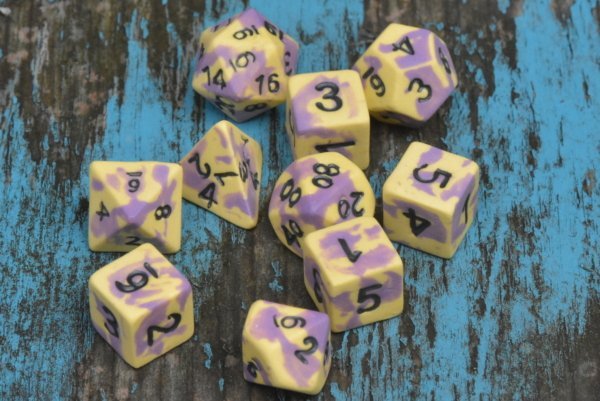
Psyy O'Narrah Ceramic Dice Set
Hand-pigmented purple and yellow English porcelain in a strange, dreamlike fusion with bold black numbering. A handmade ceramic dice set …
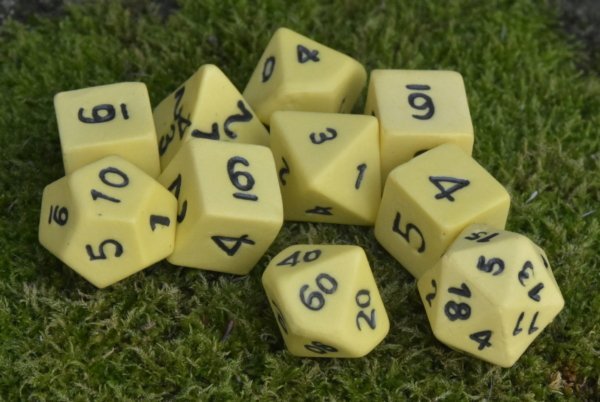
Ancient Scroll Ceramic Dice Set
Aged parchment in dice form. Hand-pigmented English porcelain in warm, weathered yellow with bold black numbering. A handmade ceramic dic…
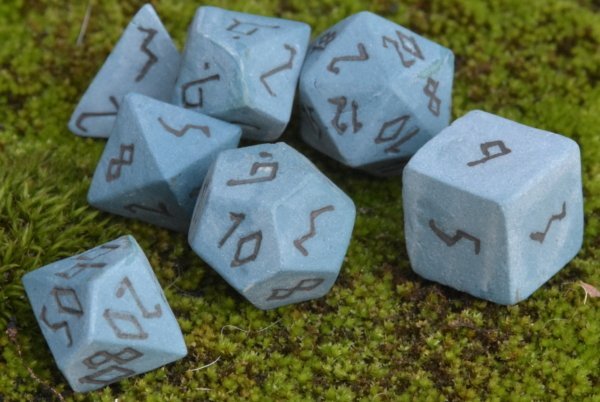
Runic Duskblade Ceramic Dice Set
The Duskblade base — deep saturated blue hand-pigmented English porcelain — finished with our signature runic-style numbering. A prem…
Wizard Core Mechanics
The Wizard is D&D 5e’s quintessential scholarly spellcaster, trading durability for unmatched magical versatility. With a d6 Hit Die, wizards are the most fragile class in the game—new players should plan to stay behind the front line. Intelligence is your primary stat (it determines spell save DC and attack rolls), and your saving throw proficiencies in Intelligence and Wisdom are excellent, protecting you against many of the worst mental effects in the game.
The defining feature is the Spellbook. Unlike Sorcerers or Warlocks, wizards don’t simply “know” spells—they record them. You start with six 1st-level spells and add two more each time you level up. Critically, you can also copy spells from scrolls or other wizards’ spellbooks (at a cost of 50 gp and 2 hours per spell level), meaning a wizard’s power grows with the campaign’s treasure.
Wizards use prepared casting: each long rest, you choose a number of spells equal to your Intelligence modifier + wizard level from your spellbook to have ready. This is the wizard’s killer advantage:
- Your known spell list is limited only by what you’ve scribed
- Your prepared list can shift every day to match the challenge ahead
Arcane Recovery lets you regain spell slots equal to half your wizard level (rounded up) once per long rest during a short rest—a vital resource for long adventuring days.
What separates wizards from other casters:
- Access to the largest spell list in the game, including iconic options like fireball, counterspell, and wish
- Spellbook flexibility means you’re never locked into bad choices
Experienced players should remember: the wizard’s true power isn’t raw damage—it’s adaptability. A prepared wizard who scouts ahead and swaps spells accordingly will outperform any caster locked into a fixed list.
Choosing Your Arcane Tradition
At 2nd level, Wizards select an Arcane Tradition that shapes their magical specialty, granting unique features as they progress.
School of Abjuration (PHB) turns wizards into surprisingly durable casters through the Arcane Ward, a rechargeable shield of magical energy that absorbs damage whenever you cast abjuration spells. It’s the tankiest wizard option available.
School of Conjuration (PHB) specializes in summoning creatures and objects from thin air. Benign Transposition lets you teleport short distances or swap places with allies, while later features enhance your summoned minions.
School of Divination (PHB) is widely considered one of the strongest subclasses thanks to Portent. You roll two d20s after each long rest and can replace any attack roll, save, or check made by yourself or others—essentially bending fate itself.
School of Enchantment (PHB) focuses on charm and compulsion magic. Hypnotic Gaze lets you incapacitate a creature each turn, and Instinctive Charm redirects attacks targeting you to other creatures nearby.
School of Evocation (PHB) is the damage king. Sculpt Spells lets you carve safe zones in your fireballs so allies stand untouched in the inferno, and Empowered Evocation adds your Intelligence modifier to evocation damage rolls.
School of Illusion (PHB) masters deception and misdirection. Improved Minor Illusion combines sound and image, while Malleable Illusions let you reshape your illusions on the fly—perfect for creative problem-solving wizards.
School of Necromancy (PHB) commands the dead. Undead Thralls lets you animate extra zombies and skeletons with bonus HP and damage, building a personal army that grows with your level.
School of Transmutation (PHB) bends matter and form. The Transmuter’s Stone grants useful bonuses to allies, and capstone features let you polymorph, restore youth, or even cheat death.
Bladesinging (SCAG) is the iconic gish, blending elven swordplay with arcane magic for AC boosts, extra speed, and Extra Attack with cantrip-infused strikes.
War Magic (Xanathar’s) combines abjuration and evocation for durable battlefield casters, with Arcane Deflection boosting AC or saves reactively.
Chronurgy Magic (Wildemount) manipulates time, featuring Chronal Shift to force rerolls twice per rest—rivaling Portent in raw power.
Graviturgy Magic (Wildemount) controls gravity, letting you increase or decrease creatures’ weight and push enemies around the battlefield.
Order of Scribes (Tasha’s) embodies the scholarly wizard, with a sentient spellbook, free spell swaps, and damage-type changes—the most flexible caster option available.
Best Race Combinations for Wizard
Wizards live and die by their Intelligence score, so race selection should prioritize INT bonuses, useful cantrips, or defensive features to keep your squishy spellcaster alive. Here are the strongest race combinations for aspiring archmages:
- High Elf: The gold standard. +1 INT, a free wizard cantrip, and Trance make this the classic min-maxer’s pick. Read the High Elf Wizard guide.
- Gnome: +2 INT and gnome cunning grants advantage on mental saves, protecting your massive INT from being turned against you. See why gnomes dominate.
- Rock Gnome: Same +2 INT plus tinker abilities for utility-focused wizards who love gadgets. Full Rock Gnome build.
- Deep Gnome: +2 INT, superior darkvision, and stealth make this the ultimate infiltrator-wizard. Deep Gnome wizard tips.
- Drow: +1 CHA paired with superior darkvision and innate spells, perfect for shadow-shrouded illusionists. Build a Drow Wizard.
- Half-Elf: Flexible +1 INT via custom stats, plus Fey Ancestry and extra skills for versatile spellcasters. Half-Elf Wizard guide.
- Triton: +1 INT (with custom origin), innate spells, and amphibious mobility for aquatic campaigns. Master the Triton Wizard.
- Silver Dragonborn: Cold breath weapon and resistance complement evocation builds beautifully. Silver Dragonborn guide.
- Green Dragonborn: Poison breath and resistance offer thematic flavor for necromancers and conjurers. Green Dragonborn build.
- Tortle: Natural AC 17 solves the wizard’s biggest weakness—paper-thin defenses—without needing Mage Armor. Tortle Wizard tips.
- Earth Genasi: +1 INT, Pass Without Trace at higher levels, and earth-walking utility make for a sturdy caster. Earth Genasi guide.
- Tabaxi: Climbing speed and Feline Agility let you reposition for optimal spell angles. Tabaxi Wizard build.
- Centaur: 40-foot speed keeps you out of melee range while your spells do the talking. Centaur Wizard guide.
- Goblin: Fury of the Small adds damage to spells, and Nimble Escape keeps you safe. Goblin Wizard tips.
Wizard Build Archetypes
Wizards are the most versatile class in D&D 5e, capable of filling almost any magical role depending on subclass and spell selection. Here are four powerful archetypes to consider when planning your next arcane caster. For a deeper dive into character creation, check out our guide on How to Build a Wizard in D&D 5e.
1) The Blaster: An Evocation Wizard built to deal massive damage through Fireball spam and other AoE staples. Sculpt Spells lets you exclude allies from blast zones, while Empowered Evocation adds your Intelligence modifier to damage rolls. Pair with Scorching Ray, Lightning Bolt, and Disintegrate for max carnage. See our Best Spells by Class guide for damage picks.
2) The Battlefield Controller: This build leverages spells like Hypnotic Pattern, Slow, Wall of Force, and Sickening Radiance to dictate the flow of combat. Any subclass works, though Chronurgy or Illusion shines here. Focus on save-or-suck spells with high impact and long durations.
3) The Bladesinger: A nimble melee gish that combines arcane spellcasting with swordplay. Bladesong boosts AC, speed, and concentration checks, while Extra Attack (with Booming Blade) makes you a frontline threat. Prioritize Dexterity and Intelligence, and lean on Shield and Absorb Elements for survivability. Stock your spellbook wisely with our Wizard Spellbook Guide.
4) The Diviner: The ultimate destiny manipulator. Portent dice let you replace any d20 roll, turning critical fails into guaranteed hits—or enemy saves into automatic failures. Combine with powerful save-targeting spells like Banishment, Forcecage, and Power Word Stun. Don’t forget core utility staples from our Essential Spells for Every Class list.
Combat Tactics & Action Economy
Open most fights with concentration first: Hypnotic Pattern, Web, or Slow at low-to-mid tiers, Wall of Force or Sickening Radiance later. Locking enemies down generates more action economy than damage—every incapacitated foe is a turn your party gains. Don’t stack two concentration spells; if you cast Haste, you’ve spent your control budget.
Budget slots by encounter count. In a six-encounter adventuring day, reserve your two highest slots for boss fights and emergencies (Counterspell, Banishment). Burn 1st and 2nd-level slots liberally on Shield, Misty Step, and upcast Magic Missile. Cantrips like Fire Bolt or Toll the Dead handle trash mobs—never waste a 3rd-level slot on a goblin.
Ritual cast everything you can outside initiative: Detect Magic, Comprehend Languages, Identify, Find Familiar, Tiny Hut, Rary’s Telepathic Bond. The 10-minute cost is free value—your ritual book holds spells you never prepare.
Prepare a flexible kit daily: one control spell, one damage spell, one utility, one defense per level you can access. Swap Fly for Tongues, Fireball for Counterspell based on intel.
Position 30-40 feet behind the frontline—out of melee charges and most breath weapons, but within range of Shield‘s reaction and Counterspell‘s 60-foot range. Stand near a corner for cover and escape via Misty Step.
Frequently Asked Questions About Wizards
Best Wizard subclass for beginners?
The School of Evocation is widely considered the best Wizard subclass for new players. Its Sculpt Spells feature lets you safely place allies within damaging area-of-effect spells like Fireball without harming them, eliminating one of the trickiest tactical concerns for new Wizards. The subclass is straightforward, powerful, and rewards classic spell choices. Other beginner-friendly options include the School of Divination for its Portent dice, which provide a forgiving safety net by letting you replace problematic d20 rolls during combat or skill challenges.
How does spellbook work?
Your spellbook contains all the Wizard spells you know and can prepare. You start with six 1st-level spells, and gain two new spells of any level you can cast each time you level up. You can also copy spells from scrolls or other wizards’ spellbooks, costing 50 gold and 2 hours per spell level. Losing your spellbook is serious, so consider keeping a backup copy. Each day, you prepare a subset of spells from your book equal to your Intelligence modifier plus your Wizard level.
Should I copy every scroll?
Not necessarily. Copying spells costs 50 gold and 2 hours per spell level, which adds up quickly. Prioritize spells that complement your build and fill gaps in your repertoire, such as utility spells, rituals, and reliable combat options. Ritual spells are especially valuable because you can cast them without using a spell slot. Skip redundant spells or those outside your playstyle. Selling unwanted scrolls or saving them for emergencies is often better than spending resources copying spells you’ll rarely prepare.
Wizard vs Sorcerer differences?
Wizards are Intelligence-based scholars with massive spell repertoires stored in spellbooks, allowing flexible daily preparation and access to nearly every arcane spell. Sorcerers are Charisma-based innate casters with a small fixed list of known spells but gain Metamagic for on-the-fly customization like twinning or quickening spells. Wizards excel at versatility, ritual casting, and utility, while Sorcerers shine through consistent spell modification and simpler resource management. Choose Wizard for tactical variety and Sorcerer for focused, repeatable power.
How many spells should I prepare?
Prepare a number of spells equal to your Wizard level plus your Intelligence modifier. Aim for a balanced mix: roughly 40% combat damage and control, 30% utility and exploration, 20% defensive or healing options, and 10% situational spells based on the adventure ahead. Always include reliable staples like Shield, Misty Step, Counterspell, and Detect Magic when available. Remember that ritual spells in your spellbook can be cast without preparation, so prioritize preparing non-ritual spells you actually expect to use.
Concentration management tips?
Concentration is critical since you can only maintain one concentration spell at a time. Take War Caster or Resilient (Constitution) to gain advantage on concentration saves. Position yourself behind cover or your party’s frontline to avoid hits entirely. Pair concentration spells with non-concentration damage spells like Fireball or Magic Missile for sustained pressure. Avoid stacking multiple concentration effects mentally by tracking duration carefully. When dropping concentration matters, prioritize spells like Hypnotic Pattern or Wall of Force that win encounters outright over weaker sustained effects.
Browse All Wizard Content
Our complete library:
By Race Combination (153)
- Mastering the Triton Wizard: A Beginner's Guide to DND Magic
- Unleashing Arcane Power: A Silver Dragonborn Wizard's Guide
- How to Build a High Elf Wizard
- How to Build a Tabaxi Wizard
- How to Build a Tortle Wizard
- How to Build a Gnome Wizard in D&D 5e
- How to Build a Centaur Wizard in D&D 5e
- How to Build a Half-Elf Wizard in D&D 5e
- How to Build a Rock Gnome Wizard in D&D 5e
- How to Build an Earth Genasi Wizard in D&D 5e
- How to Build a Drow Wizard in D&D 5e
- Gnome Wizard: Why This Build Dominates Combat
- How to Build a Green Dragonborn Wizard in D&D 5e
- How to Build a Deep Gnome Wizard in D&D 5e
- How to Build a Goblin Wizard in D&D 5e
- The Gnome Wizard's Mechanical Advantage in D&D 5e
- How to Build a Tiefling Wizard in D&D 5e
- Half-Elf Wizards Beyond Optimization: Charisma Matters
- How to Play an Elf Wizard in D&D 5e
- How to Build a Green Dragonborn Wizard
- Why Gnome Wizards Actually Work in D&D 5e
- How to Build a Tortle Wizard in D&D 5e
- How to Build an Orc Wizard in D&D 5e
- How to Build an Aasimar Wizard in D&D 5e
- How to Play a Tabaxi Wizard in D&D 5e
- How to Build an Air Genasi Wizard in D&D 5e
- Deep Gnome Wizard Survival Guide For Underground Adventures
- How to Build a High Elf Wizard in D&D 5e
- Gnome Wizard: Why Intelligence Bonuses Win Early Game
- How to Build a Goliath Wizard in D&D 5e
- Playing Aasimar Wizard: Survivability Over Optimization
- Rock Gnome Wizards: Why Intelligence Beats Flashiness
- How to Build a Yuan-Ti Pureblood Wizard
- How to Build a Halfling Wizard in D&D 5e
- Air Genasi Wizard: Mobility Without Spell Slots
- How to Build a Gold Dragonborn Wizard in D&D 5e
- Deep Gnome Wizard Survival and Stealth Tactics
- Goliath Wizard: Standing Tough on the Frontline
- Goliath Wizard: Trading Spellpower for Survivability
- Goliath Wizard: Trading Fragility For Survivability
- Goliath Wizard: Why Survivability Beats The Squishy Stereotype
- Playing Against Type: The Goliath Wizard
- Goliath Wizard: Trading Frailty For Durability
- Goliath Wizard: Trading Optimization For Survivability
- Goliath Wizard: Trading Spell Power for Survivability
- Goliath Wizard: Building A Durable Spellcaster
- Goliath Wizard: Stone's Endurance For Survivability
- Goliath Wizard: Surviving the Frontline
- Goliath Wizard: Playing a Durable Frontline Caster
- Goliath Wizard: Survivability Over Spell Power
- Goliath Wizard: Building Durability Over Optimization
- How to Build a Fire Genasi Wizard in D&D 5e
- Fire Genasi Wizard: Synergy Beyond The Obvious
- Fire Genasi Wizards: Balancing Flame And Arcana
- Fire Genasi Wizard: Theme Over Optimization
- Fire Genasi Wizards: Evocation And Survivability
- How to Build an Aarakocra Wizard in D&D 5e
- How to Build a Water Genasi Wizard in D&D 5e
- High Elf Wizard: Why This Race Excels
- High Elf Wizard: Why This Pairing Wins
- High Elf Wizard: Why This Race-Class Synergy Works
- High Elf Wizard: Why This Combo Actually Works
- High Elf Wizard: Why This Race Class Synergy Wins
- High Elf Wizard: Why Synergy Matters Most
- High Elf Wizard: Why Racial Traits Trump Other Builds
- Half-Elf Wizard: Why Versatility Beats Raw Stats
- Half-Elf Wizards As Flexible Party Generalists
- Half-Elf Wizard: Why This Race Excels at Spellcasting
- Half-Elf Wizard: The Social Spellcaster Build
- Half-Elf Wizards: The Social Spellcaster Build
- Half-Elf Wizard: Flexibility Without Compromise
- Female Half-Elf Wizard: The Social Spellcaster
- How to Build an Elf Wizard in D&D 5e
- Elf Wizard: Why This Race-Class Combo Works
- Elf Wizard Subraces: Tactical Advantages Explained
- Elf Wizard Subrace Mechanics and Survivability
- Rock Gnome Wizard: Optimal Traits And Synergies
- Rock Gnome Wizard: Why Intelligence and Cunning Win
- How to Play a Rock Gnome Wizard with a Tragic Backstory
- Rock Gnome Wizard: The Synergistic Scholar
- How to Play a Rock Gnome Wizard in D&D 5e
- Goliath Wizard: Surviving Without Intelligence Bonuses
- The Dark Goliath Wizard: Brute Force Meets Arcane Magic
- How to Build a Goliath Wizard for Dark Campaign Settings
- Goliath Wizard: Trading Strength For Arcane Power
- Goliath Wizard: Surviving Without Intelligence
- Goliath Wizard: Building Resilient Spellcasters
- How to Build a Rock Gnome Wizard for Urban Campaigns
- How to Equip Your Rock Gnome Wizard for City Adventures
- How to Build a Rock Gnome Wizard
- How to Play Rock Gnome Wizards in City Campaigns
- How to Build a White Dragonborn Wizard in D&D 5e
- How to Build a White Dragonborn Wizard
- White Dragonborn Wizard: Surviving High-Stakes Campaigns
- White Dragonborn Wizard: Breath Weapon Tactics
- Elf Wizard Race-Class Synergy in D&D 5e
- Elf Wizard Subrace Selection and Mechanical Synergy
- Elf Wizard Subraces: Mechanics That Matter
- Elf Wizard Synergies: Race And Class Advantages
- How to Build a Firbolg Wizard in D&D 5e
- How to Play a Firbolg Wizard in D&D 5e
- How to Build Tension in a Firbolg Wizard Campaign
- Firbolg Wizard: Embracing The Nature Scholar Trade-Off
- How to Build a Genasi Wizard in D&D 5e
- Building a Genasi Wizard: Elemental Heritage Meets Arcane Power
- Genasi Wizard Subrace Mechanics and Thematic Synergy
- Genasi Wizards: Elemental Magic Meets Arcane Study
- How to Build a Rock Gnome Wizard for Low-Combat Campaigns
- How to Play a Rock Gnome Wizard in Story-Driven Campaigns
- How to Build a Rock Gnome Wizard for Investigation Campaigns
- Rock Gnome Wizard: Building Durable Arcane Inventors
- How to Build a Warforged Wizard in D&D 5e
- How to Run a Lizardfolk Wizard Campaign with Comedy
- How to Play a Lizardfolk Wizard in a Comedy Campaign
- How to Play a Lizardfolk Wizard with Comedic Flair
- Gnome Wizard Mechanics: Why This Race Works
- How to Play a Gnome Wizard in D&D 5e
- How to Play a Gnome Wizard in War Campaigns
- How to Play a Gnome Wizard in War Scenarios
- Gnome Wizard: Why This Race Excels At Magic
- How to Build a Githyanki Wizard for Planar Adventures
- How to Build a Githyanki Wizard in D&D 5e
- Githyanki Wizard: Building The Armored Gish
- Gnome Wizard Synergy: Why This Pairing Actually Works
- How to Run a Gnome Wizard Campaign for New Players
- Gnome Wizard Synergies: Race-Class Optimization Guide
- Gnome Wizard: Why Mechanics Make It Optimal
- Githyanki Wizard: Trading Synergy For Tactical Flexibility
- How to Build a Forest Gnome Wizard in D&D 5e
- Forest Gnome Wizard: Mechanics And Magical Synergy
- Forest Gnome Wizard: Why This Pairing Actually Works
- Warforged Wizard: Building Durable Arcane Casters
- Warforged Wizard: Trading Versatility For Durability
- Warforged Wizard: Building Survivable Arcane Constructs
- Warforged Wizard: Durability Without Sacrificing Subtlety
- Gold Dragonborn Wizard Build: How Alignment Shapes Your Character
- Gold Dragonborn Wizard: How Alignment Shapes Your Character
- How to Build a Gold Dragonborn Wizard
- Gold Dragonborn Wizard: How Alignment Shapes Your Build
- White Dragonborn Wizard: Cold Magic Meets Chromatic Power
- How to Build an Evil Air Genasi Wizard
- Building a Firbolg Wizard with a Dark Past
- Aarakocra Wizard: Flight Over Defenses
- How to Play a Kenku Wizard in D&D 5e
- How to Build a Revenge-Driven Aasimar Wizard
- How to Play an Evil Elf Wizard in D&D 5e
- High Elf Wizard Alignment Guide for D&D 5e
- How to Build a Gnome Wizard for a Revenge Campaign
- Warforged Wizard: Building A Construct Scholar
- Firbolg Wizard: Nature Magic Meets Arcane Craft
- Gnome Wizard: Why This Race-Class Combo Works
- Goblin Wizard: Playing the Unconventional Spellcaster
- How to Build a Scourge Aasimar Wizard in D&D 5e