
Bards get a bad rap. Somewhere along the way, the class got pigeonholed as the lute-strumming horndog who flirts with the tavern keeper and contributes nothing in combat. That reputation is wrong, and frankly, it’s costing players one of the strongest, most flexible classes in the game.
A Bard is a full caster with Counterspell access (via Magical Secrets at 10th), proficiency in every skill they touch thanks to Jack of All Trades and Expertise, and a party-wide buff economy built on Bardic Inspiration that scales from a d6 to a d12. College of Lore at 6th level lets you poach two spells from any class list, including Spirit Guardians, Wall of Force, and Animate Objects. That’s not a support class. That’s the engine of the party.
The catch is that Bards punish indecisive players. You have fewer spell slots than a Wizard, no ritual book to lean on outside what you prepare, and your Bardic Inspiration die only refreshes on a short rest until 5th level. Pick the wrong spells known at level 3 and you’re stuck with them until level 4 swap day. Choose Valor instead of Lore without a plan and you’ll feel underpowered until level 14. The class rewards system mastery, not vibes.
This hub is where everything we’ve written about Bards lives, from subclass breakdowns and spell rankings to race pairings, multiclass dips, and roleplay hooks that don’t involve seducing the dragon. Start wherever your next character question lives.
Honestly, Bard players are some of the most entertaining folks who stroll up to our table, and we always know we’re in for a good story. When we ask what they love most about their class, the answer almost always comes back to one word: INSPIRATION! They live for that moment of handing out Bardic Inspiration to a struggling teammate, or, let’s be real, talking their way out of a situation the rest of the party tried to swing weapons at. The Bard players we meet at the Crit Hit Ceramics booth tend to be the social butterflies of their groups, the ones cracking jokes while their friends roll their eyes affectionately. They’re drawn to the class because it lets them be charming, clever, and a little chaotic all at once. A good Bard player loves playing the face of the party, weaving lore into every tavern visit and making every NPC interaction memorable.
Bard players almost always gravitate toward dice with personality and flair, something with a bit of sparkle or storytelling baked right in. They want a set that feels as expressive as their character. Our Violet Rose Ceramic Dice Set set tends to catch their eye immediately because of the vibrant swirl of color, and the Pink Delight Ceramic Dice Set set is another favorite for Bards who want something a little more dramatic and eye-catching at the table.
Featured Dice for Bard Players
Hand-picked ceramic dice sets from Crit Hit Ceramics that complement Bard characters at the table.
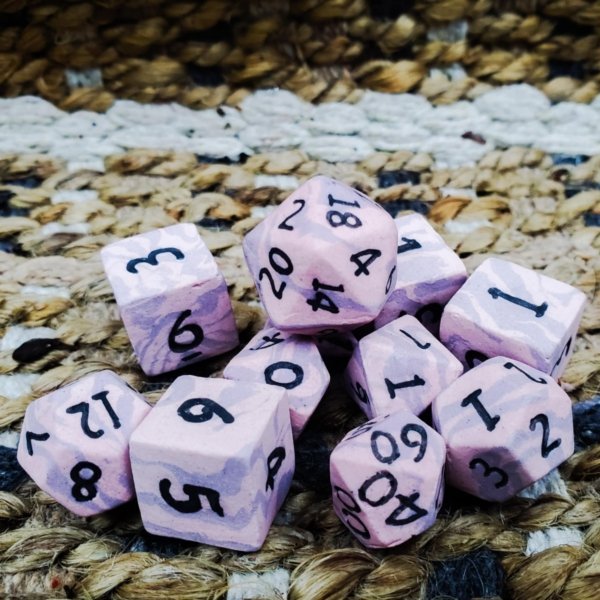
Violet Rose Ceramic Dice Set
Hand-pigmented pink and purple English porcelain in a romantic, soft fusion with bold black numbering. A handmade ceramic dice set for ba…
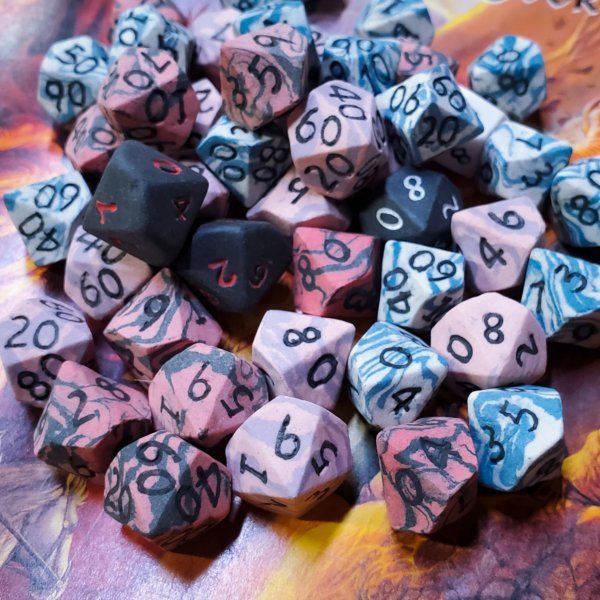
Pink Delight Ceramic Dice Set
Vibrant, unmissable hand-pigmented pink English porcelain with crisp black numbering. A handmade ceramic dice set for bards, sorcerers, a…
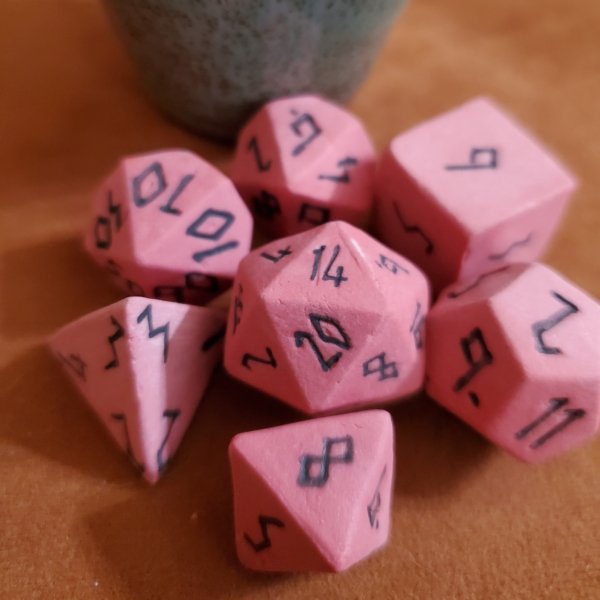
Runic Pink Delight Ceramic Dice Set
The Pink Delight base — vibrant pink hand-pigmented English porcelain — finished with our signature runic-style numbering. A premium …
Bard Core Mechanics
The Bard is a full spellcaster built on Charisma, with a d8 hit die and proficiency in Dexterity and Charisma saving throws—the latter being one of the most valuable defensive saves in the game. New players should think of the Bard as a support caster who never runs out of useful things to do, even when their spell slots are empty.
The signature feature is Bardic Inspiration. As a bonus action, you grant an ally a die they can add to one attack roll, ability check, or saving throw within 10 minutes. It starts as a d6 and scales up:
- d8 at 5th level
- d10 at 10th level
- d12 at 15th level
You get a number of uses equal to your Charisma modifier, recharging on a long rest (short rest starting at 5th level). Crucially, the recipient decides when to use it—even after seeing the d20 roll but before knowing the outcome.
Jack of All Trades adds half your proficiency bonus (rounded down) to any ability check that doesn’t already include it. Combined with Expertise (double proficiency on two skills at 3rd level, two more at 10th), Bards become the party’s premier skill monkey. Song of Rest lets allies regain extra hit points during a short rest, scaling from a d6 up to a d12.
What surprises experienced players is Magical Secrets at 10th level: you learn two spells from any class’s spell list, treated as bard spells. Want Counterspell, Fireball, or Animate Objects? They’re yours. This makes the Bard the most flexible caster in 5e—no other class can poach from the wizard, cleric, and druid lists simultaneously.
The Bard’s identity isn’t doing one thing well; it’s doing everything competently while making the rest of the party shine.
Choosing Your Bard College
Your Bard College defines your performer’s style, shaping everything from spell selection to combat role. Here’s a tour of every official option, plus where the design space is heading. For broader strategy, see The Bard’s Complete Mechanics and Subclass Strategy and The Bard’s Path: Choosing Subclass and Stat Priorities.
College of Lore (PHB) is the quintessential support caster. Cutting Words lets you reactively subtract a d6+ from enemy attacks, checks, or damage, and Additional Magical Secrets at 6th grants two spells from any class—making Lore the king of versatility.
College of Valor (PHB) turns your bard into a frontline skirmisher with medium armor, shields, martial weapons, and Extra Attack at 6th. Combat Inspiration lets allies add Bardic Inspiration to weapon damage or AC, rewarding party-wide synergy.
College of Glamour (Xanathar’s) channels fey enchantment. Mantle of Inspiration grants temporary HP and free movement to allies as a bonus action, while Enthralling Performance and Mantle of Majesty offer powerful charm-based control.
College of Swords (Xanathar’s) is the dueling blade-bard. Blade Flourishes spend Bardic Inspiration to add damage plus a tactical rider—mobility, defense, or AoE—on weapon attacks, and you eventually gain Extra Attack too.
College of Whispers (Xanathar’s) weaponizes secrets and dread. Psychic Blades add big psychic damage to a weapon hit, Words of Terror frightens isolated targets for an hour, and Mantle of Whispers lets you steal a dead creature’s identity.
College of Eloquence (Tasha’s) is arguably the strongest face-bard ever printed. Silver Tongue makes Persuasion and Deception rolls of 9 or lower count as 10, and Unsettling Words spends Inspiration to subtract from an enemy’s next save—devastating with save-or-suck spells.
College of Creation (Tasha’s) sings reality into being via the Song of Creation, animating objects and conjuring magical items. For a full breakdown read How to Play a College of Creation Bard, or for a narrative angle, How to Build a Creation Bard for a Revenge-Themed Campaign.
College of Spirits (Van Richten’s) channels ghosts through a Spiritual Focus, rolling on the Tales from Beyond table to produce a randomized effect from a Bardic Inspiration die—chaotic, flavorful, and surprisingly potent.
Lore Variants and UA: playtest material has revisited Lore with rebalanced Cutting Words and earlier Magical Secrets. Watch Unearthed Arcana for tweaks before they reach official print.
Best Race Combinations for Bard
Charisma is the Bard’s lifeblood, powering spells, Bardic Inspiration, and social skills. The best race pairings either boost Charisma directly or offer mechanical perks that complement a Bard’s support-and-control playstyle. Here are the strongest combinations to consider:
Tiefling Bard — The classic +2 Charisma plus innate spellcasting like Thaumaturgy and Hellish Rebuke makes Tieflings a mechanical powerhouse. Learn more in How to Build a Tiefling Bard and The Mechanical Case for Tiefling Bards.
Half-Elf Bard — Arguably the best Bard race: +2 Charisma, two +1 stats of your choice, Fey Ancestry, and bonus skills stack perfectly with Jack of All Trades.
Elf Bard — Dexterity boosts AC and Initiative, while Perception and Trance round out utility. Dive deeper in How to Build an Elf Bard and Elf Bard Synergies.
Drow Bard — Superior Darkvision and innate Faerie Fire pair beautifully with a Bard’s control toolkit. See How to Build a Drow Bard.
Yuan-Ti Pureblood Bard — Magic Resistance and poison immunity make this one of the tankiest Charisma builds in the game. Full breakdown at How to Build a Yuan-Ti Pureblood Bard.
Green Dragonborn Bard — Charisma boost plus a poison breath weapon adds an AoE option Bards normally lack. Details in How to Build a Green Dragonborn Bard.
Blue Dragonborn Bard — Lightning breath gives a thematic shocker-performer fantasy. Explore How to Build a Blue Dragonborn Bard or Mastering the Blue Dragonborn Bard.
Halfling Bard — Lucky and Brave protect your fragile caster, while Dexterity supports finesse weapons. Read How to Build a Halfling Bard.
Tortle Bard — Natural 17 AC frees up your ASIs for pure Charisma scaling. Check Tortle Bard Tips and How to Build a Tortle Bard.
Centaur Bard — 40-foot speed and a hoof attack turn your Bard into a mobile skirmisher. See How to Build a Centaur Bard.
Earth Genasi Bard — Constitution boost and Pass Without Trace at higher levels add survivability and stealth. Full guide: How to Build an Earth Genasi Bard.
Fire Genasi Bard — Innate Produce Flame and Burning Hands expand your spell list for free. Learn more in How to Build a Fire Genasi Bard.
Bard Build Archetypes
The Bard class offers incredible flexibility, with subclasses that can pivot your character toward party support, devastating spellcasting, frontline combat, or social manipulation. Choosing the right archetype shapes everything from your ability score priorities to your spell selection. For a deeper breakdown of mechanics, check out How to Build a Bard in D&D 5e.
1) Eloquence Face/Healer: The College of Eloquence turns your Bard into an unmatched skill-check machine, with Silver Tongue ensuring Persuasion and Deception rolls never go below 10. Pair this with healing spells like Cure Wounds and Mass Healing Word for a party-saving powerhouse. Key features: Silver Tongue, Unsettling Words, Expertise in social skills. See the Fast-Track Guide for stat priorities.
2) Lore Caster: The College of Lore grants Magical Secrets at level 6, letting you snatch Fireball, Healing Spirit, or Counterspell from other classes. Cutting Words also lets you debuff enemy attacks reactively. Key features: Bonus Proficiencies, Cutting Words, Additional Magical Secrets. Learn more in Playing a Versatile Bard.
3) Valor/Swords Gish: Colleges of Valor and Swords transform Bards into melee combatants with Extra Attack at level 6 and flourishes (Swords) that add damage or battlefield control. Prioritize Dex, Charisma, and Constitution to survive the frontline. Key features: Extra Attack, Blade Flourishes, medium armor proficiency. The Quick Build guide covers stat distribution.
4) Whispers Manipulator: The College of Whispers specializes in psychological warfare, using Psychic Blades to deal massive bonus damage and Words of Terror to inflict frightened on unsuspecting targets. Key features: Psychic Blades, Words of Terror, Mantle of Whispers. Explore support tactics in The Bard’s Role.
Combat Tactics & Action Economy
Bardic Inspiration is a limited resource—don’t burn it on the fighter’s first attack of the turn. Hand it out before known high-stakes moments: the rogue’s Sneak Attack against the BBEG, the paladin’s smite roll, or anyone making a Wisdom save against a dominate effect. Pre-combat inspiration on the scout or initiative-likely ally is often better than waiting until round one. Remember it lasts 10 minutes, so distributing dice during short rests or right before kicking in a door wastes nothing.
If you’re a Lore Bard, Cutting Words is frequently better than Inspiration because it’s reactive—you only spend the die when you see a hit confirmed. Hold one die in reserve every combat specifically for Cutting Words against a boss’s crit or a save-or-suck attack roll.
Casting versus inspiring is an action economy question: if your spell does more than a d6-d12 of swing, cast it. Hypnotic Pattern shutting down four enemies vastly outvalues a single inspiration die. Once it’s up, your job is concentration defense—Shield of Faith, healing word, and dodge actions, not flashy follow-ups that risk the save.
At 7th level, pick Counterspell via Magical Secrets. It transforms you from support into a hard-counter to enemy casters. Pair it with Slow at higher tiers: Slow doesn’t require concentration competition with allies, cripples action economy across six targets, and frees you to Counterspell their leader’s response.
Frequently Asked Questions About Bards
Is Eloquence Bard overpowered?
Eloquence Bard is widely considered one of the strongest subclasses in 5e. Silver Tongue makes you essentially infallible at Persuasion and Deception, treating rolls of 9 or lower as 10. Unsettling Words lets you spend Bardic Inspiration to debuff enemy saves, stacking brutally with spells like Hypnotic Pattern. While not game-breaking in combat power compared to full casters, its consistency and social dominance make many DMs cautious about allowing it without adjustments.
How does Magical Secrets work?
At 10th level (6th for Lore Bards), you choose two spells from any class’s spell list, treating them as Bard spells. The spell’s level must be one you can cast, so at 10th level you can pick up to 5th-level spells. Popular choices include Counterspell, Fireball, Spirit Guardians, and Healing Spirit. These spells count against your known spells, and you can swap them when you level up like any other Bard spell.
Best Bard race?
With customizable ASIs in modern 5e, any race works, but some stand out mechanically. Half-Elves were traditionally optimal due to Charisma bonuses and extra skills. Satyrs offer Magic Resistance and Mirthful Leaps, making them exceptional. Variant Humans grab a feat at level 1, perfect for Fey Touched or Inspiring Leader. Yuan-ti provide unmatched spell defense. For roleplay-flavor synergy, Tieflings and Gnomes feel thematically appropriate while remaining mechanically solid.
Bard vs Sorcerer differences?
Both are Charisma-based casters, but they play very differently. Sorcerers have fewer spells known but gain Metamagic for flexible casting, focusing on damage and battlefield control. Bards know more spells, get full skill versatility with Expertise, access any spell via Magical Secrets, and provide party support through Bardic Inspiration. Sorcerers excel as focused damage casters; Bards excel as adaptable jack-of-all-trades supporters who can fill nearly any party role.
Is Bard good for new players?
Bards are surprisingly complex for beginners. You must manage spell selection, know when to grant Bardic Inspiration, balance combat and support roles, and engage heavily in social encounters. However, they’re incredibly forgiving—you can fill gaps in any party composition. New players who enjoy roleplay and want versatility will thrive, while those wanting straightforward combat mechanics might prefer Fighter or Cleric. Lore Bard is particularly newbie-friendly due to its flexibility.
When should I give Bardic Inspiration?
Timing matters enormously since Bardic Inspiration is a limited resource. Give it before known difficult checks—the rogue scouting ahead, the fighter facing a tough enemy, or before a critical social roll. In combat, prioritize martial characters making multiple attacks per turn, as they have more chances to use it. Don’t hoard inspiration; unused dice are wasted potential. With Font of Inspiration at 5th level, you regain uses on short rests, so spend freely.
Browse All Bard Content
Our complete library:
By Race Combination (81)
- How to Build a Tortle Bard
- How to Build a Halfling Bard
- How to Build a Green Dragonborn Bard
- How to Build an Elf Bard in D&D 5e
- How to Build a Yuan-Ti Pureblood Bard
- How to Build a Drow Bard in D&D 5e
- How to Build a Centaur Bard in D&D 5e
- How to Build a Blue Dragonborn Bard in D&D 5e
- How to Build a Tiefling Bard in D&D 5e
- How to Build an Earth Genasi Bard in D&D 5e
- How to Build a Fire Genasi Bard in D&D 5e
- How to Build a Blue Dragonborn Bard
- Elf Bard Synergies: Why This Race Works
- The Mechanical Case for Tiefling Bards
- How to Build a Tortle Bard in D&D 5e
- How to Build an Aasimar Bard in D&D 5e
- Aasimar Bard Synergies: Divine Support Without Redundancy
- Aasimar Bard: Divine Power Meets Charisma
- Aasimar Bard: Celestial Support with Radiant Offense
- Aasimar Bard: Celestial Healing and Radiant Wings
- How to Play an Aasimar Bard in D&D 5e
- Aasimar Bard: Celestial Support and Combat Versatility
- Tiefling Bard: Infernal Charisma and Thematic Synergy
- Tiefling Bard: Charisma And Infernal Magic Combined
- Tiefling Bard: Why Charisma And Infernal Heritage Synergize
- Tiefling Bard: Infernal Charisma and Racial Spells
- How To Master Yuan-Ti Pureblood Bard Defenses
- How to Play a Yuan-Ti Pureblood Bard in D&D 5e
- How to Play a Yuan-Ti Pureblood Bard
- How to Build a Yuan-Ti Pureblood Bard in D&D 5e
- How to Build a Male Drow Bard in D&D 5e
- Drow Bard: Playing The Underdark's Master Manipulator
- Male Drow Bard: Narrative Depth and Battlefield Support
- Male Drow Bard: Rebellion Against Weakness
- Tiefling Bard: Infernal Charm Meets Arcane Artistry
- Building a Tiefling Bard for Epic D&D Campaigns
- Building a Heroic Quest Campaign for Your Tiefling Bard
- How to Build a Kobold Bard in D&D 5e
- How to Build a Kobold Bard for Exploration Campaigns
- How to Leverage Kobold Tactics for Exploration Bards
- How to Play a Kobold Bard in D&D 5e
- How to Build a Triton Bard in D&D 5e
- How to Build a Triton Bard for Exploration Campaigns
- How to Optimize Triton Bards for Aquatic Exploration
- Triton Bard: Flavor Over Optimization
- Tiefling Bard: Infernal Charisma and Performance
- Tiefling Bard: Infernal Charisma Meets Arcane Artistry
- Tiefling Bard Synergy: Race-Class Mechanics Explained
- Tiefling Bard: Race and Class Synergy Explained
- How to Build a Halfling Bard in D&D 5e
- How to Play a Green Dragonborn Bard in D&D 5e
- How to Play a Fallen Aasimar Bard in a West Marches Campaign
- How to Build a Fallen Aasimar Bard
- How to Run a West Marches Campaign with an Aasimar Bard
- Running a West Marches Campaign with an Aasimar Bard
- How to Build a Lightfoot Halfling Bard
- How to Build a Lightfoot Halfling Bard in D&D 5e
- How to Build a Rock Gnome Bard in D&D 5e
- How to Play a Rock Gnome Bard in High-Stakes Campaigns
- Rock Gnome Bard: Building Resilience Over Charisma
- How to Play a Rock Gnome Bard in D&D 5e
- How to Play a Rock Gnome Bard With Props
- Rock Gnome Bard: Creative Problem Solver
- How to Play a Rock Gnome Bard With Gadgets
- How to Optimize Lightfoot Halfling for Bard Play
- How to Maximize Your Lightfoot Halfling Bard
- Lightfoot Halfling Bard: Clever Positioning Over Combat
- Building a Tiefling Bard: Alignment, Roleplay, and Mechanics
- How Alignment Shapes Your Tiefling Bard
- How to Build a Tiefling Bard: Alignment and Playstyle Guide
- How to Play a Tiefling Bard: Alignment and Character Development
- Earth Genasi Bard: Building A Tanky Performer
- Drow Bard: Breaking Free From Lolth's Shadow
- How to Build a Firbolg Bard
- Aasimar Bard: Why Celestial Charisma Dominates
- How to Build a Tabaxi Bard in D&D 5e
- How to Build a Firbolg Bard in D&D 5e
- How to Build a Tiefling Bard for D&D 5e
- Fire Genasi Bard: Elemental Performance Mastery
- The Tortle Bard's Melee Advantage in D&D 5e
- Male Tiefling Bard: Mechanics Meet Roleplay