
Here’s the thing about 5e: the rulebook reads like it was written for kids, and that’s by design. Strip away the flavor text and what you have is a tactical combat system with surprising depth hiding behind plain language. The word “concentration” appears casually in spell descriptions, but it quietly governs roughly 60% of your spellcaster’s power budget. Reactions look like a footnote until you realize that Counterspell, Shield, Silvery Barbs, and the humble opportunity attack are all competing for the same once-per-round slot. Advantage doesn’t stack. Neither does disadvantage. But one of each cancels out entirely, which means a Faerie Fired enemy in heavy obscurement is just… a normal enemy.
This is where characters go from functional to genuinely good. The barbarian who understands when to break their own concentration on Rage. The wizard who knows that a held spell counts as concentration the moment they cast it, not when they release it. The DM who finally rules consistently on whether you can ready an action to cast a spell with a reaction trigger (you can, but it costs a spell slot whether or not it goes off).
What follows is everything we’ve written about how 5e actually functions at the table, organized so you can find the answer you need without digging through forum threads or squinting at Jeremy Crawford tweets from 2017. Combat math, action economy, spellcasting interactions, rest mechanics, the edge cases the PHB glosses over, and the rulings that matter.
Somewhere around a quarter of the folks who stop by our table can quote the Player’s Handbook page numbers from memory, and we love them for it. These are our rules-focused players, the ones who show up to Session Zero with a printed character sheet, three backup builds, and a highlighted copy of Tasha’s. When we get to chatting at the Crit Hit Ceramics booth at conventions, the conversation almost always turns toward one word: OPTIMIZATION! They want to talk about multiclass dips, action economy, feat synergy, and whether Great Weapon Master is really worth the -5 to hit. These players love D&D 5e because the system rewards careful study. They’re not min-maxers in a bad way, mostly, they just genuinely enjoy the puzzle of building something that works. They tend to be detail-oriented, curious, and the person their DM secretly relies on to remember how grappling actually functions.
When it comes to dice, rules-focused players gravitate toward sets where every number is crisp and unmistakable, because nothing ruins a clutch moment like squinting at a 6 that might be a 9. Our Skeleton Ceramic Dice Set set tends to be a favorite for this crowd thanks to its clean, high-contrast numbering, and the Pharaoh's Sandstorm Ceramic Dice Set also gets a lot of love for the same reason. Function first, but still beautiful on the table.
Featured Dice for D&D 5e Mechanics Players
Hand-picked ceramic dice sets from Crit Hit Ceramics that complement D&D 5e Mechanics characters at the table.
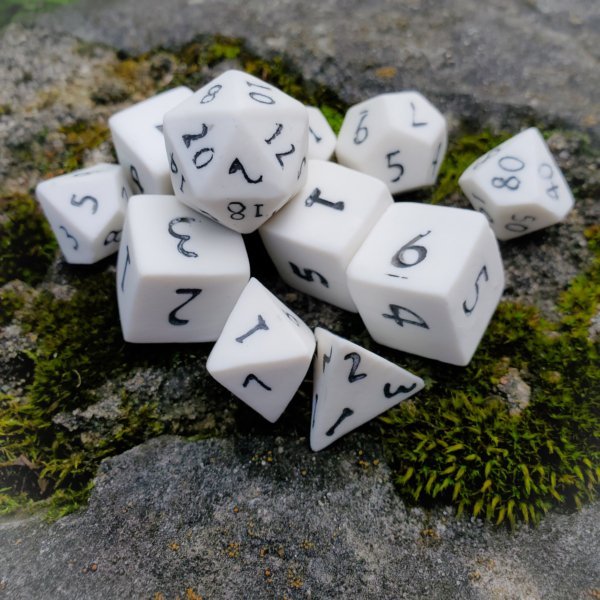
Skeleton Ceramic Dice Set
Unpigmented English porcelain — the natural color of the clay — finished with bold black numerals. A handmade ceramic dice set for cl…

Coming Soon
Pharaoh's Sandstorm Ceramic Dice Set
112 stoneware clay in a sun-baked sandy brown with bold black numbering. A handmade ceramic dice set for desert campaigns, tomb explorers…
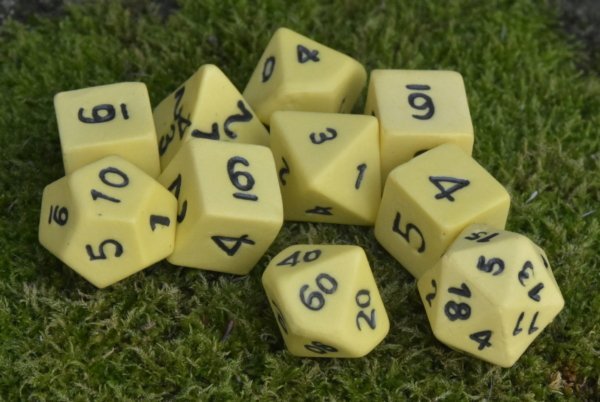
Ancient Scroll Ceramic Dice Set
Aged parchment in dice form. Hand-pigmented English porcelain in warm, weathered yellow with bold black numbering. A handmade ceramic dic…
Core Rules: The Basics
Strip 5e down to its skeleton and you’re left with one equation: d20 + ability modifier + proficiency bonus vs. a target number. That target is either an Armor Class (for attacks), a Difficulty Class (for skills and saves), or your opponent’s save DC (for spells). Everything else—features, spells, magic items—is just modifying one side of that equation or letting you roll the die more than once.
Your ability modifier comes from your six stats, which is why ability score priority matters so much more than new players realize. A +3 instead of a +1 isn’t just two extra points; it’s a meaningful shift in how often you succeed at the thing your character is supposedly good at.
Proficiency bonus scales with character level, not class level—critical for multiclassers:
- Levels 1–4: +2
- Levels 5–8: +3
- Levels 9–12: +4
- Levels 13–16: +5
- Levels 17–20: +6
You add it once to anything you’re proficient with. Expertise (Rogue, Bard, some others) doubles it. Don’t add it twice on your own.
Advantage and Disadvantage
Roll 2d20, take the higher (advantage) or lower (disadvantage). They don’t stack—three sources of advantage is still just advantage—and they cancel each other out one-for-one. Mechanically, advantage is worth roughly +5 in the middle of the probability curve and basically nothing at the extremes. This is why setting up advantage (Faerie Fire, hiding, flanking if your table uses it) is almost always better than chasing small numerical bonuses.
The Action Economy
Every turn, you get:
- One Action — Attack, Cast a Spell, Dash, Dodge, Help, Hide, Ready, Search, Use an Object
- One Bonus Action — Only if a feature explicitly grants one (Cunning Action, Healing Word, off-hand attack). You can’t “save” an unused action and spend it as a bonus action.
- One Reaction — Opportunity attacks, Shield, Counterspell. Resets at the start of your next turn.
- Movement — Split however you like across your turn.
- Free interactions — One per turn: drawing a weapon, opening an unlocked door, dropping something.
This is where 5e quietly lives or dies. Action economy is the real currency of the game—classes that give you more meaningful things to do per round (Fighter’s Action Surge, Cleric’s bonus-action spirit weapons, the Artificer’s infusions freeing up actions for combat) are the ones that outperform their raw numbers. Master the turn, master the game.
Combat Mechanics
Combat in 5e is a turn-based dance built on a few core actions, but the actual game lives in the spaces between the obvious choices. Here’s what’s actually happening under the hood.
Initiative is a Dexterity check, not a saving throw, which means Jack of All Trades, Bardic Inspiration, and the Alert feat all work on it. Going first matters enormously—you can drop a target before it acts, or position before the enemy locks down terrain. This is one of the biggest arguments for high Dex on martials, as covered in The Dexterity Fighter’s Advantage.
Attack rolls versus saving throws is the fundamental design split. Attack rolls scale with proficiency and ability mod against AC; saves are made by the target against your spell save DC. Crucially: attacks can crit, saves cannot. This is why Divine Smite is so brutal on a crit (see Paladin Sacred Oaths and Divine Smite Mechanics) and why save-or-suck spells favor consistency over burst.
Opportunity attacks trigger when a creature leaves your reach without disengaging or teleporting. Note “leaves your reach”—standing up, swapping weapons, and casting in melee do not trigger OAs by default. Use this knowledge to bait or punish.
The action economy options most players underuse:
- Dodge: Disadvantage on attacks against you, advantage on Dex saves. Underrated for tanks drawing fire.
- Disengage: No OAs this turn. A whole action—usually worth it only if the OA would hurt badly. Rogues get it as a bonus action with Cunning Action (Rogue Tactics).
- Dash: Double movement. Often better than attacking when you can’t reach anything useful.
- Ready: Set a trigger and a reaction. Lets you interrupt enemy turns—great for counterspell baits or readied bow shots.
Grappling and shoving are special melee attacks using an Athletics check contested by the target’s Athletics or Acrobatics. Grappled creatures have speed 0; shoved creatures are either knocked prone or pushed 5 feet. Prone is the spicier option—melee attackers gain advantage, ranged attackers have disadvantage, and standing up costs half the target’s movement. Stack grapple + prone and you’ve functionally removed a threat. Full breakdown in How Grappling Works In D&D 5e Combat.
Two-weapon fighting lets you make an off-hand attack as a bonus action with a light weapon, but you don’t add your ability modifier to damage unless you have the Two-Weapon Fighting style. It competes for your bonus action with smites, Hex, Healing Word, and Cunning Action—plan accordingly.
Ability Scores & Modifiers
Every character in 5e is built on six ability scores, and the modifier (score minus 10, divided by 2, rounded down) is what actually matters at the table. A 14 and a 15 give the same +2; a 16 and a 17 both give +3. That math should drive every decision you make during character creation.
Here’s the practical stat-by-stat rundown:
- Strength (STR): Melee attacks/damage with heavy weapons, Athletics, carrying capacity. Crucial for Barbarians, Paladins, and heavy-armor Fighters. Dumpable for almost everyone else.
- Dexterity (DEX): The king stat. AC (light/medium armor), initiative, ranged and finesse attacks, Stealth, and the most common saving throw in the game. See Dexterity Fighter builds for why DEX often outclasses STR.
- Constitution (CON): Hit points and concentration saves. Nobody dumps CON. Squishy casters especially need 14+.
- Intelligence (INT): Wizard/Artificer casting, Arcana, History, Investigation. Otherwise a save you’ll occasionally roll against mind flayers. Tragically underused.
- Wisdom (WIS): Cleric/Druid/Ranger/Monk casting, Perception, and the second-most-targeted save in the game. Even non-WIS classes benefit from a 12.
- Charisma (CHA): Bard/Sorcerer/Warlock/Paladin casting, social skills, and increasingly common saves at higher tiers. Sorcerers live or die by CHA.
Generation methods matter more than people admit. Standard array (15, 14, 13, 12, 10, 8) is fast and balanced. Point buy (27 points, scores capped at 15 before racial bonuses) lets you min-max, and it’s what most optimization guides assume. Rolling 4d6 drop lowest is fun but produces wildly uneven parties—one player rolls four 17s while another scrapes together a 13 as their highest. If your DM allows rolling, agree on a floor (re-roll if total modifiers are under +4, for example).
The MAD vs SAD distinction is the single most important concept for new builders. SAD (Single Attribute Dependent) classes like Sorcerer, Wizard, and Warlock dump everything into one casting stat plus CON and thrive. MAD (Multiple Attribute Dependent) classes like Monk (DEX + WIS), Paladin (STR + CHA + CON), and Ranger spread thin and feel weaker at low levels. Multiclassing amplifies MAD problems—a Sorcerer/Rogue needs CHA, DEX, and CON, which is brutal on point buy.
When in doubt: max your primary, get CON to 14, don’t dump DEX below 10 unless you’re in heavy armor, and accept that one stat will be an 8. That’s fine—it’s flavor.
Multiclassing & Spell Slots
Multiclassing trades long-term power for short-term flexibility, and 5e’s prerequisites are designed to keep you honest. You need a 13 in the primary stat of every class involved (Paladins and Rangers need 13 STR/DEX and 13 CHA/WIS). Skip those, and your DM is well within their rights to laugh you out of session zero.
The part that trips everyone up is spell slot calculation. Slots are pooled using the Multiclass Spellcaster table, but spells known/prepared are tracked per class. Count levels like this:
- Full casters (Bard, Cleric, Druid, Sorcerer, Wizard): every level counts
- Half casters (Paladin, Ranger, Artificer): half levels, rounded down (Artificer rounds up—it’s the exception)
- Third casters (Eldritch Knight, Arcane Trickster): one-third levels, rounded down
- Warlock slots are entirely separate and don’t pool at all
This means a Paladin 6 / Warlock 2 has 3rd-level paladin slots and two short-rest 1st-level pact slots to dump into Divine Smite. That mechanical quirk is why Paladin/Hexblade became infamous—CHA-based attacks, smite fuel, medium armor, and Hex from a 1-level dip. For deeper combos, the Paladin multiclassing breakdown and the broader spellcaster multiclassing guide are worth bookmarking.
The popular dips earn their reputation:
- Hexblade 1: CHA to weapon attacks, medium armor, shield, Hexblade’s Curse
- Fighter 2: Action Surge plus a fighting style—obscene burst for anyone who attacks (see the Fighter multiclass guide)
- Sorcerer 2: 4 sorcery points, Twinned/Quickened metamagic, font of slot conversion
- Cleric 1 (Forge, Peace, Twilight): heavy armor and a busted 1st-level feature, covered in the Forge Cleric build
When multiclassing hurts: full casters delaying their capstone spells. A Wizard 17 gets Wish; a Wizard 15 / Cleric 2 does not, and that’s a real loss. Extra Attack also doesn’t stack across classes—Fighter 5 / Ranger 5 still only gets two attacks, not three. Delayed ASIs/feats hurt single-classed martials less than you’d think but cripple SAD casters who needed that 20 in their primary stat.
When it helps: when the dip is front-loaded (1–3 levels), when your build is already MAD, or when you’re chasing a specific interaction—warlock slots for smites, Action Surge for nova rounds, or armor proficiency you couldn’t otherwise get. Everything past a 3-level dip should be a deliberate choice, not a “what if.”
Backgrounds, Feats & Customization
Backgrounds are the most underused mechanical layer in 5e. Players treat them like flavor text, then forget their character is technically a Folk Hero with Rustic Hospitality—free lodging and friendly contacts in every village they visit. The Criminal’s underworld contact, the Acolyte’s free shelter at any temple of their faith, the Sailor’s free passage on ships in exchange for labor: these aren’t decorative. They’re problem-solvers your DM is obligated to honor. Read your background feature again. Then read it again next session.
The skill proficiencies matter more than people realize, too. Your class gives you a narrow slice of the skill list, and a smart background fills the gaps your class can’t. A Cleric with Insight and Religion from class doesn’t need an Acolyte doubling those up—they need a background that covers Perception or Stealth. The same principle drives Warlock background selection, Sorcerer survival picks, and Ranger gap-fillers. Pick for what your sheet is missing, not what sounds cool twice over.
Custom backgrounds (Tasha’s, page 61) are the cleanest fix when nothing official fits. You get:
- Any 2 skill proficiencies
- Any 2 tool/language proficiencies (in any combination)
- One existing background feature of your choice
- Standard equipment package
This is rules-as-written. If your DM balks, point them to Tasha’s. There’s no reason to play a Sage when you really want Athletics, Stealth, thieves’ tools, and the Outlander’s Wanderer feature.
Feats are where customization gets spicy—and where new players get paralyzed. The honest priority order:
- Fix a stat first. If your primary is at 15, take the ASI or a half-feat (Fey Touched, Resilient, Telekinetic) that bumps it to 16.
- Then take a build-defining feat. Great Weapon Master, Sharpshooter, Polearm Master, Crossbow Expert, War Caster, Lucky, Alert. These reshape what your character does at the table.
- Avoid trap feats. Skilled, Weapon Master, Linguist, and Keen Mind exist mainly to make you sad. Tavern Brawler got better in 2024, but the 2014 version is still niche.
Lucky and Alert are the two feats worth taking on almost any character. Resilient (Wisdom or Constitution) is a close third—Wisdom saves protect you from the worst save-or-suck spells, and Constitution saves keep concentration alive. Build around the math, then layer flavor on top. That’s the order. Not the other way around.
Advanced Mechanics (Concentration, Counterspell, etc.)
This is where 5e stops being a board game and starts rewarding system mastery. Most table arguments boil down to someone not knowing these rules, so let’s get them right.
Concentration checks use a Constitution save with a DC equal to 10 or half the damage taken, whichever is higher. Eat a 30-damage Fireball? DC 15. Take three separate hits in one round? You roll three saves, one per instance of damage. War Caster gives advantage; Resilient (Con) gives proficiency. At higher levels, a paladin’s Aura of Protection can make concentration nearly unbreakable for the whole party, which is why aura paladins are tier-S support.
Counterspell is the most misplayed reaction in the game. The ladder works like this:
- Cast at 3rd level: auto-counters spells of 3rd level or lower.
- Cast at higher slot: auto-counters that level or lower.
- Cast at 3rd against a 4th+ spell: ability check, DC 10 + spell’s level.
You need to see the caster and identify the spell (RAW that’s Xanathar’s optional rule, but most tables use it). Subtle Spell from a sorcerer shuts down Counterspell entirely—no V/S components means there’s nothing to react to. Counter-Counterspell wars are real; always hold a slot if the enemy mage is still standing.
Mage Slayer is underrated and frequently misread. When a creature within 5 feet of you casts a spell, you get a reaction attack. If you damage a concentrating caster, they have disadvantage on the save. Pair it with Sentinel on a frontline fighter and enemy casters evaporate.
Ritual casting adds 10 minutes to the cast time and consumes no slot. Bards, Wizards, Druids, and Clerics get the most mileage—Find Familiar, Detect Magic, Identify, Tiny Hut, and Comprehend Languages should never burn a slot. Bards with Magical Secrets can poach ritual gold like Tiny Hut for the party.
Surprise and stealth aren’t a “surprise round”—that was 3.5e. In 5e, surprised creatures simply can’t move or take actions on their first turn and can’t take reactions until that turn ends. Initiative is rolled normally. The whole party must beat enemy passive Perception to surprise them; one clanking plate-armor paladin ruins the ambush. This matters because Assassin rogues and fast scouts live or die by that first turn of advantage and auto-crits.
Frequently Asked Questions
How does advantage work?
Roll 2d20 and take the higher result. Advantage and disadvantage don’t stack—having three sources of advantage still equals one. If you have both advantage and disadvantage from any sources, they cancel and you roll a single d20, even if you have multiple sources of one and only one of the other. Advantage translates to roughly a +3.3 to +5 bonus depending on the target number, with the biggest impact near a 50% hit rate.
What is the difference between an action and a bonus action?
You get one action per turn for major activities: Attack, Cast a Spell, Dash, Dodge, Disengage, Help, Hide, Ready, Search, or Use an Object. Bonus actions are a separate, smaller pool granted only by specific features, spells, or items—you can’t choose to “convert” actions into bonus actions. If a spell uses a bonus action and you also cast a leveled spell with your action that same turn, the other spell must be a cantrip.
Can spells be cast as reactions?
Only spells with a casting time of “1 reaction” can be cast as reactions, and only when the specified trigger occurs. Examples include Shield (triggered when hit by an attack), Counterspell (when a creature casts a spell within 60 feet), Hellish Rebuke, and Absorb Elements. You only get one reaction per round, refreshing at the start of your turn. Casting a reaction spell also prevents you from casting any other non-cantrip spell on your turn if you’ve already used your action on a leveled spell.
How does concentration actually work?
You can only concentrate on one spell at a time; casting another concentration spell ends the first. Taking damage forces a Constitution save: DC 10 or half the damage taken, whichever is higher. Being incapacitated, killed, or sometimes failing other saves also breaks concentration. War Caster grants advantage on these saves, and Resilient (Constitution) plus proficiency makes you remarkably reliable. Note that environmental effects like falling damage also trigger concentration checks.
How does opportunity attack work with disengage?
Opportunity attacks trigger when a hostile creature you can see leaves your reach using movement—not via teleportation, forced movement, or standing up from prone. The Disengage action makes your movement not provoke for the entire turn. Note that Disengage costs your action (or bonus action for Rogues/Monks), so it’s often more efficient to just accept the attack, use Mobile feat, or shove/grapple the enemy first. Reach weapons threaten at 10 feet, so a 5-foot step doesn’t escape them.
When should I multiclass?
Multiclass when a 1-3 level dip provides a feature that significantly outperforms your next class levels, and you can afford the delayed capstones, ASIs, and spell progression. Strong dips include Hexblade 1 (Charisma-based weapon attacks, medium armor, shield), Fighter 1-2 (Action Surge, Second Wind, fighting style), Cleric 1 (heavy armor and shield for some builds), and Warlock 2-3 (short-rest slots and invocations). Avoid multiclassing if you’re delaying critical features like Extra Attack or 5th-level spells without clear payoff.
Browse All Content
Our complete library:
- Soar to New Heights: Mastering the Aarakocra Cleric in D&D
- How to Build an Artificer in D&D 5e
- Sorcerer Ability Score Priority in D&D 5e
- How to Build an Oath of the Watchers Paladin
- How to Build a Life Cleric in D&D 5e
- Most Important Sorcerer Stats in D&D 5e
- Sorcerer Quick Build Guide for D&D 5e
- How to Play an Artificer in D&D 5e
- How to Play a Rogue in D&D 5e
- How to Build the Strongest Barbarian in D&D 5e
- How to Build a Bard in D&D 5e
- How to Play a Paladin in D&D 5e
- How to Build a Paladin in D&D 5e
- How to Build a Barbarian in D&D 5e
- How to Build a Cleric in D&D 5e
- How to Build a Wizard in D&D 5e
- How to Build an Aberrant Mind Sorcerer in D&D 5e
- How to Build a Beast Master Ranger in D&D 5e
- Artificer Intelligence Builds For Tactical Support
- How to Build a Rogue in D&D 5e
- How to Build a Dexterity Fighter in D&D 5e
- How to Build a Monk in D&D 5e
- Paladin Power: Divine Smite And Oath Selection
- How to Build a Human Fighter in D&D 5e
- Paladin Sacred Oaths and Divine Smite Mechanics
- Sorcerer Backgrounds That Maximize Skills and Survival
- The Bard's Guide to Support Casting and Combat
- Monk Speed and Striking Power in D&D 5e
- How to Build a Ranger in D&D 5e
- How to Build and Play a Ranger in D&D 5e
- How to Build a Divine Soul Sorcerer in D&D 5e
- How to Play a Life Domain Cleric in D&D 5e
- Rogue Tactics: Positioning and Sneak Attack Strategy
- Sorcerer Ability Score Priority: Charisma, Constitution, and Survival
- The Artificer's Role: Spellcaster, Support, And Gadgeteer
- How to Build a D&D Fighter That Actually Works
- Paladin Mechanics and Sacred Oath Selection Guide
- How to Play a College of Creation Bard in D&D 5e
- The Monk's Guide to Speed, Precision, and Ki
- The Art Of Positioning: Building D&D Rogue Strategy
- How to Multiclass a Fighter in D&D 5e
- Dexterity Fighter: Why Speed Beats Strength
- How to Play an Artificer: Invention Ideas and Infusion Strategy
- How to Play an Artificer: Inventions and Infusions Guide
- Artificer Invention Ideas: Creative Infusions for Your D&D Campaign
- How to Design Artificer Inventions in D&D 5e
- Artificer Inventions and Infusions for D&D 5e
- 50 Artificer Invention Ideas for D&D 5e
- How to Build Better Artificer Inventions in D&D 5e
- How to Create Artificer Inventions in D&D 5e
- Artificer Inventions: Crafting Creative Magic Items for Your Campaign
- Artificer Invention Ideas for Your Next D&D Campaign
- Warforged Artificer: Mechanical Synergy for New Players
- Ranger Backgrounds That Actually Add Value
- Ranger Builds That Actually Work In D&D 5e
- How to Play a Ranger in D&D 5e
- How to Choose Ranger Backgrounds in D&D 5e
- How to Play a Ranger Without Optimization Traps
- How to Play a Ranger Without Falling Behind
- Ranger Backgrounds That Fill Your Class Skill Gaps
- How to Build a Fighter in D&D 5e
- Fighter Versatility Across All Tiers of Play
- How to Build Your First D&D Fighter
- Fighter Builds That Actually Dominate Combat
- Fighter Fundamentals: Tactics Over Magic
- The Fighter's Flexibility: Why Simplicity Hides Depth
- Best Backgrounds for Sorcerers: Narrative and Mechanics
- The Bard Support Character: Inspiration And Versatility
- How to Build a Bard in D&D 5e: Fast-Track Guide
- How to Build a Bard in D&D 5e: Quick Start Guide
- The Bard's Complete Mechanics and Subclass Strategy
- Quick Build Guide: Playing A Versatile Bard
- The Bard's Path: Choosing Subclass and Stat Priorities
- How to Quick Build a Bard in D&D 5e
- Best Backgrounds for Warlock in D&D 5e
- How Warlock Backgrounds Fill Your Class's Skill Gaps
- Gnome Rogue Multiclassing: Intelligence and Cunning
- Tabaxi Monk Speed Tactics: Control the Battlefield
- Bugbear Barbarian: Tactical Reach and Rage Fury
- Fun Barbarian Builds for D&D 5e
- Artificer Mechanics: Magic As Science In D&D 5e
- How to Build a Forge Domain Cleric in D&D 5e
- Forge Domain Cleric: The Armored Healer
- Forge Domain Clerics: Melee Magic And Tactical Durability
- How to Build a Forge Cleric in D&D 5e
- Forge Cleric: The Tank Spellcaster That Actually Works
- Dexterity Fighter: Why It Outperforms Strength
- Dexterity Fighter Superiority: Accuracy Over Armor
- Dexterity Fighter: Speed And Finesse Over Brute Force
- The Dexterity Fighter's Advantage: AC, Initiative, and Saves
- How to Build a D&D Fighter with a Strong Backstory
- How to Build Fighter Backstories That Work at the Table
- Paladin Backgrounds That Reinforce Your Oath
- How to Stack Speed Mechanics on Your Tabaxi Monk
- How to Manage Large D&D Groups: DM Strategies That Actually Work
- How to Build a D&D Ranger: Class Guide for 5e
- How to Play a Ranger Without Wasting Features
- How to Build an Effective D&D Ranger
- How to Choose the Best Ranger Background in D&D 5e
- How to Play Chromatic and Metallic Dragons in D&D 5e
- Half-Elf Warlock: Why This Pairing Works Best
- How to Build a Warlock Barbarian Tortle
- How to Multiclass Warlock Barbarian as a Tortle
- How to Balance Ability Scores in Drow Sorcerer/Rogue
- Building Atmosphere: Dark Tone Campaigns in D&D 5e
- Yuan-ti Pureblood Race Guide for D&D 5e
- How Dragons Shape Yuan-Ti Warlock Gameplay in D&D
- Building a Functional Fantasy Economy for Your D&D Campaign
- Building a Functional D&D Economy System
- How to Build a Tiefling Paladin for Time-Pressured Campaigns
- Running Time-Pressured D&D Campaigns
- Building a Tiefling Paladin for Time-Sensitive Campaigns
- How to Run a Half-Elf Sorcerer in Your Campaign
- How to Make D&D Combat More Cinematic
- How to Build a Cleric to Handle Death and Resurrection
- How to Handle Character Death in D&D 5e
- How to Handle Character Death as a Cleric in D&D 5e
- How Clerics Handle Character Death in D&D 5e
- How to Create Cinematic Combat Moments in D&D
- Aberrant Mind Sorcerer: Infiltration Through Psionics
- Best Backgrounds for Cleric Characters in D&D 5e
- How to Build a Warforged Barbarian-Monk Multiclass
- How to Build a Warforged Monk/Barbarian Multiclass
- How to Play a Paladin with a Secret Agenda
- Paladin Multiclass Guide: Best Options for D&D 5e
- Paladin Multiclassing Guide for D&D 5e
- Paladin Multiclassing: Which Combinations Actually Work
- How to Multiclass Your Paladin in D&D 5e
- How to Run Goblin Encounters as a Dungeon Master
- How to Run Goblin Fighters as a Dungeon Master
- Bugbear Ranger: Mastering Ambush With Reach
- Best D&D Feats by Class in 5e
- Best Feats for D&D 5e Classes and Building the Ultimate Tiefling Warlock
- Building an Earth Genasi Ranger-Paladin Multiclass
- How to Run D&D for Large Groups: A DM's Guide
- How to DM for Large Groups in D&D 5e
- How to Play a Fey Wanderer Ranger in D&D 5e
- How to Build a Fey Wanderer Ranger in D&D 5e
- How to Play a Fey Wanderer as Your Party Face
- How to Play a Fey Wanderer as a Social Ranger
- How to Build a D&D Monk: Complete Class Guide
- How to Build a Way of the Drunken Master Monk in D&D 5e
- Artificer Infusions: Building D&D's Problem-Solver
- The Artificer's Advantage: Mastery Through Infusions
- The Artificer's Edge: Infusions and Intelligence
- The Artificer's Creative Problem-Solving Edge
- How to Play an Oath of Hexes Paladin in D&D 5e
- Ranger Backgrounds That Amplify Wilderness Skills
- Ranger Strengths and Subclass Strategies in D&D
- Half-Orc Ranger: Strength-Based Melee Combat
- Human Fighter Mechanics: Why They Dominate D&D
- Half-Elf Cleric Combat: Handling Tough Encounters
- How to Run Wilderness Survival in D&D Campaigns
- How to Run a Wilderness Survival Campaign in D&D
- Kobold Artificer Tactics: Pack Tactics in Combat
- Dexterity Fighter Builds For Superior AC And Mobility
- Dexterity Fighter Combat Styles and Ability Optimization
- Dodge and Strike: The Dexterity Fighter's Tactical Edge
- Dexterity Fighter: Speed And Precision Over Raw Power
- How to Play a Water Genasi in D&D 5e
- How to Play a Warlock in D&D 5e
- How to Play a D&D Warlock: Traits, Patrons, and Build Options
- Paladin Multiclassing: Trading Power For Versatility
- How to Leverage Feline Agility for Monk Speed
- Dragons in D&D: A Complete Guide for Rangers and Dungeon Masters
- How to Create Balanced Homebrew Races and Classes
- How to Play a Goliath in D&D 5e
- Essential Resources for Dungeon Masters in D&D 5e
- Oath of Hexes: Homebrew Paladin Subclass Guide
- Hex-Based Mechanics and Resources for D&D Dungeon Masters
- How to Run an Oath of Hexes Paladin in Your Campaign
- Legendary Artifacts for D&D 5e Campaigns
- Essential Dungeon Master Resources for D&D 5e
- How to Run High-Stakes D&D Campaigns
- How to Build a High-Stakes Rogue for D&D 5e
- How to Build a High-Stakes Rogue in D&D 5e
- How to Build a Tabaxi Barbarian Warlock Multiclass
- How to Build a Tabaxi Warlock-Barbarian Multiclass
- Building a Dexterity Fighter in D&D 5e
- How to Build a Dexterity Fighter Backstory in D&D 5e
- Dexterity Fighter: Precision Over Power in D&D 5e
- How Fighter Backgrounds Shape Combat Identity
- How to Play a Bard in D&D 5e
- How to Play a Bard With Versatility in Mind
- The Bard's Generalist Edge: Skills, Magic, and Support
- The Bard's Role: Support, Skills, And Spellcasting Mastery
- Best Spells for Every D&D 5e Class
- Best Spells for Aarakocra Rogues in D&D 5e
- Spell Access for Aarakocra Rogues in D&D 5e
- D&D Planes of Existence: A DM's Guide to Planar Travel
- Best Artificer Subclass: Ranking Every Specialist
- Best Artificer Subclass for Veteran Players
- How to Choose the Best Artificer Subclass in D&D 5e
- Essential Spells for Every D&D Class
- Best Spells for Every D&D Class
- Best Spells by Class in D&D 5e
- How to Play a Sorcerer in D&D 5e
- How to Play a Sorcerer for D&D Beginners
- How to Build a Sorcerer in D&D 5e
- How to DM for Large Groups Without Losing Pace
- How to Build a Monk in D&D 5e: Best Backgrounds and Subclasses
- Best Monk Backgrounds for D&D 5e
- Filling The Monk's Skill Gaps With Strategic Backgrounds
- How To Balance Paladin And Rogue Levels
- How to Introduce New Players to D&D
- How to Introduce D&D to New Players
- How to Build a Goblin Barbarian/Rogue Multiclass
- How to Run Multiple DM Campaigns in D&D
- Goblin Ranger Tactics: Shadows and Skirmishes
- How to Play a Goliath Barbarian: Death, Resurrection, and Survival
- Goliath and Resurrection Spells: A Party Role Guide
- How to DM for New Players: A Practical Guide
- Fighter Multiclass Guide for D&D 5e
- Fighter Multiclass: Why Action Surge Breaks The Game
- How to Pace a D&D Campaign Without Losing Your Players
- How to Run a Black Dragonborn Character: Player and DM Guide
- How to Pace a D&D Campaign With Tension and Release
- How to Run Multi-DM Campaigns in D&D 5e
- How to Run a Multi-DM Campaign in D&D 5e
- Paladin Mechanics and Sacred Oaths Explained
- How to Build a D&D Paladin: Divine Magic and Sacred Oaths
- How Magic Works in D&D: A Paladin's Perspective
- How to Run Improvised D&D Sessions: A DM's Guide
- How to Build an Exploration-Focused Paladin in D&D 5e
- How to Play a Traveling Paladin in D&D 5e
- How to Build a Paladin for Travel and Exploration
- Building a Forest Gnome Character: Backstory, Traits, and Mechanical Synergies
- How to Run Non-Combat Encounters That Actually Matter
- How To DM For Large Groups Without Losing Pacing
- How to Manage Large D&D Groups: Combat, Spotlight, and Table Control
- Dragons in D&D: Lore, Types, and How to Use Them
- Ranger Backgrounds That Balance Mechanics and Story
- How to Build an Aasimar Druid/Sorcerer Multiclass
- How to Build a Kenku Character: Racial Traits and Worldbuilding
- How to Build a Ranger for Dungeon Crawling in D&D 5e
- How to Play a Ranger in Dungeon Crawls
- How to Play a Ranger in Dungeon Tactics
- Magic Items for Every D&D Class: What Actually Matters
- Best Magic Items for Every D&D Class
- Best Magic Items For Elevating Each Class
- Building the Human Fighter in a Magical World
- Human Fighter Builds Through Strategic Ability Distribution
- How to Build a Creation Bard for a Revenge-Themed Campaign
- How to Build Balanced Homebrew Races and Classes in D&D 5e
- Orc Fighter Tactics: Aggressive Movement And Battlefield Control
- How to Play a Sorcerer: Metamagic Mastery
- How to DM for Large Groups Without Losing Control
- How to Handle Character Death in D&D
- Grappling Rules for Urban D&D Campaigns
- How to Build a Half-Elf Warlock on a Budget
- How to Build a Half-Elf Barbarian/Paladin Multiclass
- How to Play a Fighter in D&D 5e: Combat Tips for Every Level
- How to Build an Elemental Sorcerer in D&D 5e
- How to Run a Multiverse Campaign in D&D 5e
- How to Build a Dexterity-Based Fighter in D&D 5e
- Non-Combat Encounters in D&D: Beyond the Battle Grid
- How to Use D&D Modules in Your Campaign
- Forge Domain Cleric: The Melee Combat Priest
- Cleric Support Builds: Healing, Versatility, and Action Economy
- How Artifacts Work in D&D 5e
- The Role of Dragons in D&D: Lore, Mechanics, and Campaign Integration
- How to Run a Horror Campaign in D&D 5e
- How to Pace Your D&D Campaign Without Losing Player Engagement
- How to Handle Splitting the Party in D&D
- Best Feats for Clerics in D&D 5e
- How to Build a Warforged Armorer Artificer in D&D 5e
- How to Multiclass Artificer in D&D 5e
- How to Play a Barbarian in D&D 5e
- How to Build a Dexterity Paladin in D&D 5e
- How to Grapple as a Fighter in D&D 5e
- How to Host a Multiclass D&D Party
- How to Build a Dual-Wielding Cleric in D&D 5e
- How To Handle Character Death As A Player
- How to Run Cinematic RPG Combat in D&D 5e
- Running D&D for Large Groups: Proven DM Strategies
- Best D&D Backgrounds for Every Class
- Best D&D Podcasts for Players and Dungeon Masters
- How Alignment Shapes Your Rogue Build in D&D 5e
- Multiclassing for Spellcasters in D&D 5e
- Running the False Hydra in D&D 5e
- How to Play a Twilight Domain Cleric in D&D 5e
- Best Magic Items for Warforged in D&D 5e
- Point Buy in D&D 5e: How to Build Balanced Characters
- Aberrant Mind Sorcerer: Mastering Psionic Control
- How to Play a Fey Wanderer Ranger with Familiars and Companions
- Best Sorcerer Abilities for D&D 5e
- Understanding D&D Dice: The Complete Polyhedral Set Guide
- Understanding D&D Dice: What Every New Player Needs to Know
- How to Approach D&D Homebrew Content
- Goliath Darkvision in D&D 5e: What You Need to Know
- How Clerics Determine Starting Gold in D&D 5e
- Fighter Subclasses and Combat Tactics Explained
- Understanding the Grappled Condition in D&D 5e
- Is the Grappler Feat Worth Taking in D&D 5e?
- How to Play a Dwarf in D&D 5e
- Two Weapon Fighting in D&D 5e: Rules and Build Options
- How to Play a Shifter in D&D 5e
- How Grappling Works in D&D 5e
- How Grappling Works In D&D 5e Combat
- Healing Potions in D&D 5e: Rules, Variants, and Table Strategy
- Grappling in D&D 5e: Rules and Tactics
- How to Play a Dwarf Beyond the Stereotypes
- How to Use Artisan's Tools in D&D 5e
- How the Grappled Condition Works in D&D 5e
- Dwarves in D&D 5e: Race Guide and Character Options
- How to Use Healing Potions in D&D 5e
- How to Play a Kobold in D&D 5e
- How to Play an Aasimar in D&D 5e
- How Healing Potions Work in D&D 5e
- How to Play a Shifter's Shifting Ability
- How to Play Shifters in D&D 5e
- How to Play a Charlatan Background in D&D 5e
- How Point Buy Works in D&D 5e
- How Point Buy Works: Building Balanced Characters
- Yuan-Ti Character Guide for D&D 5e
- How to Play a Firbolg: Mechanics and Class Synergies
- How to Play Gnomes in D&D 5e
- How to Master Your Wizard Spellbook in D&D 5e
- How to Play a Human in D&D 5e
- The Artificer's Infusion System and Core Mechanics
- Essential D&D Equipment: What Every Adventurer Actually Needs
- Lycanthropes and Werewolf Encounters in D&D 5e
- Running a Pirate Campaign in D&D 5e
- How to Play an Aasimar With Divine Purpose
- The Complete Guide to Playing a Shifter in D&D 5e
- Playing a Drow in D&D 5e: Traits, History, and Build Options
- How to Play Yuan-Ti Pureblood in D&D 5e
- How to Play a Dwarf: Tank and Tradition
- How to Play a Barbarian: Rage and Resilience
- Why Dice Matter in Dungeons & Dragons
- How to Choose Backgrounds in D&D 5e
- Tiefling Traits and Build Options in D&D 5e
- Kobold 5e: Building Effective Reptilian Characters