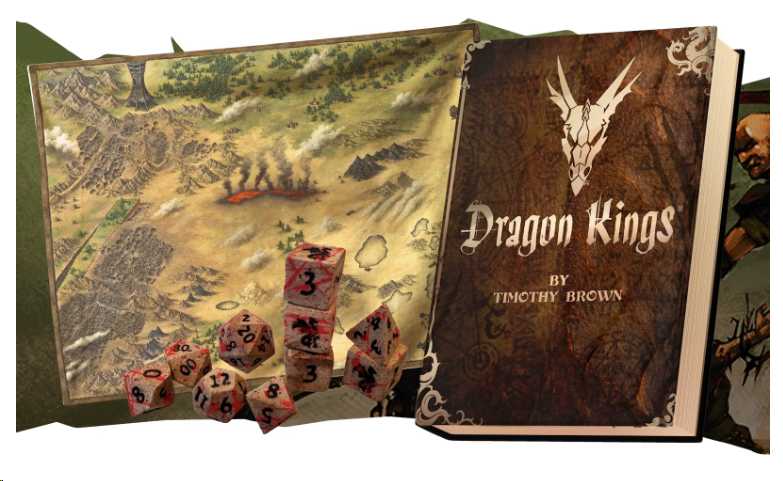
Every D&D player remembers their first set of dice. Mine was a translucent blue plastic seven-piece from a dusty hobby shop, and that d20 rolled three natural 20s in my first session of Lost Mine of Phandelver. I still have it. I still pull it out when a paladin needs a smite to land. That is the thing about this hobby — the gear becomes part of the story.
The trouble is that the dice and accessory market has exploded in the last decade. Sharp-edged resin, hand-poured inclusions, gemstone sets that cost more than the Player’s Handbook, metal dice in every finish from antique copper to gunmetal rainbow. Then come the trays, towers, vaults, mats, mini storage, DM screens, and spell card decks. Some of it genuinely changes how you play. Some of it is just shiny.
This guide is where we have collected everything we have written on the subject — what to actually look for in your first real set, why sharp-edged dice roll differently than tumbled ones, when metal is worth the weight and when it just chews up your table, how to spot a balanced die from a pretty paperweight, and how to care for resin so it does not yellow on you in two years. There are deep dives on dice trays, towers, and the gear that earns its spot in your bag versus the stuff that lives in a drawer.
Start wherever your next purchase is taking you. The links below go deep.
Pick up a ceramic die and you feel it before you understand it — the cool weight in your palm, the slight chatter as it rolls, the satisfying clack against a wooden table. That sensation is exactly what dice enthusiasts come to our booth chasing, and the one word we hear over and over is HEFT! These folks are a special breed of tabletop gamer. They aren’t just rolling to hit; they’re collectors, tactile thinkers, people who notice the difference between a hollow plastic tumble and the dense, deliberate roll of a fired ceramic die. At the Crit Hit Ceramics booth at conventions, we love watching dice enthusiasts pick up a single d20, weigh it, roll it across their palm, then immediately ask about the firing process. They want stories. They want to know what makes each set unique, and they almost always leave with more than one set.
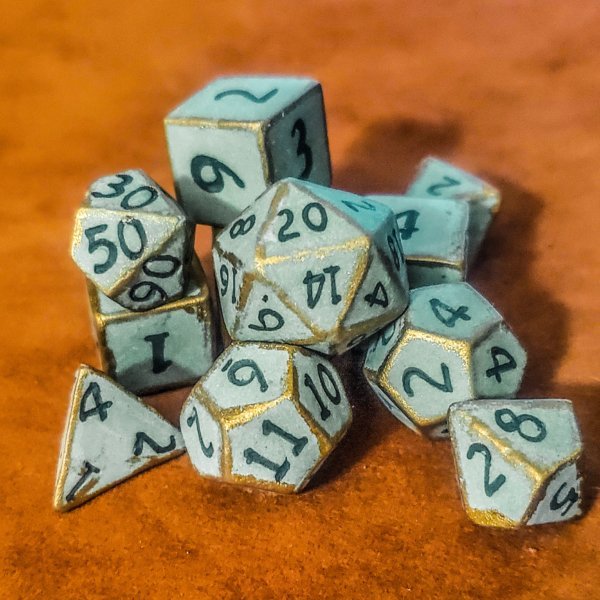
Dice enthusiasts gravitate toward sets with character — something they haven’t seen in every other dice bag at the table. They love bold glaze work, unusual color pairings, and sets that show the marks of being handmade. Our Gold Caged Forgotten Forest Ceramic Dice Set set tends to be a favorite because of its layered glaze depth, and the Pharaoh's Sandstorm Ceramic Dice Set catches their eye for the striking number contrast and one-of-a-kind finish.
Featured Dice for D&D Dice & Gear Players
Hand-picked ceramic dice sets from Crit Hit Ceramics that complement D&D Dice & Gear characters at the table.
Coming Soon
Gold Caged Forgotten Forest Ceramic Dice Set
The Forgotten Forest base — natural-green hand-pigmented English porcelain — with hand-painted gold edging on every face. A premium h…
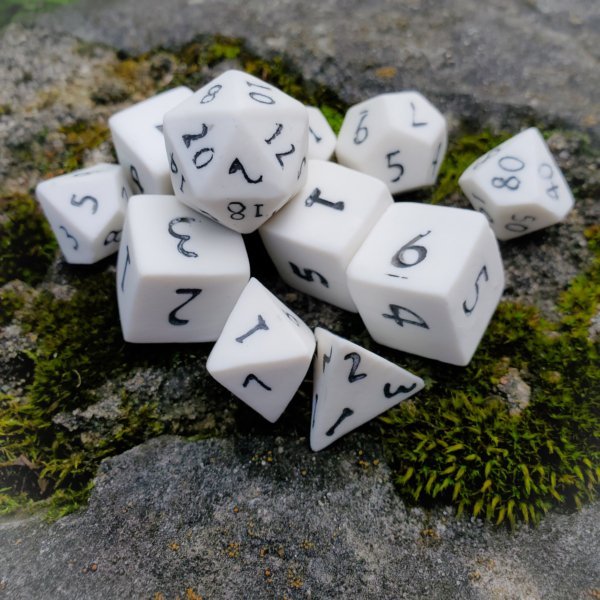
Skeleton Ceramic Dice Set
Unpigmented English porcelain — the natural color of the clay — finished with bold black numerals. A handmade ceramic dice set for cl…
Coming Soon
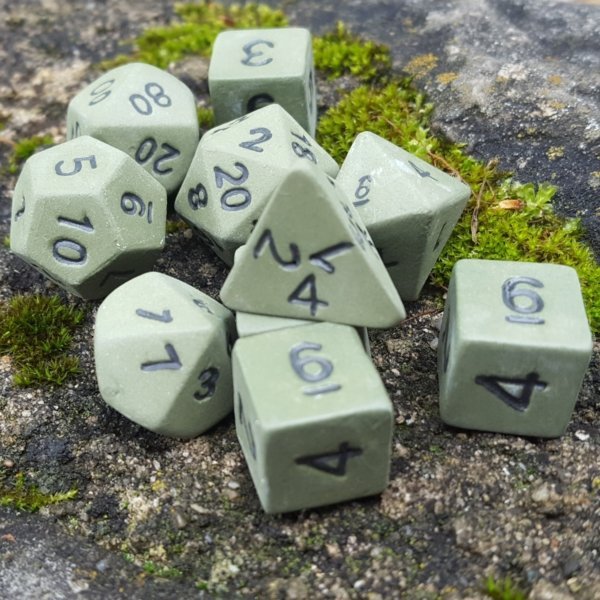
Forgotten Forest Ceramic Dice Set
Deep, mossy green hand-pigmented English porcelain with bold black numbering. A handmade ceramic dice set for druids, wood elves, and fey…
.hub-featured-products { background:#faf7f0; border:1px solid #d4c8a8; border-radius:6px; padding:1.5em 2em; margin:2.5em 0; }
.hub-featured-products h2 { border:none !important; margin-top:0 !important; color:#5c3a1f; font-size:1.5em; padding-bottom:0 !important; }
.hub-featured-intro { color:#6a5a3c; margin-bottom:1.5em; font-style:italic; }
.hub-product-grid { display:grid; grid-template-columns:repeat(auto-fit, minmax(250px, 1fr)); gap:1.5em; }
.hub-product-card { background:white; border:1px solid #e3d7b8; border-radius:4px; overflow:hidden; transition:box-shadow 0.2s; }
.hub-product-card:hover { box-shadow:0 4px 12px rgba(0,0,0,0.1); }
.hub-product-image { display:block; padding:1em; background:#fafafa; position:relative; }
.hub-product-image img { width:100%; height:auto; display:block; }
.hub-stock-badge { position:absolute; top:0.6em; right:0.6em; background:#8B4513; color:white; padding:0.3em 0.7em; border-radius:3px; font-size:0.75em; font-weight:600; }
.hub-product-info { padding:0 1.2em 1.2em 1.2em; }
.hub-product-info h4 { font-size:1.05em; margin:0.5em 0 0.3em 0; line-height:1.3; }
.hub-product-info h4 a { color:#5c3a1f; text-decoration:none; }
.hub-product-info h4 a:hover { text-decoration:underline; }
.hub-product-price { color:#8B4513; font-weight:700; font-size:1.15em; margin:0.3em 0; }
.hub-product-desc { font-size:0.9em; color:#666; line-height:1.4; margin:0.5em 0 1em 0; min-height:3.6em; }
.hub-product-cart { display:inline-block; background:#8B4513; color:white !important; padding:0.6em 1.2em; border-radius:4px; text-decoration:none !important; font-weight:600; font-size:0.9em; transition:background 0.2s; }
.hub-product-cart:hover { background:#6b3410; }
.hub-shop-all { color:#8B4513; font-weight:600; text-decoration:none; }
.hub-shop-all:hover { text-decoration:underline; }
.hub-featured-cta { text-align:center; margin:1.5em 0 0 0; }
Choosing Your First Dice Set
Every D&D player needs the same seven dice: d4, d6, d8, d10, d% (percentile d10), d12, and d20. That’s it. One standard polyhedral set gets you through character creation, your first session, and probably your first campaign arc. Don’t overthink it.
That said, there’s one upgrade worth making immediately: get a second d20. Advantage and disadvantage are core 5e mechanics, and rolling two d20s simultaneously is faster, more satisfying, and prevents the “wait, which roll counts?” confusion of re-rolling the same die. Some sets ship with two d20s built in. If yours doesn’t, grab a single replacement d20 in a contrasting color.
What you actually need:
- One 7-die polyhedral set (legible numbers, readable at arm’s length)
- A second d20 in a different color
- A small bag or tray so dice don’t vanish into couch cushions
Nice to have, not essential: extra d6s for sneak attack, fireball, and other dice-pool spells; a dedicated dice tray to protect your table (and your DM’s screen); a second full set in a different color for tracking different damage types on the same attack.
For your first set, start with plastic acrylic dice. They’re cheap, readable, well-balanced for the price, and replaceable when one inevitably rolls into a heating vent. Look for sharp edges (sharp-edged dice look gorgeous but roll harder), clearly inked numbers, and a 6 or 9 with a dot or underline so you don’t argue about orientation mid-combat. For a deeper breakdown of what separates a $10 set from a $40 set, our D&D dice brands comparison covers what actually matters.
When to upgrade: after you’ve played 5–10 sessions and know this hobby is sticking. At that point, your taste will be clearer. Some players go for metal sets for heft and sound (just use a tray—they’ll chew up wood tables). Others chase gemstone dice for the aesthetic, though balance varies wildly. If sustainability matters to you, there are solid eco-friendly dice options using plant-based resins and recycled materials.
Bottom line: buy one good plastic set, add a second d20, play the game. Upgrade when you know what you want, not before. And once you’re ready to round out your kit, check our guide to essential D&D accessories for new players.
Ceramic Dice: Our Specialty at Crit Hit Ceramics
We make ceramic dice. That’s our whole thing. After years of throwing clay, refining molds, and rolling thousands of test sets across battle maps, here’s what we’ve learned: ceramic dice occupy a category that resin, metal, and acrylic simply can’t touch.
The most immediate difference is the sound. Resin dice clack. Metal dice clang (and gouge your table). Ceramic dice make a deeper, almost musical tumble across wood — a sound closer to mahjong tiles than plastic. Players notice it within the first roll. DMs notice it when they don’t have to wince every time someone throws a d20 against a varnished oak surface.
Then there’s weight and balance. Ceramic sits heavier than resin but lighter than metal, which puts it in a sweet spot for rolling behavior. The dice tumble longer, settle naturally, and feel substantial in the hand without being a hazard. Because we fire each die individually and finish them by hand, we can control the density and balance in ways mass-produced resin pours can’t match. If you want the full breakdown on what to look for, our guide on materials, balance, and aesthetics covers it in detail.
Aesthetically, ceramic gives us things other materials don’t:
- Real glazes — depth, crackle effects, reactive colors, and finishes that shift with light
- Earth-based materials — clay, mineral pigments, and kiln firing instead of petroleum resins (more on that in our eco-friendly dice guide)
- Genuine one-of-a-kind variation — no two glaze pulls are identical
Our process is slow on purpose. Each set at Crit Hit Ceramics goes through forming, bisque firing, glazing, glaze firing, and hand-inking the numerals. We’ve had pieces crack in the kiln, glazes pool wrong, numerals smudge. Every failure taught us something — which clay bodies hold edges sharpest, which glazes won’t pit, how long a d20 needs to cure before it sees a dice tray. That accumulated knowledge is why our premium sets roll the way they do.
Ceramic isn’t the right choice for every player. If you want twenty identical sets for a convention giveaway, bulk resin makes more sense. But if you want dice that feel like an heirloom — something you’d hand down with your old Player’s Handbook — that’s what we make.
Other Dice Materials Compared
Ceramic isn’t the only game in town. Once you start collecting, you’ll inevitably end up with a drawer full of mixed materials — and each one has a personality at the table. Here’s the honest breakdown.
Metal dice are the showstoppers. They land with that satisfying thunk that announces a crit before anyone reads the number. They’re durable enough to outlive your character, your campaign, and probably your DM screen. The catch? They’re loud, heavy, and they will absolutely chip a nice wooden table if you roll like a barbarian. A full set can weigh more than four times a plastic equivalent, which matters when you’re hauling gear to game night. They also tend to run $40–$120 per set. If you’re curious whether the investment pays off, this breakdown on metal RPG dice value is worth a read, and this piece on weight and balance covers the physical quirks.
Gemstone dice are pure luxury — amethyst, tiger’s eye, bloodstone, labradorite. They photograph beautifully and feel incredible in hand. But they come with real tradeoffs:
- Fragility: Drop a fluorite d20 on tile and you’re picking up dust.
- Balance issues: Natural stone has inclusions and density variations, which can affect roll distribution.
- Cost: Quality sets run $80–$300+.
If you’re considering a set, this guide on what to know before buying gemstone dice covers material hardness and what to avoid. For deeper detail on actual gaming performance, this companion piece is solid.
Resin dice are where the creative explosion lives. Inclusions, glitter, suspended miniatures, sharp-edge cuts, swirling galaxies — if you can imagine it, someone on Etsy has poured it. Resin is light, quiet enough to roll late at night, and cheap to produce, which is why indie makers gravitate toward it. The downsides: edges can dull over time, some cheaper sets have bubbles or off-center cores that wreck balance, and resin isn’t exactly eco-friendly (worth reading this take on sustainable options).
Wooden dice are the quiet contemplatives of the dice world. They’re whisper-soft on the table, feather-light, and have a warm tactile quality that pairs nicely with druid and ranger characters. The honest downside: numbers wear over time, especially on lighter woods, and humidity can warp them. They’re a vibe choice, not a workhorse.
For a deeper comparison between the two most-debated materials, metal vs. plastic is a useful starting point.
Dice Sets by Character Theme
Matching your dice to your character isn’t just aesthetic — it’s a small ritual that pulls you deeper into the role. When your Paladin swears their oath and you scoop up a handful of white-and-gold d20s, the table feels it. Here’s how to theme dice around four of the most popular classes, with notes on what actually works at the table versus what just photographs well.
Paladins (White & Gold): The classic divine champion palette. Look for translucent white or pearl-finish resin with gold ink and metallic gold flecks suspended inside — they catch candlelight beautifully during oath moments. Solid metal dice in brushed gold or polished brass also nail the holy-warrior vibe, though they hit hard, so use a tray. Avoid pure white with white ink; you’ll squint reading your Divine Smite damage every time. If you want extra punch, hunt for sets with a celestial or sunburst d20 design.
Druids (Earthy & Green): This is where themed dice really sing. Mossy greens, mushroom browns, amber, and bone-white all work — the goal is “found in a forest.” Real inclusions like dried flowers, leaves, or moss embedded in resin are increasingly common and absolutely worth the premium for a Circle of the Land player. Avoid anything too polished or uniform; druid dice should look a little wild. See Choosing Themed Dice Sets for Your D&D Campaign for more on matching aesthetic to character backstory.
Warlocks (Dark & Purple): Deep eldritch purples, black with iridescent shimmer, blood-red ink, smoke effects. Sharp-edged resin dice photograph incredibly well in these palettes and feel appropriately ominous. For a Hexblade or Fiend patron, look for:
- Black resin with purple/red swirls and silver ink
- Sharp-edge dice with foil “veins” running through them
- Sets featuring sigils or runes on the d20
Sorcerers (Elemental Colors): Sorcerers are the most flexible — match your origin. Draconic Bloodline players pick the color of their ancestor (icy blue, brass yellow, copper-green). Wild Magic? Get a chaotic galaxy or rainbow set. Storm Sorcery loves stormy grays with lightning-blue ink. Check the Sorcerer class hub for origin breakdowns, then theme accordingly.
If you’re building a collection rather than a single set, Why Themed Dice Sets Actually Matter at Your Table and Unique D&D Dice Sets Worth Adding are both worth reading before you drop money on your next character.
Dice Care & Maintenance
Your dice are tools, but the good ones — ceramic, gemstone, hand-poured resin — are also small pieces of art. Treat them like it. A $60 set of obsidian d20s doesn’t survive being chucked across a basement onto concrete, and that gorgeous ceramic set will chip if you roll it like you’re trying to break the table. The good news: dice maintenance is mostly common sense and about ninety seconds of effort per month.
Cleaning ceramic and resin dice is straightforward. Use a soft microfiber cloth, occasionally dampened with water, and wipe down the faces and edges. Inked numbers can fade over time from skin oils and Mountain Dew residue — that’s just physics. For deeper grime, a soft-bristled toothbrush works wonders on textured faces. What you should never do:
- Soak dice in water, alcohol, or any solvent (resin warps, inks bleed, gemstone settings loosen)
- Use abrasive cleaners, polishing compounds, or paper towels (micro-scratches dull the finish)
- Leave dice in direct sunlight or a hot car — resin yellows and warps faster than you’d think
For a full breakdown by material — because metal, gemstone, ceramic, and resin all have different needs — see How To Care For D&D Dice By Material Type. Gemstone dice especially deserve special attention; check this gemstone guide for why some stones (like fluorite) are genuinely fragile.
Rolling surface matters more than people admit. A dice tray with a felt, neoprene, or leather bottom is the single biggest upgrade you can make for dice longevity. Hardwood tables, glass, and stone battle maps are dice killers. If your table doesn’t have one, get one — your collection will thank you in five years.
Storage best practices:
- Individual padded compartments for prized sets — not a chaotic pouch where dice grind against each other
- Keep storage cool and dry; avoid attics, garages, and windowsills
- Separate metal dice from softer materials — metal will absolutely scar ceramic and resin
If you’re serious about a growing collection, invest in a proper care kit. This guide to dice care kits covers what’s actually worth buying versus what’s overpriced fluff. And for the bigger picture on managing a sprawling hoard, How to Care for Your D&D Dice Collection is the deep dive. Take care of them, and they’ll roll nat 20s (or at least look beautiful failing to) for decades.
Other Gaming Accessories
Dice get the spotlight, but the gear surrounding them shapes every session. Here’s an honest take on what’s worth your gold and what’s just table clutter.
Dice trays are non-negotiable. If you buy one accessory after your first set, make it a tray. They protect your table, your dice, and your DM’s sanity when a stray d20 launches into the chip bowl. Leather and felt trays roll quietly; ceramic and wood trays roll beautifully but louder. For premium sets — especially gemstone or metal dice that can chip finishes and dent wood — a tray isn’t optional, it’s insurance. Read more on why dice trays matter.
Dice towers are more divisive. They eliminate accusations of cocked dice and fudged rolls, which matters in suspicious party dynamics or competitive play. Downsides: they’re slow, they take up real estate, and they kill the tactile joy of actually rolling. Verdict — great for DMs running deadly combats behind a screen, overkill for casual home games.
Battlemats are where 5e tactical combat lives or dies. Your options:
- Vinyl wet-erase mats — the Chessex standard. Cheap, durable, forgiving. Buy one.
- Neoprene mouse-pad style mats — gorgeous printed terrain, but you’re locked into one environment.
- Dry-erase tiles — modular, but the seams drive perfectionists mad.
If your group uses theater-of-the-mind, skip this entirely. If you run grid-based combat, a 24″x36″ wet-erase mat pays for itself by session three.
Miniature trays and storage matter once your mini collection breaks twenty figures. Magnetic foam-lined cases beat the “ziploc bag in a shoebox” approach by miles — broken sword arms and bent spears are a tax on disorganization. Painted minis especially deserve dedicated foam.
GM screens are personal. The cardboard WotC screens have useful reference charts but flop over if you breathe wrong. Premium wooden or customizable screens (with insertable cheat sheets) are the move if you DM regularly. Pick one with the rules you forget — conditions, cover, improvised damage — not generic charts you’ll never read.
What to skip: dice jails (a gimmick), dice-shaped storage boxes that don’t actually protect dice, and any “DM kit” bundle that pads the price with junk you wouldn’t buy separately. If you’re building a serious collection, invest in real storage — a proper dice display case beats ten novelty pouches.
Frequently Asked Questions
How many dice do I actually need?
One full polyhedral set (d4, d6, d8, d10, d12, d20, and percentile d10) covers every roll in 5e. However, most players quickly want 4-8 d6s for fireballs, sneak attack, and healing spells, plus extra d20s for advantage rolls. A practical starting loadout: one full set, eight d6s, and four d8s. Casters slinging higher-level spells should add more d6s and d10s. DMs need significantly more—plan for 10+ d6s minimum.
Are expensive dice worth it?
It depends on what you’re paying for. Premium metal, sharp-edged resin, and gemstone dice ($30-150) feel substantial and look gorgeous but don’t roll “better” than $10 plastic sets. Hand-inked artisan dice support small makers and offer unique designs. What’s genuinely worth paying for: balanced dice from reputable manufacturers (Chessex, Gamescience, Dispel), sharp-edged resin for legibility, and metal sets if you enjoy the weight. Skip cheap bulk dice with visible casting flaws—they roll inconsistently.
What dice should a Dungeon Master use?
DMs need volume and variety. Stock at least 10 d6s (for fireballs and monster damage), 6 d8s, 6 d10s, and 4-5 d20s for handling multiple monsters in initiative. Get a distinct “DM set” in a unique color so your dice never mix with players’. Some DMs prefer rolling in the open with sharp-edged dice for credibility; others use a DM screen. Bonus tip: keep a separate d20 for NPC saves so you’re not constantly recalling which roll was which.
Are dice trays necessary?
Not strictly, but they solve real problems. Trays contain rolls (no more dice flying into someone’s beer), protect tables from metal dice, dampen noise in apartments, and prevent the eternal “did that die fall off the edge?” debate. A good leather or felt-lined tray runs $15-40. For metal dice especially, a tray is essential—dropping a metal d20 on a hardwood table will leave dents. Folding hex trays travel well for game nights away from home.
How do I care for ceramic dice?
Ceramic dice are gorgeous but fragile—treat them like pottery. Always roll them in a felt-lined or leather tray; rolling on hard surfaces causes chips and cracks. Never mix them with metal dice in storage, as the metal will damage the glaze. Store ceramics in padded compartments or individual pouches. Clean with a soft, slightly damp cloth—never soak them. If a die chips, retire it from rolling rotation. Drops onto tile or stone floors are usually fatal.
Can I use the same dice for different characters?
Absolutely—dice don’t care which character sheet they serve. That said, many players assign dedicated sets to characters for thematic reasons: blood-red dice for a barbarian, deep blue for a wizard, bone-white for a cleric. It deepens immersion and creates a tangible connection to the character. Some players also retire “cursed” dice that consistently roll poorly for a specific PC. Practically, having multiple sets just means less digging through your bag mid-combat to find that one d4.
Browse All Content
Our complete library:
- Finding Quality D&D Dice: What Makes a Set Worth Buying
- Why Metal D&D Dice Deserve Their Place at Your Table
- Gemstone Dice for D&D: Material Quality and Gaming Performance
- Why Every D&D Table Needs a Dice Rolling Tray
- Essential Accessories for RPG Miniatures
- How to Build a D&D Dice Collection Worth Rolling
- Understanding D&D Dice: The Complete Polyhedral Set Guide
- Metal Dice Sets: Weight, Balance, and Table Impact
- Why Dice Rolling Trays Matter for Your TTRPG Table
- Custom D&D Accessories: What Actually Matters at the Table
- How to Choose D&D Dice Sets That Match Your Play Style
- Gemstone Dice for D&D: Materials, Balance, and What to Know Before You Buy
- Essential D&D Accessories for New Players: What You Actually Need
- Metal RPG Dice: Are They Worth Your Gold?
- What You Need to Know About D&D Dice Subscription Boxes
- What Makes D&D Dice Sets Unique and How to Choose Yours
- Best RPG Miniatures and Dice Bundles for Your Campaign
- The Case for Specialty Dice: When Standard Polyhedrals Aren't Enough
- D&D Dice Storage: How to Organize and Protect Your Collection
- How to Choose D&D Dice as Gifts for Players
- Best D&D Gifts for Players and Dungeon Masters
- How to Choose the Right Dice Tray for Your Gaming Table
- Why Metal Dice Changed Tabletop Gaming Forever
- How to Buy Bulk D&D Dice: Quality, Pricing, and What to Look For
- What Makes a Great D&D Dice Set: Materials, Balance, and Aesthetics
- Eco-Friendly D&D Dice: Materials, Options, and What Actually Matters
- How Ceramic Tabletop Accessories Enhance Your D&D Sessions
- What to Expect from a D&D Dice Subscription Service
- How to Maintain Your D&D Dice Collection
- RPG Dice Comparison: Which Type Belongs at Your Table?
- The Evolution of D&D Dice: What's Next for Polyhedral Gaming
- Best D&D Dice for Kids: Choosing Safe, Fun Dice Sets
- Custom Engraved D&D Dice: What You Need to Know Before You Buy
- Sustainable D&D Dice: What Actually Makes Them Eco-Friendly
- Custom D&D Dice for Memorable Gaming Moments
- Metal D&D Dice Sets: What Actually Matters When You're Buying
- Sustainable Gaming: Building an Eco-Conscious RPG Table
- How to Maintain Your Dice With Proper Care Kits
- Metal vs Plastic D&D Dice: Making the Right Choice
- Choosing Gemstone Dice for Your D&D Table
- 10 D&D Gift Sets Worth Giving in 2024
- What Makes Premium D&D Dice Worth Collecting
- Sustainable D&D Accessories: Real Options for Eco-Conscious Gaming
- Choosing Themed Dice Sets for Your D&D Campaign
- D&D Dice Brands Comparison: What Actually Matters When Choosing Dice
- D&D Gift Ideas That Actually Matter to Players
- How to Choose Bulk D&D Dice Suppliers
- Essential D&D Accessories That Actually Improve Your Game
- Why Buying Dice in Bulk Makes Sense for D&D Groups
- Custom D&D Dice as Gifts: What Actually Makes Them Worth It
- Sustainable Dice Materials: What Actually Makes D&D Dice Eco-Friendly
- Custom D&D Dice as Corporate Gifts: A Practical Guide
- D&D Dice Comparison: Materials, Styles, and What Actually Matters
- What to Expect from a D&D Dice Subscription Box
- Custom D&D Dice: Finding Your Perfect Set
- Understanding D&D Dice: What Every New Player Needs to Know
- How to Care for Your D&D Dice Collection
- Sustainable Dice Materials for D&D: What Actually Works
- 10 Unique D&D Dice Designs Worth Adding to Your Collection
- Why Custom Dice Make Exceptional Gifts for Tabletop Gamers
- How to Buy Bulk D&D Dice for Your Gaming Group
- Gift Ideas for D&D Players Who Have Everything
- How D&D Dice Subscriptions Work: What Players Need to Know
- Custom D&D Dice Engraving: What You Need to Know
- Gift Ideas for D&D Players: Beyond the Dice Bag
- How to Choose Quality D&D Dice Sets
- D&D Dice Subscriptions: What They Are and Who They're For
- Best D&D Dice Designs for Modern Campaigns
- Why Themed Dice Sets Actually Matter at Your Table
- How To Care For D&D Dice By Material Type
- Unique D&D Dice Sets Worth Adding to Your Collection
- Are Dice Subscriptions Worth It for D&D Players?
- Holiday D&D Dice: Choosing Festive Sets for Your Gaming Table
- Best D&D Dice Subscription Boxes: What to Look For in 2025
- Custom D&D Dice: Why Personalized Dice Sets Matter
- Sustainable Gaming: D&D Dice Materials and Environmental Impact
- D&D Dice Subscription Boxes: What's Worth Your Money in 2025
- How to Care for Your D&D Dice: Cleaning, Storage, and Maintenance
- What Dice Designs Actually Matter at Your Table
- Handcrafted Ceramic Dice: Why Material Matters for Your D&D Game
- Essential D&D Equipment: What Every Adventurer Actually Needs
- How to Source D&D Products for Your Gaming Store
- Cat's Eye Dice: Understanding Chatoyant Gemstone Dice for D&D
- Why Dice Matter in Dungeons & Dragons
- How to Choose D&D Dice That Match Your Character and Playstyle
- Are Ceramic Dice Worth the Investment?