
The Artificer is the weirdest full caster in 5e, and I mean that as a compliment. You’re a half-caster who prepares spells like a Cleric, infuses mundane gear into magic items like nobody else in the game, and casts spells through a crossbow or a wrench if you feel like it. Mechanically, you’re filling the gap between a Wizard and a Rogue with a soldering iron in your hand. Thematically, you’re Iron Man, Q from Bond, or that one player who reads every magic item description twice.
The catch? Artificer asks more of you at session zero and at every level-up than almost any other class. Infusions need to be planned around your party, not just your character. Your spell list is short and idiosyncratic—Faerie Fire, Catapult, Web, and Sanctuary are doing a lot of heavy lifting, and your DM may not know what to do with Homunculus Servant or the Replicate Magic Item infusion at level 6. Subclass choice locks in your entire combat identity: Armorer wants to be in melee, Artillerist wants a sightline, Battle Smith wants a steel defender that actually survives, and Alchemist wants… patience.
This hub pulls together every Artificer resource we’ve put out—subclass breakdowns, infusion rankings, multiclass math, level-by-level build guides, and the gritty answers to questions like “is Repeating Shot still the best infusion in the game?” Start wherever your next character needs you to start.
Artificer players are the ones who lean over the booth and start asking about the kiln temperatures, the clay bodies, and whether we ever experiment with metallic glazes. Honestly, we love these conversations because they get just as nerdy about process as we do about polyhedrals. The single word we hear over and over from Artificer fans is TINKER! These players are drawn to the class because it lets them invent, modify, and problem-solve their way through encounters that other classes might just hack through. We notice Artificer players tend to be the engineers, programmers, makers, and hobbyists at the table. They like the flexibility of infusions, the gadgetry of magical items they crafted themselves, and the satisfaction of a plan that comes together because they prepared the right tool three sessions ago. Their characters are clever, curious, and a little eccentric, just like the players running them.
When it comes to dice, Artificer players gravitate toward sets that look like something pulled off a workbench or out of an alchemist’s lab. They love dice with visible texture, mixed materials, or unusual color combinations that feel engineered rather than purely decorative. Our Runic Forgotten Forest Ceramic Dice Set set tends to be a favorite for the brass-and-bronze tinkerer aesthetic, and the Ancient Scroll Ceramic Dice Set set gets snatched up by players building a more arcane, experimental character.
Featured Dice for Artificer Players
Hand-picked ceramic dice sets from Crit Hit Ceramics that complement Artificer characters at the table.
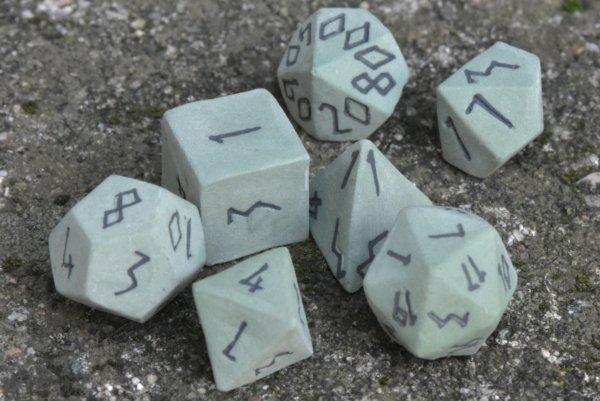
Runic Forgotten Forest Ceramic Dice Set
The Forgotten Forest base — natural-green hand-pigmented English porcelain — finished with our signature runic-style numbering. A pre…
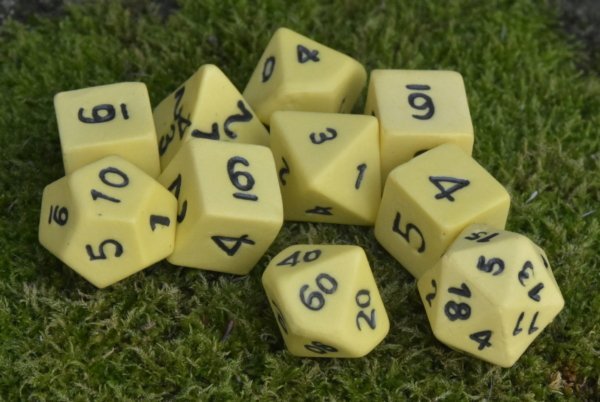
Ancient Scroll Ceramic Dice Set
Aged parchment in dice form. Hand-pigmented English porcelain in warm, weathered yellow with bold black numbering. A handmade ceramic dic…

Coming Soon
Dawnblade Ceramic Dice Set
Bright blue hand-pigmented English porcelain with crisp white numbering. A handmade ceramic dice set for dawn paladins, light clerics, an…
Artificer Core Mechanics
The Artificer is D&D 5e’s tinkerer-engineer, channeling magic through tools, gadgets, and infused gear rather than raw spellcraft. With a d8 hit die, Intelligence as the primary stat, and proficiency in Constitution and Intelligence saves, the class is surprisingly durable for a caster—those Con saves protect concentration, while Int saves are rare and valuable.
For new players, here’s what defines the class:
- Magical Tinkering (1st level) lets you imbue tiny objects with minor magical effects—lights, messages, sounds, scents. It’s flavor-rich but mechanically modest.
- Spellcasting uses Intelligence and follows a half-caster progression (spell slots scale like a Paladin or Ranger), but spells are prepared, not known, giving you daily flexibility most half-casters lack.
- Infusions (2nd level) are the heart of the class. You learn a list of magic-item recipes and apply a limited number each long rest to mundane gear, creating permanent-feeling magic items for yourself and your party.
Experienced players should note several surprises. The Artificer is the only Intelligence-based half-caster in 5e, meaning Wizard scrolls, certain magic items, and Int-skill synergies hit differently here. Artificers can also cast spells using a held tool or infused item as their spellcasting focus—no component pouch required, and infused weapons double as foci.
Tool Expertise (6th level) doubles your proficiency bonus on all tools you’re proficient with, making the Artificer the undisputed king of skill challenges involving craft, repair, or tinkering. Combined with broad tool proficiencies from 1st level, you become the party’s universal specialist.
Capping the class, Soul of Artifice (20th level) grants a +1 bonus to all saving throws per active infusion and lets you drop to 1 HP instead of 0 by ending an infusion—a fitting capstone for a character whose soul is literally bound to their creations.
Choosing Your Artificer Specialist
At 3rd level, every Artificer commits to a Specialist path that defines their inventing style, combat role, and signature gadgets. Each of the four official subclasses pulls the class in a wildly different direction, from frontline tank to back-line blaster, so picking the right one is the single biggest decision you’ll make. If you want a broader comparison before diving in, check out our ranking of every Artificer Specialist or our guide to choosing the best subclass for your table.
Alchemist (Tasha’s Cauldron of Everything) — The classic mad-scientist build, the Alchemist brews Experimental Elixirs each long rest that grant healing, flight, resistance, or transformation. Mechanically, they bolt bonus healing and damage onto every acid, fire, necrotic, or poison spell they cast, making them the party’s premier support-caster Artificer.
Artillerist (Tasha’s Cauldron of Everything) — If you’ve ever wanted to plop down a magical turret mid-fight, this is your subclass. The Eldritch Cannon comes in Flamethrower, Force Ballista, or Protector configurations, giving you a portable AoE, a single-target sniper, or a healing pylon. Combined with bonus damage on cantrips and the ability to imbue a wand or staff into an Arcane Firearm, the Artillerist is a true blaster.
Battle Smith (Tasha’s Cauldron of Everything) — Part beast-master, part gish, the Battle Smith bonds with a Steel Defender — a loyal mechanical companion that flanks, soaks hits, and reacts to threats. You also get Extra Attack and use Intelligence for your weapon strikes via a magical Battle-Ready infusion, making this the most consistent martial Artificer in the game.
Armorer (Tasha’s revised) — The Armorer integrates their tools directly into a suit of magical power armor, choosing between the heavily-armored Guardian model (gauntlet melee, taunt aura) or the stealthy Infiltrator model (lightning ranged attacks, advantage on stealth). It’s thematically the most striking subclass and pairs beautifully with the Warforged race — see our dedicated Warforged Armorer build guide for an optimized walkthrough.
DMs juggling these wildly different power profiles should also read our guide to balancing Artificer subclasses at the table.
Best Race Combinations for Artificer
The Artificer thrives on Intelligence, so races offering INT bonuses, durability, or utility magic create the strongest mechanical synergies. Here are the top race pairings to consider for your next inventor.
- Warforged: The undisputed king of Artificer races. +2 CON, +1 to any (INT), natural AC bonus, and immunity to disease make them peerless tinkerers. Dive deeper with this Warforged Artificer build guide or explore why this combo works so well.
- Warforged Battle Smith: Constructs commanding constructs—thematic perfection plus a tanky frontline INT-caster. See the full Battle Smith build.
- Warforged Armorer: Living armor wearing magical armor amplifies AC stacking and infusion synergy. Check the Armorer guide.
- High Elf: +1 INT, a free wizard cantrip (hello, Booming Blade), and perception proficiency give Artificers extra cantrip flexibility. Read the High Elf Artificer guide.
- Rock Gnome: +2 INT, +1 CON, and the Tinker racial feature is practically a love letter to Artificers. Build one with this Rock Gnome guide.
- Githyanki: +2 STR, +1 INT, plus innate Mage Hand and free martial proficiencies make for a versatile gish. Explore the Githyanki Artificer build.
- Aasimar: Celestial flavor with healing and damage resistance pairs beautifully with Alchemist or Battle Smith support roles. See the Aasimar Artificer guide.
- Tabaxi: Feline Agility and climbing speed compensate for low Artificer mobility, perfect for hit-and-run Armorers. Full breakdown in this Tabaxi guide.
- Fire Genasi: Innate fire spells complement Alchemist and Artillerist damage casters beautifully. Start with this build, then explore elemental infusion synergies.
- Variant Human: A free feat at level 1 (Fey Touched or Telekinetic for INT) accelerates any Artificer subclass into power tier immediately.
- Hobgoblin (Fey’wild): +2 CON, +1 INT, plus innate teleportation, fills the Artificer’s mobility gap perfectly.
- Kobold: Draconic Cry and Pack Tactics turn any Artificer into a reliable battlefield support attacker.
Artificer Build Archetypes
The Artificer’s versatility shines through its subclass options, each enabling a distinct combat role. Whether you want to swing a hammer, sneak through shadows, or rain explosive fire, there’s a build for you. For a complete primer, see How to Build an Artificer in D&D 5e.
1) Battle Smith Gish: Pair your Steel Defender with INT-based weapon attacks for a sturdy frontline duo. Your construct soaks hits and grants reaction attacks, while you swing a magical weapon with Intelligence. Key features: Steel Defender, Battle Ready, Arcane Jolt. Pair with strong infusions and Intelligence synergy for maximum impact.
2) Armorer Guardian Tank: Don heavy Guardian armor with thunder gauntlets that impose disadvantage on attacks against your allies. You become an immovable melee anchor, perfect for protecting squishy casters. Key features: Guardian Armor, Thunder Gauntlets, taunt mechanic. The Warforged Armorer guide is a perfect fit here.
3) Armorer Infiltrator Striker: Use Infiltrator armor’s Lightning Launcher for ranged precision strikes with bonus damage on a target each turn. Stealth-friendly and stylish, this build excels at skirmishing and scouting. Key features: Infiltrator Armor, Lightning Launcher, enhanced stealth. Choose a sneaky background like Urchin or Charlatan.
4) Artillerist Caster: Summon an Eldritch Cannon and lean into spellcasting for a true mage-engineer experience. Your cannon dishes out AoE damage, healing, or force pushes while you cast Fireball and Shatter. Key features: Eldritch Cannon, Arcane Firearm, expanded spells. Boost it further with essential inventions or creative infusion ideas.
Want more power? Explore multiclassing options or run a budget-friendly Artificer campaign.
Combat Tactics & Action Economy
Infusion selection drives Artificer power more than spell choice. Replicate Magic Item priorities at level 2: Bag of Holding (utility and emergency creature disposal—shove an enemy inside is a debated but flavorful trick; mostly it solves logistics), Goggles of Night for any party member lacking darkvision, and Boots of Striding and Springing to give your Steel Defender or melee ally 30-foot jumps and immunity to magical speed reduction. At level 6, Winged Boots and Cloak of Protection become standard upgrades. Always infuse Enhanced Weapon and Enhanced Defense on frontliners—those +1s stack with magic items for action-economy-free buffs.
Battle Smith’s Steel Defender uses your bonus action to command, but it attacks on its own turn. Don’t waste actions babysitting—position it next to spellcasters to trigger Deflect Attack reactions, and let its Repair action heal you mid-fight without burning your spell slots. For more on synergies, see Mastery Through Infusions and Kobold Artificer Tactics.
Concentration spells worth the slot: Faerie Fire (no save bypass for invisibility, advantage for the whole party) and Web (action denial against grouped enemies). Both scale without upcasting.
Hold Flash of Genius for saves against save-or-suck effects (Hold Person, Banishment) and critical attack rolls against squishies—not routine d20s. See Tactical Support builds for prioritization frameworks.
Frequently Asked Questions About Artificers
Best Artificer subclass?
Battle Smith is widely regarded as the strongest Artificer subclass due to its Steel Defender companion, proficiency in martial weapons, and ability to use Intelligence for weapon attacks via the Arcane Jolt feature. However, Armorer (introduced in Tasha’s Cauldron of Everything) is a close second, offering powerful integrated armor models for either tanking or stealth. Artillerist excels at ranged damage with its Eldritch Cannon, while Alchemist remains the weakest mechanically but offers flavorful healing and utility options.
How do Infusions actually work?
Infusions are magical enhancements you imbue into mundane items during a long rest. At 2nd level, you learn 4 infusions and can have 2 active at once, scaling up as you level. You choose which infusions to apply each long rest, allowing flexibility based on the upcoming adventure. Infused items lose their magic if you replace them or die. Some infusions require attunement, counting against your attunement limit, while others (like Enhanced Weapon) do not, making them especially valuable.
Best Artificer race?
Any race with Intelligence bonuses works well, but standouts include Gnomes (especially Rock Gnome) for their INT bonus and tinkering flavor, and Vedalken for their +2 INT and skill versatility. Variant Human is excellent for grabbing the Fey Touched or Telekinetic feat at level 1. With the optional Tasha’s rules allowing you to move ability score bonuses, any race becomes viable. Hobgoblins and Githyanki also synergize thematically and mechanically with Intelligence-based builds.
Artificer vs Wizard for INT casting?
Wizards have a deeper spell list, more spell slots, and reach 9th-level spells, making them stronger pure casters. Artificers, however, are half-casters with built-in martial capability, magic item creation, and infusions that provide permanent equipment bonuses to the party. Artificers shine in versatility and gish playstyles, while Wizards dominate raw magical power. Choose Wizard for spellcasting supremacy; choose Artificer if you want a hybrid character with crafting flavor and party-wide equipment benefits.
What infusions should I pick?
Essential picks include Enhanced Weapon and Enhanced Defense for permanent +1 bonuses without using attunement slots. Replicate Magic Item is incredibly versatile, letting you create items like Bag of Holding, Goggles of Night, or Cloak of Protection. Repeating Shot is fantastic for ranged builds, providing infinite ammunition with a +1 bonus. Boots of the Winding Path and Helm of Awareness become available at higher levels and offer strong tactical options. Tailor your selections to your party’s needs.
Is Artificer good for new players?
Artificer is moderately complex and may overwhelm absolute beginners due to spellcasting, infusion management, and subclass-specific features like cannons or companions. However, players familiar with basic 5e mechanics often find Artificer rewarding because of its flexibility and toolkit nature. Battle Smith is the most beginner-friendly subclass, offering straightforward martial combat alongside a pet. New players should start with simpler classes like Fighter or Champion, then graduate to Artificer once comfortable with action economy and resource management.
Browse All Artificer Content
Our complete library:
By Race Combination (82)
- Mastering Warforged Artificer in D&D 5e: A Guide
- How to Build a High Elf Artificer
- How to Build a Warforged Artificer Battle Smith
- How to Build an Aasimar Artificer in D&D 5e
- How to Build a Warforged Artificer Armorer
- How to Build a Tabaxi Artificer in D&D 5e
- How to Build a Warforged Artificer in D&D 5e
- How to Build a Rock Gnome Artificer in D&D 5e
- Warforged Artificer: Mechanical Synergy for New Players
- Warforged Artificer Synergy: Why This Combo Works
- How to Build a Fire Genasi Artificer
- How to Build a Fire Genasi Artificer in D&D 5e
- Fire Genasi Artificer Build Guide for D&D 5e
- Fire Genasi Artificer: Forging Power in Flames
- Fire Genasi Artificer: Infusions And Elemental Synergies
- Warforged Artificer: Maximum Durability and Utility
- Warforged Artificer: Mechanical Synergy Across All Tiers
- Warforged Artificer: Mechanical Synergy Guide
- How to Build an Artificer: Best Races and Multiclass Options
- Best Races for Artificer in D&D 5e
- Best Races For Artificers: Intelligence Matters Most
- Best Races For Artificers: Intelligence Driven
- Best Races for Artificer: Intelligence Matters Most
- How to Build an Artificer Elf in D&D 5e
- How to Build an Elf Artificer in D&D 5e
- Elf Artificer Builds: Why High Elf Wins
- Elf Artificer: Ancient Magic Meets Arcane Engineering
- Elf Artificer: Bridging Ancient Magic and Artifice
- Elf Artificer: Leveraging Racial Synergies
- Elf Artificer: Weapon Synergy And Arcane Crafting
- Building an Elf Artificer Around Prophecy and Destiny
- How to Build an Artificer Warforged in D&D 5e
- How to Build a Warforged Artificer for Dungeon Crawling
- How to Play a Warforged Artificer in Dungeon Crawls
- How to Play a Firbolg Artificer
- How to Build a Firbolg Artificer
- How to Reconcile Nature and Invention in Your Firbolg Artificer
- How to Build a Kobold Artificer in D&D 5e
- Kobold Artificer: Tactical Cunning Meets Magic
- Kobold Artificer: Pack Tactics and Magic Items
- Warforged Artificer: Thematic Synergy and Mechanical Advantages
- How to Play a Warforged Artificer in D&D 5e
- How to Play a Warforged Artificer in Dungeon Campaigns
- Warforged Artificer: Mechanical Synergy in D&D 5e
- Aasimar Artificer: Bridging Divine and Arcane Power
- Aasimar Artificer: Engineering Divine Purpose
- Aasimar Artificer: Divine Support Meets Mechanical Genius
- Aasimar Artificer Support Build for Battlefield Control
- How to Build an Elf Artificer for a Single-Location Campaign
- Elf Artificer: Why High Elf Works Better Than Expected
- Elf Artificer: Centuries of Magical Innovation
- Artificer Elf Subraces and Subclass Synergies
- Warforged Artificer: Mechanics And Thematic Synergy
- Warforged Artificer Support Builds for Party Play
- Warforged Artificer: Synergies That Shape City Campaigns
- Warforged Artificer: Building Support in D&D Cities
- Kobold Artificer Pack Tactics Synergy Guide
- Kobold Artificer: Building Pack Tactics in Play
- Kobold Artificer: Trading Weakness For Tactical Advantage
- Kobold Artificer: Turning Weakness Into Advantage
- Warforged Artificer Synergies For Exploration Campaigns
- Warforged Artificer Tank Support Hybrid Guide
- Warforged Artificer Synergy In Your Epic Campaign
- How to Play a Warforged Artificer in Combat
- How to Build a Tiefling Artificer in D&D 5e
- Tiefling Artificer: Infernal Innovation and Versatility
- Tiefling Artificers Beyond The Intelligence Problem
- Tiefling Artificer: Infusions Meet Infernal Heritage
- How to Build a Gnome Artificer in D&D 5e
- Rock Gnome Artificer: Perfect Synergy by Design
- How to Build a Half-Elf Artificer in D&D 5e
- Warforged Artificer: Durability Meets Magical Crafting
- Half-Elf Artificer: Versatility and Problem-Solving
- How to Play an Aasimar Artificer in D&D 5e
- How to Build a Deep Gnome Artificer in D&D 5e
- How to Play a Dwarf Artificer in D&D 5e
- Warforged Artificer: Building an Unbreakable Support
- Warforged Artificer: Building The Perfect Magical Construct
- Warforged Artificer Synergy: Durability And Party Support
- Warforged Artificer: Thematic Synergy Meets Mechanics
- Warforged Artificer: Why This Race Class Pairing Works
- Warforged Artificer: Engineering Immortal Constructs
By Artificer Specialist (13)
- How to Play an Artificer: Inventions and Infusions Guide
- How to Design Artificer Inventions in D&D 5e
- Artificer Inventions and Infusions for D&D 5e
- 50 Artificer Invention Ideas for D&D 5e
- How to Build Better Artificer Inventions in D&D 5e
- How to Create Artificer Inventions in D&D 5e
- Artificer Invention Ideas for Your Next D&D Campaign
- Artificer Infusions: Building D&D's Problem-Solver
- Best Artificer Subclass: Ranking Every Specialist
- Best Artificer Subclass for Veteran Players
- How to Choose the Best Artificer Subclass in D&D 5e
- Artificer Subclasses: A DM's Guide to Balancing Innovation at the Table
- How to Build a Warforged Armorer Artificer in D&D 5e
Build Guides & Optimization (9)
- How to Build an Artificer in D&D 5e
- How to Build a Warforged Armorer Artificer
- Artificer Invention Ideas: Creative Infusions for Your D&D Campaign
- Essential Artificer Inventions for Your D&D Campaign
- The Artificer's Edge: Infusions and Intelligence
- How to Run a Budget-Friendly Artificer Campaign
- Best Backgrounds for Artificers in D&D 5e
- How to Multiclass Artificer in D&D 5e
- Artificer Ideals and Personality Traits in D&D 5e
Tactics & Play Style (4)
Other Content (13)
- How to Play an Artificer in D&D 5e
- The Artificer's Role: Spellcaster, Support, And Gadgeteer
- How to Play an Artificer: Invention Ideas and Infusion Strategy
- Artificer Invention Ideas: Building Creative Magical Items in D&D 5e
- How To Create Artificer Inventions Beyond The Rules
- Artificer Inventions: Crafting Creative Magic Items for Your Campaign
- Fire Genasi Artificer: Balancing Chaos And Craft
- Artificer Mechanics: Magic As Science In D&D 5e
- Drow High Magic: Legendary Items and Artifacts in D&D 5e
- The Artificer's Creative Problem-Solving Edge
- Warforged Artificer: Why This Race-Class Synergy Works
- D&D Inventions: Magical Items and Gadgets for Your Campaign
- The Artificer's Infusion System and Core Mechanics