
The Ranger has spent more time on the therapist’s couch than any other 5e class, and for good reason. The 2014 Player’s Handbook version shipped with Favored Enemy and Natural Explorer—two features that ranged from situationally useful to completely worthless depending on what your DM threw at you. Tasha’s Cauldron tried to patch the bleeding with optional class features like Favored Foe and Deft Explorer. Then the 2024 Player’s Handbook rebuilt the chassis entirely, handing you Hunter’s Mark as a baseline feature, Weapon Mastery, and a Conjure Barrage that no longer eats your concentration. If you’ve been burned before, the class deserves another look.
What makes a Ranger worth playing isn’t the half-caster spell list or even the subclass features—it’s that you’re the only character at the table who feels genuinely competent in the wilderness AND in a fight. Hunter’s Mark stacking with Colossus Slayer hits hard. Gloom Stalker opening rounds in the dark are still some of the most lopsided turns in the game. Drakewarden gives you a literal dragon. Beast Master finally works.
That said, the Ranger punishes inattention. Concentration management with Hunter’s Mark is a real skill. Picking the wrong subclass for your campaign’s environment will sting. And if your party already has a Rogue scout and a Druid, you’ll need to think about your niche.
Everything we’ve written on builds, subclasses, spells, multiclassing, and optimization lives here. Pick a thread and pull.
Almost every Ranger player who wanders up to our table starts the conversation by telling us about their animal companion before they even mention their character’s name. It’s always “I have a wolf named Shadow” or “my owl scouts ahead for the party,” and you can tell that bond is the heart of why they love the class. One word sums it up: COMPANION! Ranger players at the Crit Hit Ceramics booth at conventions tend to be thoughtful, observant folks who pay close attention to detail, which makes sense given how much tracking, exploring, and survival is baked into the class. They love the idea of being self-reliant out in the wilderness, the lone scout or the wandering protector of the borderlands. Many of them also gravitate toward the underdog story, finding something romantic about a character who feels more at home in the woods than in a city.
When it comes to dice, Ranger players almost always lean toward earthy tones, mossy greens, deep browns, and stormy grays that feel like they belong in the wild. Forest-inspired sets are a huge hit, and we see lots of hands reaching for our Runic Ancient Oasis Ceramic Dice Set set because of those rich woodland colors. The Runic Arrow Hawk Ceramic Dice Set set is another favorite, with tones that feel like rain-soaked bark and quiet trails through the pines.
Featured Dice for Ranger Players
Hand-picked ceramic dice sets from Crit Hit Ceramics that complement Ranger characters at the table.
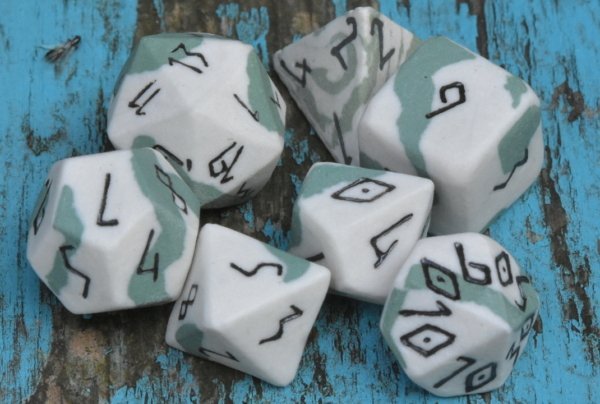
Runic Ancient Oasis Ceramic Dice Set
The Ancient Oasis base — hand-pigmented white and green English porcelain — finished with our signature runic-style numbering. A prem…
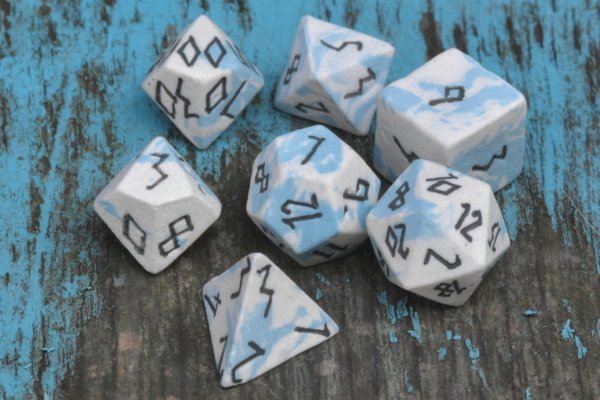
Runic Arrow Hawk Ceramic Dice Set
The Arrow Hawk base — hand-pigmented white and turquoise English porcelain — finished with our signature runic-style numbering. A pre…

Coming Soon
Arrow Hawk Dice Set
Hand-pigmented white and turquoise English porcelain in a soft, atmospheric fusion with bold black numbering. A handmade ceramic dice set…
Ranger Core Mechanics
The Ranger is a d10 Hit Die martial half-caster with Strength and Dexterity saving throw proficiencies. Its primary stats are Dexterity (for attacks, AC, and Stealth) and Wisdom (for spellcasting and Perception). On paper, that’s a sturdy frame — but the Ranger is also the only class in 5e with two competing versions of its core identity.
The PHB Ranger gets Favored Enemy (advantage on tracking and lore checks against one creature type) and Natural Explorer (travel bonuses in a chosen terrain). Both features are situational and depend heavily on your DM’s campaign.
Tasha’s optional features replace these with:
- Favored Foe — concentration-free bonus damage tied to Hunter’s Mark, usable on any creature
- Deft Explorer — expertise in a skill, plus extra languages and movement speed
For most tables, Tasha’s version is simply better and more reliable. Ask your DM before character creation which set is in play; many groups now treat the Tasha’s version as the default Ranger.
Beyond that split, Rangers share a consistent core:
- Spellcasting at 2nd level (half-caster progression, Wisdom-based, prepared from a focused druid/ranger list)
- Fighting Style at 2nd level — Archery is the standard pick for ranged builds, Two-Weapon Fighting or Dueling for melee
- Extra Attack at 5th level, putting Rangers on par with Fighters and Paladins for weapon damage
Hunter’s Mark is the Ranger’s signature spell and the source of most surprises for new players. It adds 1d6 to weapon hits but requires concentration — meaning you cannot stack it with most other ranger spells like Pass Without Trace or Spike Growth. Veteran Rangers know that concentration management, not damage output, is the class’s real puzzle. Choose your spell each turn deliberately.
Choosing Your Ranger Conclave
Your Ranger Conclave (subclass) defines your combat style and flavor far more than your favored enemy ever will. Each one carves out a distinct niche, so pick the one that matches both your party’s needs and the campaign’s terrain. For a broader look at how subclasses interact with your build, see our overview of Ranger strengths and subclass strategies.
Hunter (PHB) is the customizable damage-dealer, letting you pick bonuses at levels 3, 7, 11, and 15 — Colossus Slayer plus Volley is a classic crowd-clearing combo. It’s reliable, flexible, and a strong pick for dungeon-crawling campaigns.
Beast Master (PHB) bonds you to an animal companion, and Tasha’s “Primal Companion” revision finally makes it competitive by giving you a scaling, summonable beast. See our full Beast Master build guide for optimization tips.
Gloom Stalker (XGtE) is the ambush king: extra attack in round one, bonus initiative, darkvision that pierces magical darkness, and the ability to vanish in shadow. It’s arguably the strongest Ranger subclass and shines underground or in any low-light setting.
Horizon Walker (XGtE) channels planar energy with Planar Warrior, converting weapon damage into force and adding bonus dice. With teleport mobility and ethereal step, it’s a planeswalker fantasy with serious single-target punch.
Monster Slayer (XGtE) is the anti-everything specialist, using Hunter’s Sense to reveal resistances and Slayer’s Prey to add reliable damage. It excels against spellcasters and shapeshifters with magic-disrupting features baked in.
Fey Wanderer (TCoE) adds psychic damage to every attack, gives you Charisma-based fey charm, and turns the Ranger into a viable party face. Dive deep with our guides on building a Fey Wanderer, playing one effectively, running them as a social ranger, using them as the party face, and pairing them with familiars and companions.
Swarmkeeper (TCoE) binds you to a swarm of fey spirits that deals bonus damage and shoves enemies around the battlefield. Their later levels grant flight and teleport-style mobility — great for skirmishers.
Drakewarden (FToD) grants a loyal draconic companion that grows from a tiny familiar into a rideable mount, breathing elemental damage and adding flavor to any dragon-themed campaign.
Still deciding? Start with our beginner’s guide to playing a Ranger or our overview of Ranger builds that actually work.
Best Race Combinations for Ranger
Rangers thrive on Dexterity for attacks and AC, with Wisdom fueling spells and Perception. The right race amplifies both, turning a solid class into a battlefield standout. Here are the top pairings to consider:
Wood Elf: The gold standard. +2 Dex, +1 Wis, Mask of the Wild, and 35 ft. speed make this the most mechanically pure Ranger race in the game.
Tabaxi: +2 Dex and Feline Agility double your movement, perfect for skirmishers and scouts. Dive deeper with the Tabaxi Ranger build guide, mobile scout build, feline agility tactics, and tactical positioning tips.
Firbolg: +1 Dex, +2 Wis, plus innate invisibility and Speech of Beast and Leaf make this the ultimate wilderness Ranger. Explore the beginner guide, synergy tips, why this pairing works, stealth mastery, and racial alignment.
Kenku: +2 Dex, +1 Wis, and Expertise-like skill bonuses to Stealth and Perception make them natural trackers. See the Kenku Ranger guide.
Aasimar: +1 Wis (and +2 Cha) supports spellcasting, while radiant damage and healing fill gaps the Ranger can’t. More in the Aasimar Ranger guide.
Goblin: +2 Dex, +1 Con, Fury of the Small, and Nimble Escape create a hit-and-run terror. Details in the Goblin Ranger guide.
Half-Orc: Trades typical Dex synergy for raw melee power with Savage Attacks and Relentless Endurance—ideal for a two-weapon Hunter. See the Half-Orc Ranger guide and melee-focused build.
Hobgoblin: Saving Face turns missed shots into hits when allies are nearby—a fantastic synergy for archery-focused Rangers. Read the Hobgoblin Ranger guide.
Variant Human: A free feat (Sharpshooter or Crossbow Expert) at level 1 makes this the most flexible and damage-forward option for any Ranger archetype.
Lightfoot Halfling: +2 Dex, Lucky, and Naturally Stealthy combine for a resilient archer who can hide behind larger allies.
Ranger Build Archetypes
The Ranger class shines brightest when you lean into a specific playstyle rather than trying to do everything. Picking the right subclass and background combination shapes your character from level one onward.
1) Gloom Stalker Burst: The undisputed king of round-one damage. Dread Ambusher grants an extra attack on your first turn, bonus initiative, and 90-foot darkvision that ignores magical darkness. Pair with Sharpshooter and Crossbow Expert for devastating surprise rounds, especially in dungeons. See our full Ranger build guide for stat priorities.
2) Hunter Horde Breaker: Horde Breaker lets you attack a second creature within 5 feet of your first target, effectively giving you a free extra attack against grouped enemies. Add Volley at level 11 for AoE ranged dominance. Key features: Colossus Slayer for single-target, Multiattack Defense for tankier builds. Check our complete Ranger playstyle guide.
3) Beast Master Drakewarden: Fizban’s Drakewarden finally makes pets viable. Your drake companion uses your bonus action, scales with your proficiency bonus, and grants resistance to a damage type at level 7. With Tasha’s optional features fixing primal companion math, this is the proper pet class Ranger always promised. Browse our optimization traps article to avoid common pitfalls.
4) Fey Wanderer Face: Want Charisma utility without multiclassing into Bard or Paladin? Fey Wanderer adds your Wisdom modifier to Charisma checks, gives Otherworldly Glamour for free expertise-like bonuses, and grants psychic damage on every attack. You become the party’s secondary face while still dealing damage. For background synergy, see Ranger backgrounds that fill skill gaps and our background building guide.
Combat Tactics & Action Economy
Your bonus action is the most contested resource you have. Hunter’s Mark adds 1d6 per hit but eats concentration and your bonus action on cast, plus a bonus action to move it when a target drops. Only mark targets you expect to hit 3+ times—otherwise the spell slot is wasted. Drop it instantly if you need Pass Without Trace, Spike Growth, or Conjure Animals; those spells outscale Mark’s damage in nearly every fight.
Favored Foe (Tasha’s optional class feature) is concentration-free in practice only if you’re not running another concentration spell, and it costs no bonus action to apply—just a hit. Take it over Mark when you want to keep Hunter’s Mark slots for utility, or when you’re already concentrating on Zephyr Strike or Ensnaring Strike.
Sharpshooter is a power budget, not a default. Use the -5/+10 only when your to-hit math (proficiency + Dex + Archery +2 + advantage or Bless) keeps you at 60%+ against the target’s AC. Against AC 17+ without advantage, turn it off.
Spike Growth + Pass Without Trace is the Ranger’s signature lockdown: cast PWT pre-combat, open with Spike Growth across a choke, then Stealth and force enemies to eat 2d4 per 5 feet. For positioning, Deft Explorer (Roving) gives +5 speed, but if you want Cunning Action–style Dash/Disengage as a bonus action, multiclass one level of Rogue—Ranger alone doesn’t grant it.
More tactics: Goblin Ranger Tactics | Ranger Dungeon Crawls | Dungeon Tactics.
Frequently Asked Questions About Rangers
Is Ranger underpowered?
The Ranger had a reputation as one of 5e’s weakest classes at launch, primarily due to situational features like Favored Enemy and Natural Explorer. However, with the optional class features from Tasha’s Cauldron of Everything, the Ranger is now considered solidly mid-to-high tier. With access to spells, two fighting styles, Extra Attack, and powerful subclasses like Gloom Stalker, modern Rangers can compete with Fighters and Paladins in most campaigns.
Best Ranger subclass?
Gloom Stalker is widely regarded as the strongest Ranger subclass, especially for combat-heavy campaigns. It offers an extra attack on the first round, Dexterity-based initiative bonuses, superior darkvision, and invisibility in darkness. Fey Wanderer (Tasha’s) is a close second, adding Charisma to damage and excellent utility. Hunter remains a solid, versatile choice for traditional play, while Swarmkeeper and Horizon Walker offer unique flavor with strong mechanical support.
Should I use Tasha’s optional rules?
Almost universally, yes. The Tasha’s Cauldron of Everything optional features replace weak abilities like Favored Enemy and Natural Explorer with Favored Foe and Deft Explorer, which are far more reliable and useful across diverse campaigns. You also gain access to Spellcasting Focus options and bonus spells. Unless your DM forbids them or you’re playing a wilderness-focused game where the original features shine, the Tasha’s options dramatically improve the Ranger experience.
Is Beast Master good now?
Yes, significantly. The original Beast Master suffered from a fragile companion that consumed your action to command. The Tasha’s “Primal Companion” optional feature fixed this by providing a scaling beast with hit points tied to your level, and you only need a bonus action to direct it. The companion attacks on its own turn, effectively giving you action economy advantages. Beast Master is now a viable, fun choice rather than a trap option.
Hunter’s Mark — is it worth concentration?
Hunter’s Mark is iconic but contentious. It adds 1d6 damage per hit, which scales well with Extra Attack and features like Colossus Slayer or Dread Ambusher. However, it consumes your concentration, blocking spells like Pass Without Trace, Spike Growth, or Conjure Animals. For straightforward archery builds, it’s excellent. For Rangers leveraging utility spells or higher-level concentration options, consider Favored Foe instead or skip marking entirely in many encounters.
Is Ranger good for new players?
Ranger is moderately beginner-friendly. The core combat loop—shoot bow, cast Hunter’s Mark, use Extra Attack—is simple and effective. However, spell selection, choosing between bonus action options, and managing concentration can overwhelm newcomers. A Champion Fighter or Battle Master is simpler if pure combat appeals to you. That said, a Gloom Stalker or Hunter Ranger with a focused archery build offers an accessible introduction to half-casters and provides plenty of room to grow.
Browse All Ranger Content
Our complete library:
By Race Combination (78)
- Mastering the Kenku Ranger: Tips and Tricks for Beginners
- How to Build a Goblin Ranger in D&D 5e
- How to Build a Half-Orc Ranger in D&D 5e
- How to Build an Aasimar Ranger in D&D 5e
- How to Build a Hobgoblin Ranger in D&D 5e
- Half-Orc Ranger: Melee Combat Over Archery
- How to Build a Tabaxi Ranger in D&D 5e
- Tabaxi Ranger: Mobile Scout Build Guide
- Tabaxi Ranger: Feline Agility Combat Tactics
- Tabaxi Ranger Mobility and Tactical Positioning
- How to Build a Firbolg Ranger in D&D 5e
- Firbolg Ranger: Race and Class Synergy Tips
- Firbolg Ranger: Why This Pairing Actually Works
- Firbolg Ranger: Stealth And Wilderness Mastery
- Firbolg Ranger: Why Racial Features Align With Class
- How to Build an Earth Genasi Ranger in D&D 5e
- How to Build a Water Genasi Ranger
- Goblin Ranger Build: Nature's Ambush Master
- Goblin Ranger Tactics: Mastering Nimble Escape
- Goblin Ranger Tactics: Why Small Size Wins
- Goblin Ranger Tactics: Mastering Hit-And-Run Combat
- Tabaxi Ranger Party Synergies and Scout Tactics
- How to Build an Orc Ranger in D&D 5e
- How to Build a Bugbear Ranger in D&D 5e
- How to Play a Bugbear Ranger in D&D 5e
- Bugbear Ranger: Mastering Ambush With Reach
- Bugbear Ranger: Ambush Tactics and Surprise Damage
- Earth Genasi Rangers: Durability Over Dexterity
- Building an Earth Genasi Ranger-Paladin Multiclass
- Magic Items for Grung Rangers in D&D 5e
- Magic Items for Grung Rangers: Mobility Over Power
- Best Magic Items for Grung Rangers in D&D 5e
- How to Build and Play a Fire Genasi Ranger
- How to Play a Fire Genasi Ranger in D&D 5e
- How to Build a Fire Genasi Ranger in D&D 5e
- Building a Half-Orc Ranger for Mystery Campaigns
- Half-Orc Ranger: Breaking The Scout Stereotype
- Half-Orc Ranger: Strength-Based Alternative Build
- Half-Orc Ranger: Strength-Based Melee Combat
- How to Build a Halfling Ranger in D&D 5e
- Halfling Ranger: Why Lucky Changes Everything
- Halfling Ranger: Why Luck Beats Size
- How to Build a Water Genasi Ranger in D&D 5e
- Water Genasi Ranger: Aquatic Combat Advantages
- How to Play a Water Genasi Ranger in D&D 5e
- How to Build a Drow Ranger in D&D 5e
- How to Play a Drow Ranger in D&D 5e
- How to Build a Half-Elf Ranger/Cleric Multiclass
- How to Build a Tiefling Ranger in D&D 5e
- Building Tiefling Ranger Villains for Your D&D Campaign
- How to Build Tiefling Ranger Villains That Players Will Remember
- How to Build a Tiefling Ranger Villain
- Goblin Ranger: Navigating Mobility And Wisdom Tradeoffs
- Goblin Ranger: Mechanics, Roleplay, and Tactical Synergy
- Goblin Ranger Tactics: Master Hit-And-Run Combat
- Bugbear Ranger: Stealth and Reach Combined
- How to Play a Bugbear Ranger for Ambush Combat
- How to Build a Bugbear Ranger for Exploration Campaigns
- How To Build A Bugbear Ranger For Ambush
- How to Build a High Elf Ranger in D&D 5e
- How to Build an Elf Ranger in D&D 5e
- How to Play an Elf Ranger in High-Stakes D&D Campaigns
- How to Play an Elf Ranger in D&D 5e
- How to Build a Drow Ranger with a Secret Agenda
- How to Play a Drow Ranger with a Hidden Agenda
- Playing a Drow Ranger with Hidden Motives in D&D 5e
- How to Build a Centaur Ranger in D&D 5e
- Centaur Ranger Lore and Mechanics in Sync
- Centaur Ranger: Race-Class Synergy For Wilderness
- Centaur Ranger: Lore and Thematic Synergy
- How to Play an Evil Half-Orc Ranger in D&D 5e
- Kenku Ranger Alignment Guide: How to Choose and Play
- Hobgoblin Ranger: Tactical Advantage Over Lone Scout
- Drow Rangers In Darkness: Mastering The Underdark Scout
- Tabaxi Ranger: Mobility And Reconnaissance Tactics
- How to Build a Wood Elf Ranger in D&D 5e
- How to Build an Air Genasi Ranger in D&D 5e
- How to Build an Aarakocra Ranger in D&D 5e
By Ranger Conclave (10)
- How to Build a Beast Master Ranger in D&D 5e
- Ranger Builds That Actually Work In D&D 5e
- How to Play a Ranger in D&D 5e
- How to Play a Fey Wanderer Ranger in D&D 5e
- How to Build a Fey Wanderer Ranger in D&D 5e
- How to Play a Fey Wanderer as Your Party Face
- How to Play a Fey Wanderer as a Social Ranger
- Ranger Strengths and Subclass Strategies in D&D
- How to Build a Ranger for Dungeon Crawling in D&D 5e
- How to Play a Fey Wanderer Ranger with Familiars and Companions
Build Guides & Optimization (19)
- Best Ranger Backgrounds in D&D 5e
- How to Build a D&D Ranger Background
- How to Build a Ranger in D&D 5e
- How to Build and Play a Ranger in D&D 5e
- Ranger Backgrounds That Actually Add Value
- How to Play a Ranger Without Optimization Traps
- How to Play a Ranger Without Falling Behind
- Ranger Backgrounds That Fill Your Class Skill Gaps
- How to Build a D&D Ranger: Class Guide for 5e
- How to Play a Ranger Without Wasting Features
- How to Build an Effective D&D Ranger
- How to Choose the Best Ranger Background in D&D 5e
- Ranger Backgrounds That Amplify Wilderness Skills
- How to Play a Drow Ranger with a Secret Agenda
- Best Ranger Backgrounds for D&D 5e
- Ranger Backgrounds That Balance Mechanics and Story
- Religion and the D&D Ranger: Building Spiritual Depth
- Religion and the Ranger: Building Faith-Driven Wilderness Champions
- Religion and the Ranger: Building Faith Into Your Wilderness Character
Tactics & Play Style (3)
Character & Lore (3)
Other Content (9)
- How to Choose Ranger Backgrounds in D&D 5e
- How to Paint a Tabaxi Ranger Miniature
- Building an Orc Ranger in D&D 5e
- Campaign Themes That Work and Best Ranger Backgrounds in D&D 5e
- Building Rangers Around D&D Campaign Themes
- Handling the Ranger Problem Player at Your D&D Table
- How to Build Ranger Backgrounds into Your D&D Campaign
- How Religion Enhances Ranger Gameplay in D&D Campaigns
- Building Planar Campaigns for Rangers in D&D 5e