
Warlocks are the strangest class in 5e, and that’s exactly why people love them. You’re not studying magic for years like a wizard or praying for it like a cleric—you signed a contract with something ancient, hungry, or both, and now you’ve got power that nobody else gets to wield. Eldritch Blast at will. Hex on every enemy you point at. Spell slots that recharge on a short rest while everyone else is rationing theirs through three encounters.
But the class fights you a little, and you should know that going in. Two spell slots is jarring if you’re coming from any other caster. Short rest economy means you’re constantly negotiating with your DM and party about when you actually get to refresh—campaigns that push through six encounters before a long rest are a different beast than ones that stop for tea every other fight. Invocation choices punish indecision; pick Agonizing Blast and Hex late and you’ll feel underpowered for tier 1. And the Patron/Pact/Invocation/Spell stack means character creation has more moving parts than most classes, which is why so many new Warlocks end up rebuilding at level 5.
This is the hub for everything we’ve written on the class. Patron breakdowns, Pact Boon comparisons, the invocations actually worth taking at each tier, multiclass dips that genuinely work, and full builds from Hexblade bladelocks to Genie chain pact controllers. Start wherever you need to—the links below are organized by what you’re trying to figure out.
Some of the most fascinating backstory conversations we have at conventions happen with Warlock players. There is always a story, and that story almost always starts with one word: PATRON! Whether it’s a Great Old One whispering from beyond the stars, an Archfey making mischievous bargains, or a Fiend with a contract written in fine print, Warlock players come to the Crit Hit Ceramics booth ready to tell us all about who (or what) granted them their power and what it’s going to cost them in the end. We notice these players tend to lean into the dramatic and the mysterious. They love morally gray characters, secret deals, and a touch of the eldritch. Warlock players also tend to be the ones asking the most questions about how our dice are made, because they appreciate craft and a little bit of arcane mystery in everything they pick up.
When it comes to dice, Warlock players almost always gravitate toward sets with depth, contrast, or something a little unusual happening in the design. They want dice that look like they could have been pulled out of a forgotten tome. Our Necromancer Ceramic Dice Set set tends to be a favorite for the eldritch crowd, and the Dark Heart Dice Set set also draws them in because the black and white feels otherworldly and just a bit haunted.
Featured Dice for Warlock Players
Hand-picked ceramic dice sets from Crit Hit Ceramics that complement Warlock characters at the table.
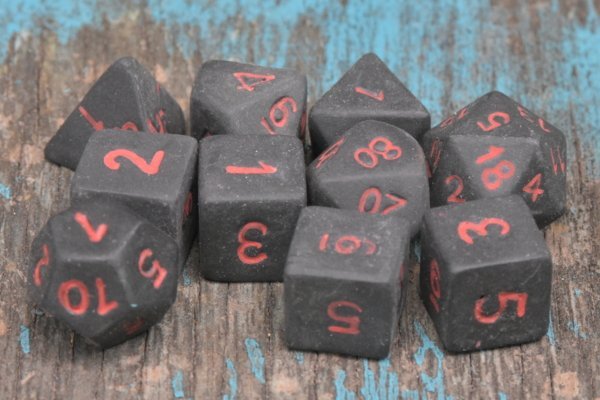
Necromancer Ceramic Dice Set
Pure black hand-pigmented English porcelain with crisp white numbering. A standout fantasy dice set for necromancers, warlocks, and shado…
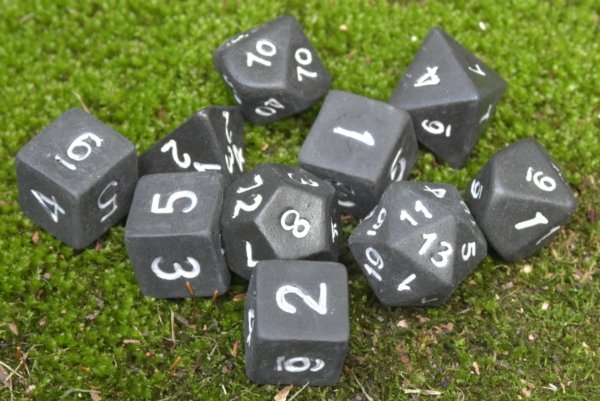
Dark Heart Dice Set
Pure black hand-pigmented English porcelain with crisp white numbering. One of our most beloved handmade ceramic dice sets — bold, clea…

Coming Soon
Runic Necromancer Ceramic Dice Set
The Necromancer base — pure black hand-pigmented English porcelain — finished with our signature runic-style numbering. A premium col…
Warlock Core Mechanics
The Warlock is D&D 5e’s modular caster, blending short-rest spellcasting with a customizable suite of magical perks. Built on a d8 Hit Die and powered by Charisma, with saving throw proficiencies in Wisdom and Charisma, the Warlock trades raw spell volume for repeatable bursts of power.
Pact Magic is the engine that defines the class. Unlike Wizards or Clerics, Warlocks have only 1–4 spell slots — but those slots recover on a short rest and always cast at the highest level available. This means two short rests per day effectively triples your high-level spell output. New players should embrace the rhythm: cast big, then rest.
Eldritch Invocations are the customization layer. Starting at 2nd level, you select minor magical features that reshape your character — at-will utility spells, combat upgrades, or roleplay tools. You can swap them when you level up, letting your Warlock evolve.
Pact Boon (chosen at 3rd level) further defines your identity:
- Pact of the Blade — summon a magical weapon
- Pact of the Tome — gain extra ritual cantrips and spells
- Pact of the Chain — gain a special familiar (imp, sprite, etc.)
- Pact of the Talisman — grant ability check bonuses to allies
Eldritch Blast, paired with the Agonizing Blast invocation, is the Warlock’s signature damage tool — a cantrip that scales with level and adds your Charisma modifier to each beam. It’s why Warlocks rarely run dry: your “basic attack” is already exceptional.
At 11th level, Mystic Arcanum grants one free casting of a 6th-level spell per long rest, scaling up through 9th-level spells.
What surprises veterans? Warlocks don’t play like casters — they play like spell-slinging fighters with a renewable nuke and a custom toolkit.
Choosing Your Otherworldly Patron
Your patron defines your warlock’s flavor, power source, and roleplay hooks. Here’s a quick tour of every official Otherworldly Patron, with mechanical highlights to help you pick. For deeper roleplay ideas, check out how to design memorable warlock patrons and using patrons in non-combat encounters.
The Fiend (PHB): The classic devil-or-demon pact, brimming with hellfire and bargains made in blood. Dark One’s Blessing grants temp HP whenever you drop an enemy, making you a surprisingly sturdy blaster.
The Archfey (PHB): Bound to a capricious lord of the Feywild, this warlock blends whimsy with menace. Fey Presence lets you charm or frighten clusters of enemies, while later features give you teleportation tricks.
The Great Old One (PHB): Cosmic horror incarnate—your patron may not even know you exist. Awakened Mind grants telepathy, and Entropic Ward turns missed attacks into advantage on your next strike.
The Celestial (Xanathar’s): A radiant patron pulls you toward the support role with bonus-action healing via Healing Light. You also gain access to cure wounds and other cleric staples on your spell list.
The Hexblade (Xanathar’s): The undisputed multiclass king. Hex Warrior lets you use Charisma for weapon attacks, making it the go-to dip for Paladins, Sorcerers, and Bards.
The Fathomless (Tasha’s): Pacted with abyssal trench horrors, you summon a spectral tentacle as a bonus action that whips and slows foes. You also gain a swim speed and damage resistance underwater.
The Genie (Tasha’s): Pick from Dao, Djinni, Efreeti, or Marid for elemental customization. Genie’s Vessel gives you a magical container to rest inside, plus bonus damage on attacks.
The Undead (Van Richten’s): A lich-like horror grants Form of Dread, frightening enemies you hit and giving you temp HP. The flavor leans deeply ghostly and necromantic.
The Undying (SCAG): An older, simpler version of the Undead patron, focused on longevity and resisting death rather than horror. Mechanically eclipsed by Undead, but thematically gentler.
The Fae (PHB 2024): The updated Archfey, now featuring Misty Step as a class feature and stronger crowd-control fey magic baked into every tier.
For a full primer on building any of these, see our Warlock traits and build options guide.
Best Race Combinations for Warlock
Warlocks live and die by Charisma, so the best race pairings push that primary stat to 17+ at level 1 while layering in resistances, skills, or utility that complement their limited spell slots. Here are the standout combinations worth considering.
Tiefling: The classic flavor pick, granting +2 Charisma, fire resistance, and free innate spells that stretch your slot economy. Dive deeper with How to Build a Tiefling Warlock or explore the lore in Why Infernal Heritage Fits The Build.
Winged Tiefling: Trade darkness spells for a 30-foot fly speed at level 1, an absolute game-changer for Eldritch Blast positioning. See How to Build a Winged Tiefling Warlock.
Half-Elf: Arguably the strongest mechanical pick with +2 Charisma, two +1s of your choice, Fey Ancestry, and two extra skills that fuel your face role. Check out the Half-Elf Warlock Guide or Female Half-Elf Warlock Beginner’s Guide.
Dragonborn (Black): Acid breath weapon and resistance pair with a Hexblade’s melee pivot, while +2 Strength or Charisma options fit caster or gish builds. See How to Build a Black Dragonborn Warlock.
Triton: Underwater freedom, cold resistance, and innate spells make this an underrated pick for aquatic campaigns. Read How to Build a Triton Warlock.
Tortle: A natural 17 AC frees your ASIs for pure Charisma scaling, perfect for Pact of the Blade builds. Explore How to Build a Tortle Warlock.
Warforged: +2 Constitution and +1 anywhere plus +1 AC keep your concentration spells alive through punishment. See How to Build a Warforged Warlock.
Variant Human: A free feat at level 1 means early Eldritch Adept, Fey Touched, or Telekinetic for immediate power spikes.
Yuan-ti Pureblood: Magic resistance is arguably the strongest defensive trait in the game, and they get +2 Charisma to boot.
Satyr: Magic resistance, +2 Charisma, and Mirthful Leaps make this a top-tier optimization pick.
Hexblood: +2/+1 customizable stats, Hex Magic, and Eerie Token utility fit the warlock fantasy perfectly.
Changeling: Shapechanger plus +2 Charisma turns any warlock into the ultimate infiltrator and party face.
Warlock Build Archetypes
The Warlock’s modular design—patrons, pacts, invocations, and short-rest slots—makes it one of the most flexible classes in 5e. Here are four proven archetypes to anchor your next character concept.
1) Hexblade Multiclass (1-2 Warlock Dip). Taking just one or two levels of Hexblade lets martial characters use Charisma for weapon attacks via Hex Warrior, unlocking medium armor, shields, and Hexblade’s Curse for crit-fishing burst. This is the backbone of “Sorlock” and “Paladlock” builds, and it pairs beautifully with rage-based hybrids like the Tortle Warlock-Barbarian or the Tabaxi Warlock-Barbarian multiclass. Key features: Hex Warrior, Hexblade’s Curse, Shield proficiency.
2) Eldritch Blast Spammer. Stack Agonizing Blast and Repelling Blast for the iconic “shove cannon” that scales into multiple beams with bonus damage on each. Add Hex, Spell Sniper, or Eldritch Mind for a tireless ranged controller who never burns spell slots on damage. Key features: Agonizing Blast, Repelling Blast, Hex.
3) Pact of the Tome Caster. The Book of Shadows grants three additional cantrips from any class, transforming your Warlock into a utility caster with rituals (via Book of Ancient Secrets) and unmatched cantrip flexibility. This pact rewards thoughtful character building—pair it with a skill-rich origin like those in these background recommendations or these top picks. Key features: Three bonus cantrips, Book of Ancient Secrets, ritual casting.
4) Genie Warlock Burst. The Genie’s Vessel acts as a portable Leomund’s Tiny Hut, letting your whole party rest safely anywhere, while Elemental Gift and Genie’s Wrath deliver consistent damage bursts. Lean into the flavor with distinctive character traits and a compelling background. Key features: Bottled Respite, Genie’s Wrath, Elemental Gift.
Combat Tactics & Action Economy
Your spell slots are precious—usually just 2-3 between rests—so push your party to take a short rest after every significant encounter. If your group resists, frame it mechanically: a 10-minute rest restores your two slots at maximum power, effectively giving you 4-6 slots per long rest day instead of 2.
Eldritch Blast is your default action. With Agonizing Blast, you add CHA to each beam (4 beams at 17th level = potentially +20 damage on top of 4d10). Pair it with Repelling Blast to shove enemies 10 feet per beam—stack hits on one target to launch them 40 feet, breaking grapples, knocking foes off ledges, or kiting melee bruisers indefinitely. Hex on a low-stat ability (Strength, Dexterity) doubles as damage rider and disadvantage on saves for grappling escapes.
Devil’s Sight + Darkness is the classic combo: cast Darkness on a thrown coin or familiar, position so you’re inside, and shoot out with advantage while enemies have disadvantage attacking you. Coordinate with your party first—a blinded fighter hates you. For Yuan-Ti or other Pact of the Chain builds, see how dragon-themed familiars reshape positioning (Crit Hit Ceramics on dragon-influenced Warlock play).
Spend Mystic Arcanum on utility or save-or-suck spells, not damage—your slots already handle damage. Foresight, True Polymorph, and Plane Shift end encounters; Fireball at 9th-level slot equivalent doesn’t.
Frequently Asked Questions About Warlocks
Best Warlock Patron?
The “best” patron depends on your playstyle, but Hexblade is widely considered the most powerful due to its Hex Warrior feature, which allows Charisma-based weapon attacks. The Fiend offers reliable damage and temporary hit points, while the Genie (especially Dao) provides incredible versatility with its Genie’s Vessel. Celestial shines as a hybrid healer-blaster. For roleplay-heavy campaigns, Archfey and Great Old One offer fantastic flavor. Ultimately, pick the patron whose theme and mechanics align with your character concept.
Is Hexblade overpowered?
Hexblade is considered one of the strongest subclasses in 5e, particularly at low levels. Hex Warrior consolidates attack and spellcasting stats into Charisma, Hexblade’s Curse provides a massive damage boost with expanded critical range, and Shadow of Ill Omen gives access to Hex without spending a slot at higher levels. Many DMs allow it as written, but some restrict multiclass dipping. While powerful, it’s not game-breaking when balanced against other optimized builds like Paladins or Bladesingers.
How does Pact Magic differ from regular spellcasting?
Pact Magic uses fewer spell slots than traditional spellcasting, but all slots are cast at the highest level available and recharge on a short rest rather than a long rest. For example, a 5th-level Warlock has only two slots, but both cast spells at 3rd level. This makes Warlocks excellent at sustained adventuring days with multiple short rests, but potentially weaker in single-encounter situations compared to long-rest casters like Wizards or Sorcerers.
Best Warlock race?
Variant Human or Custom Lineage are top picks because they grant a feat at level 1, allowing early access to Eldritch Adept, War Caster, or Fey Touched. Hexblood and Satyr (Strixhaven/Wildemount) offer Charisma boosts plus useful traits. Yuan-ti was once dominant for magic resistance but has been rebalanced. For thematic play, Tieflings fit perfectly with Fiend patrons, while Half-Elves provide solid Charisma and versatility. Choose based on whether you prioritize optimization or roleplay fit.
Hexblade dip for which classes?
A one or two-level Hexblade dip benefits any Charisma-based martial or gish build. Paladins gain Hex, Shield, and medium armor synergy. Sorcerers (especially Divine Soul or Draconic) become smite-capable bladelocks. Bards can transition into combat threats with Hex Warrior. Even Fighters benefit if they’re already Charisma-focused. The dip provides Hex Warrior, Hexblade’s Curse, Shield, and Hex—all incredibly powerful tools. However, three or more levels typically dilute your primary class progression too much.
Is Warlock good for new players?
Yes, Warlocks are excellent for beginners. They have a short, focused spell list, fewer spell slots to manage, and Eldritch Blast provides a reliable, scaling damage option that simplifies combat decisions. Invocations like Agonizing Blast and Devil’s Sight make the class feel powerful without overwhelming complexity. Pact Magic mechanics are straightforward once understood. The class also offers rich roleplay opportunities through patron relationships. Just be aware that resource management around short rests differs from other spellcasters.
Browse All Warlock Content
Our complete library:
By Race Combination (102)
- Ultimate Female Half-Elf Warlock: Beginner's Guide
- How to Build a Warforged Warlock
- How to Build a Tiefling Warlock
- How to Build a Triton Warlock in D&D 5e
- How to Build a Winged Tiefling Warlock in D&D 5e
- How to Build a Tiefling Warlock in D&D 5e
- Tiefling Warlock: Race and Class Synergy Explained
- How to Build a Tortle Warlock in D&D 5e
- Tiefling Warlock: Why Infernal Heritage Fits The Build
- Tiefling Warlock Synergies: Charisma and Fire Resistance
- How to Build a Male Half-Elf Warlock in D&D 5e
- How to Build a Half-Elf Warlock in D&D 5e
- How to Build a Black Dragonborn Warlock in D&D 5e
- Tiefling Warlock: Why Infernal Heritage Matters
- Half-Elf Warlock: Why Stats And Skills Synergize
- Half-Elf Warlock: Why This Pairing Dominates D&D
- Half-Elf Warlock: Social Power and Eldritch Control
- Half-Elf Warlock: Charisma And Flexibility
- Half-Elf Warlock: Why This Race Solves Your Problems
- How to Build a Half-Drow Warlock in D&D 5e
- Half-Elf Warlock: Why Charisma Beats Every Other Race
- Half-Drow Warlock: Optimizing Synergy and Mechanics
- Half-Drow Warlock: Mechanics And Narrative Synergy
- How to Play a Half-Elf Warlock in D&D Modules
- How to Play a Half-Elf Warlock in D&D 5e
- Half-Elf Warlock: Why This Pairing Works Best
- Half-Elf Warlock: Why This Combination Works
- How to Build a Warlock Barbarian Tortle
- How to Multiclass Warlock Barbarian as a Tortle
- Yuan-Ti Pureblood Warlock Build Guide
- How to Build a Yuan-Ti Pureblood Warlock
- How to Play a Half-Elf Warlock in Wilderness Campaigns
- How to Build a Tiefling Warlock on a Budget
- Tiefling Warlock: Why This Race Wins Mechanically
- How to Run a Tiefling Warlock Campaign on a Budget
- How To Build A Tiefling Warlock Without Extra Books
- How To Play A Yuan-Ti Pureblood Warlock
- Best Feats for Tiefling Warlocks in D&D 5e
- How to Build the Ultimate Tiefling Warlock in D&D 5e
- Best Feats for D&D 5e Classes and Building the Ultimate Tiefling Warlock
- Morality And Power: Building Tiefling Warlocks
- Tiefling Warlock Morality: Playing Complex Characters in D&D
- How to Play a Tiefling Warlock: Navigating Moral Complexity
- Playing a Tiefling Warlock: Navigating Moral Complexity in D&D
- How to Build a Tiefling Warlock on Any Budget
- Tiefling Warlock Synergies And Patron Selection
- The Tiefling Warlock's Mechanical Edge in 5e
- Tiefling Warlock Optimization Across Campaign Tiers
- Tiefling Warlock Synergy: Charisma, Heritage, And Pacts
- Tiefling Warlock Build Guide for Exploration-Heavy Campaigns
- Tiefling Warlock Synergy: Race and Class Alignment
- How to Play a Triton Warlock in D&D 5e
- How to Play a Triton Warlock With Moral Depth
- Building a Triton Warlock: Roleplaying Conflicts and Character Depth
- How to Play a Triton Warlock's Moral Conflict
- How to Run a Half-Elf Warlock as a Dungeon Master
- How to Run a Half-Elf Warlock in Your D&D Campaign
- Half-Elf Warlock Synergies: Race Traits Explained
- Half-Elf Warlock: Solving Puzzles With Synergy
- Half-Elf Warlocks: Flexible Builds For Any Party Role
- How to Build a Half-Elf Warlock for Puzzle-Heavy Campaigns
- Half-Elf Warlock's Mechanical Edge With Fey Ancestry
- How to Build a Half-Elf Warlock with Elemental Pact Powers
- Half-Elf Warlock Synergies: Why Stats Matter
- Building a Nature-Focused Half-Elf Warlock in D&D 5e
- How to Build a Black Dragonborn Warlock
- How To Optimize Black Dragonborn Warlock Combat
- Half-Elf Warlock: Social Power And Eldritch Mastery
- How to Build a Half-Elf Warlock for High-Stakes Campaigns
- How To Build A Half-Elf Warlock For Combat
- Half-Elf Warlock: Why This Pairing Actually Works
- Tiefling Warlock Mechanics and Thematic Synergy
- Non-Combat Encounters for Tiefling Warlocks
- How to Play a Tiefling Warlock Beyond Combat
- How to Roleplay a Tiefling Warlock Beyond Combat
- Tiefling Warlock: Infernal Heritage and Otherworldly Power
- How to Play a Tiefling Warlock with Dragon Patrons in D&D 5e
- Tiefling Warlock: Infernal Heritage Meets Eldritch Power
- How to Build a Tiefling Warlock with Draconic Themes
- Half-Elf Warlock: Why This Combo Works Best
- Half-Elf Warlock Synergies: Why This Combo Works
- Half-Elf Warlock: Why Charisma Synergy Works
- Half-Elf Warlock: Optimizing Charisma and Skills
- How to Build an Aasimar Warlock in D&D 5e
- Aasimar Warlock: Embracing Celestial Contradiction
- How to Build an Aasimar Warlock with Time Magic Themes
- Aasimar Warlock: Celestial Conflict And Power
- Tiefling Warlock: Why This Race-Class Pair Dominates
- Tiefling Warlock: Why This Race-Class Synergy Works
- How to Build a Half-Elf Warlock for Mystery Campaigns
- How to Build a Half-Elf Warlock for D&D 5e
- How to Play a Half-Elf Warlock in Mystery Campaigns
- How to Roleplay a Goliath Warlock in D&D 5e
- How to Build a Half-Elf Warlock on a Budget
- How to Play a Tortle Warlock in D&D 5e
- How to Play a Tiefling Warlock in D&D 5e
- Half-Elf Warlock: Why This Race Wins
- How to Build a Goliath Warlock for Dark Campaigns
- How to Build a Tabaxi Warlock in D&D 5e
- How to Build a Yuan-Ti Pureblood Warlock in D&D 5e
- Tiefling Warlock Encounters: Building for Social Utility
- How to Build a Half-Elf Warlock for Magic Item Crafting
By Otherworldly Patron (3)
Build Guides & Optimization (11)
- How to Build Warlock Character Traits That Drive Your Story
- How to Build a Compelling Warlock Background in D&D 5e
- Best Warlock Backgrounds in D&D 5e
- Best Backgrounds for Warlock in D&D 5e
- How Warlock Backgrounds Fill Your Class's Skill Gaps
- How to Build a Tortle Warlock Barbarian Multiclass
- Building a Tabaxi Warlock-Barbarian Multiclass
- How to Build a Tabaxi Warlock-Barbarian Multiclass
- How to Build a Warlock Paladin Multiclass in D&D 5e
- How to Build a Warlock Rogue Multiclass
- How to Build a Warlock Ranger Multiclass in D&D 5e