The Fighter is the class everyone underestimates until they watch a Battle Master Riposte a crit out of a dragon’s mouth and dump three superiority dice into a single Disarming Strike. Yeah, it’s the “simple” class on paper — pick a weapon, hit things, get more attacks than anyone else at the table. But that simplicity is a trap door. Underneath it, you’ve got the deepest martial toolkit in 5e: Action Surge for nova rounds that genuinely embarrass casters, Second Wind as a built-in panic button, and three Extra Attacks by level 20 that nobody else gets to touch. The published options span multiple books and play very differently.
The trouble is choice paralysis. Champion looks “boring” until you realize crit-fishing with Great Weapon Master and Elven Accuracy turns you into a damage blender. Battle Master demands you actually read your maneuvers and pick the right one mid-combat. Eldritch Knight wants you to track spell slots AND weapon attacks AND War Magic timing. Rune Knight (Tasha’s Cauldron of Everything) is mechanically rich but easy to misbuild. And don’t get me started on people who pick Samurai then never use Fighting Spirit because they forgot it’s a bonus action.
So this is the hub. Every Fighter article we’ve put together — subclass breakdowns, feat priority orders, multiclass dips that actually pull their weight, level-by-level build guides, and the optimization math behind why GWM isn’t always the right pick — lives here. Start wherever your next character needs you to start.
Rules scope: Core Fighter progression, feats, and action-economy examples below use the legacy 2014 rules unless a feature is marked with its source. Species traits are source-specific; 2024 species and class features are separate options.
Official rules references: 2014 Fighter class · 2014 multiclassing · 2014 species · Xanathar’s Guide to Everything · Tasha’s Cauldron of Everything · Explorer’s Guide to Wildemount · Fizban’s Treasury of Dragons.
Fighter players show up to the booth knowing exactly what they want. There’s a directness to them that we notice almost immediately, and the conversation usually circles back to one thing pretty fast: WEAPONS! Whether it’s a greatsword build, a sword-and-board defender, or a two-weapon fighting specialist, Fighter players love talking about the mechanics of their character’s combat style. We hear a lot about Action Surge, multi-attacks, and the satisfying crunch of consistent damage round after round. At the Crit Hit Ceramics booth at conventions, Fighter players tend to be the ones who appreciate reliability over flash. They like classes that work, that show up every combat ready to do their job. Many tell us they enjoy playing the character the rest of the party can count on, the steady frontliner who never overcomplicates things.
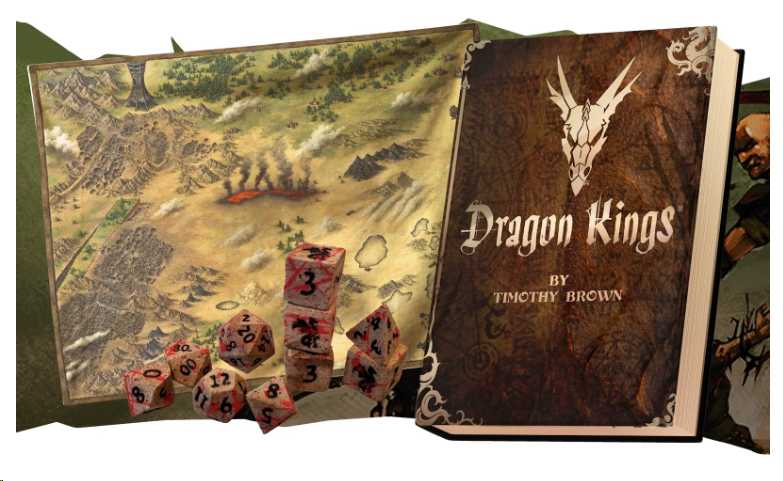
When it comes to dice, Fighter players gravitate toward sets with a bold, grounded feel, something that looks battle-ready sitting next to their character sheet. Strong color and stone-inspired sets tend to catch their eye first. Our Dwarven Deep Iron Extended Dice Set set is a frequent favorite because of its weighty, forged appearance, and the Blood Skeleton Ceramic Dice Set set also pulls them in for that bloody, hand-to-hand melee look that fits the Fighter personality perfectly.
Featured Dice for Fighter Players
Hand-picked ceramic dice sets from Crit Hit Ceramics that complement Fighter characters at the table.

Coming Soon
Dwarven Deep Iron Extended Dice Set
Deep, glowing red hand-pigmented English porcelain with crisp white numbering. An extended themed dice set for dwarves, mountain clerics,…

Blood Skeleton Ceramic Dice Set
Natural unpigmented English porcelain finished with bold black numbering and red splatter detailing. A handmade ceramic dice set for bloo…
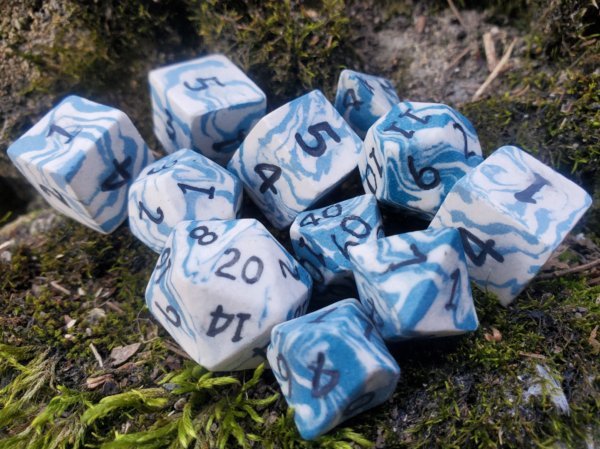
Stone Wash Giant Ceramic Dice Set
Hand-pigmented white and blue English porcelain in a glacial-stone fusion with bold black numbering. A handmade ceramic dice set for goli…
.hub-featured-products { background:#faf7f0; border:1px solid #d4c8a8; border-radius:6px; padding:1.5em 2em; margin:2.5em 0; }
.hub-featured-products h2 { border:none !important; margin-top:0 !important; color:#5c3a1f; font-size:1.5em; padding-bottom:0 !important; }
.hub-featured-intro { color:#6a5a3c; margin-bottom:1.5em; font-style:italic; }
.hub-product-grid { display:grid; grid-template-columns:repeat(auto-fit, minmax(250px, 1fr)); gap:1.5em; }
.hub-product-card { background:white; border:1px solid #e3d7b8; border-radius:4px; overflow:hidden; transition:box-shadow 0.2s; }
.hub-product-card:hover { box-shadow:0 4px 12px rgba(0,0,0,0.1); }
.hub-product-image { display:block; padding:1em; background:#fafafa; position:relative; }
.hub-product-image img { width:100%; height:auto; display:block; }
.hub-stock-badge { position:absolute; top:0.6em; right:0.6em; background:#8B4513; color:white; padding:0.3em 0.7em; border-radius:3px; font-size:0.75em; font-weight:600; }
.hub-product-info { padding:0 1.2em 1.2em 1.2em; }
.hub-product-info h4 { font-size:1.05em; margin:0.5em 0 0.3em 0; line-height:1.3; }
.hub-product-info h4 a { color:#5c3a1f; text-decoration:none; }
.hub-product-info h4 a:hover { text-decoration:underline; }
.hub-product-price { color:#8B4513; font-weight:700; font-size:1.15em; margin:0.3em 0; }
.hub-product-desc { font-size:0.9em; color:#666; line-height:1.4; margin:0.5em 0 1em 0; min-height:3.6em; }
.hub-product-cart { display:inline-block; background:#8B4513; color:white !important; padding:0.6em 1.2em; border-radius:4px; text-decoration:none !important; font-weight:600; font-size:0.9em; transition:background 0.2s; }
.hub-product-cart:hover { background:#6b3410; }
.hub-shop-all { color:#8B4513; font-weight:600; text-decoration:none; }
.hub-shop-all:hover { text-decoration:underline; }
.hub-featured-cta { text-align:center; margin:1.5em 0 0 0; }
Fighter Core Mechanics
On paper, the Fighter is the simplest class in D&D 5e: hit things, hit them again, hit them harder. That simplicity hides one of the deepest mechanical chassis in the game.
For new players, the basics are forgiving. You roll a d10 for hit points (tied with Barbarian for the highest), get proficiency in the two most useful saves in the game (Strength and Constitution), and choose either Strength or Dexterity as your primary stat depending on whether you want to swing a greatsword or flick a rapier. Your turn-one decision tree is small, which makes Fighter ideal for learning combat flow.
But the class quietly stacks tools other classes envy:
- Second Wind: a bonus action self-heal (1d10 + Fighter level), once per short rest. Free survivability built into the chassis.
- Action Surge: take an entire extra action on your turn. At 2nd level, this means four attacks in one round. Later, it means casting two leveled spells in a turn (Eldritch Knight) or unleashing devastating burst damage.
- Extra Attack: scales uniquely. Fighters reach four attacks per Attack action at 20th level — no other martial class matches this.
- Indomitable: reroll a failed saving throw, eventually three times per long rest. A clutch insurance policy against save-or-suck spells.
What surprises experienced players is the Ability Score Improvement track. Fighters get seven ASIs (at levels 4, 6, 8, 12, 14, 16, and 19), versus the standard five. That’s two extra feats — enough room to grab Great Weapon Master, Polearm Master, Sentinel, and still cap your primary stat.
This is the Fighter’s real identity: a “simple” frame whose customization budget — feats, fighting styles, subclass features, weapon choices — quietly outpaces nearly every other class in the game.
Choosing Your Martial Archetype
Your Martial Archetype defines your Fighter’s combat identity, transforming a baseline weapon-swinger into a specialist with distinct flair. For a broader breakdown of how these subclasses interact with builds, check out our Fighter Subclasses and Combat Tactics Explained guide, or start with the fundamentals in How to Build a Fighter in D&D 5e.
Champion (PHB) is the simplest pick, expanding your crit range to 19-20 (and later 18-20) for satisfying critical-hit fishing. Perfect for new players who want raw damage without bookkeeping.
Battle Master (PHB) grants superiority dice fueling tactical maneuvers like Trip Attack, Riposte, and Commander’s Strike. It’s the most versatile, skill-expressive Fighter option in the game.
Eldritch Knight (PHB) blends steel with sorcery, learning abjuration and evocation spells. Shield and Absorb Elements bolster defense, while Misty Step adds battlefield mobility at higher levels.
Samurai (Xanathar’s) channels Fighting Spirit for advantage on attacks plus temporary hit points, three times per long rest. Bonus proficiencies and Rapid Strike make it a relentless burst-damage striker.
Cavalier (Xanathar’s) is the anchor tank, locking down enemies with reaction-based attacks and protecting allies from harm. Excellent mounted combat options sweeten the deal.
Arcane Archer (Xanathar’s) imbues arrows with magical effects like Banishing Arrow or Piercing Arrow. Limited uses per rest hold it back, but the flavor of an elven warmage-archer is unmatched.
Echo Knight (Wildemount) projects a spectral duplicate that grants extra attacks, flanking potential, and teleportation. One of the strongest and most mechanically unique Fighters ever printed.
Rune Knight (Tasha’s) carves giant runes into gear for passive and active buffs, plus a Giant’s Might feature that grants growth, extra damage, and advantage on Strength checks.
Psi Warrior (Tasha’s) wields psionic energy dice to shove enemies, shield allies, and eventually fly. It’s an elegant, MAD-free alternative to Eldritch Knight with reaction-based defense.
Banneret / Purple Dragon Knight (SCAG) inspires nearby allies with Rallying Cry, granting temporary hit points whenever the Fighter uses Second Wind. Mechanically underwhelming, but thematically perfect for noble leader archetypes.
Best Race Combinations for Fighter
Fighters thrive on raw physical stats, so the best race pairings amplify Strength for crushing weapon damage and heavy armor builds. Here are the top race combinations to consider for your next martial powerhouse:
Orc Fighter — choose the source version first. The revised 2024 Orc’s Adrenaline Rush grants a bonus-action Dash and temporary hit points; it does not grant Powerful Build or a fixed Strength increase. See the linked guide for the specific option. Dive deeper with Unleashing the Orc Fighter, Raw Strength Without Complex Optimization, or Orc Fighter Synergy.
Legacy 2014 Half-Orc Fighter — Savage Attacks adds a weapon damage die on a qualifying melee critical hit, and Relentless Endurance can keep you at 1 hit point once per long rest. Revised versions have different traits. See the full Half-Orc Fighter guide.
Goliath Fighter — traits depend on the source version. Powerful Build increases carrying, pushing, dragging, and lifting capacity; it does not grant a feature for wielding oversized weapons. See the linked guide for its 2014 or 2024 option.
Bugbear Fighter — Long-Limbed reach and Surprise Attack bonus damage make first-round Strength strikes devastating. Read the Bugbear Fighter guide.
Red Dragonborn Fighter — Strength-friendly stats and a fiery breath weapon give you a built-in AoE alongside your greatsword. Check the Red Dragonborn Fighter guide.
Silver Dragonborn Fighter — Cold breath and resistance pair beautifully with a heavy-armor Strength build for a frosty frontliner. Full breakdown in the Silver Dragonborn Fighter guide.
Legacy 2014 Earth Genasi Fighter — this version has a Strength increase, a limited-use casting of Pass Without Trace at character level 5, and Earth Walk across difficult terrain made of earth or stone. It does not ignore all difficult terrain. Explore the Earth Genasi Fighter guide.
Halfling Fighter — Though small, Lucky and Brave keep you alive while a Strength-focused Champion still cleaves through enemies. Try the Halfling Fighter beginner’s guide or the perfect Halfling Fighter build.
Gnome Fighter — Unconventional, but Gnome Cunning paired with Strength heavy armor creates a surprisingly resilient anti-caster fighter. See the Gnome Fighter build.
Goblin Fighter — Fury of the Small differs by source version. Legacy Volo’s and revised MotM Goblins have different use limits and damage scaling; cite the version in the linked build before planning those uses. Learn more in the Goblin Fighter guide.
For an alternate Orc approach, also check this Orc Fighter alternate build and <a href='https://crithitceramics.com/
Fighter Build Archetypes
Not every Fighter swings the same way. Picking an archetype early helps you focus your ability scores, feats, and fighting style into something that actually dominates combat rather than just participating in it.
1) The Great Weapon Master. The classic damage-per-round monster, wielding a glaive, halberd, or greatsword to trigger GWM’s bonus-action attack on crits and kills. Pair it with Polearm Master for reaction attacks, take Champion or Battle Master, and lean hard into Strength. Key features: GWM, PAM, Action Surge, Great Weapon Fighting style. See our core Fighter build guide for stat priorities.
2) The Sharpshooter. A hand-crossbow Battle Master with Crossbow Expert and Sharpshooter can make multiple ranged attacks; the number depends on Fighter level and whether you spend Action Surge. The 2014 Crossbow Expert bonus-action attack uses a hand crossbow after you attack with a one-handed weapon; a heavy crossbow does not grant that bonus-action shot. Key features: Crossbow Expert, Sharpshooter, Archery fighting style, Precision Attack maneuver. More on Dex builds in our speed-beats-strength breakdown and Dex Fighter guide.
3) The Sword & Board Tank. A Cavalier or Rune Knight with shield, plate, and Defense fighting style soaks hits while locking down enemies. Cavaliers punish anyone ignoring them; Rune Knights grow Large and debuff foes with runes. Key features: Sentinel, Shield Master, Heavy Armor Master, Constitution saves. Pick the right background for Insight or Perception proficiency.
4) The Multiclass Dip. Paladins, Warlocks, and Rogues all benefit from a one- or two-level Fighter dip for armor, a fighting style, and especially Action Surge. Two levels is the sweet spot — then leave. Key features: Action Surge, Second Wind, fighting style. Full breakdown in our multiclass guide and flexibility overview.
Combat Tactics & Action Economy
Save Action Surge for turns where you can land a killing blow on a high-priority target or burst down a boss before its next turn—not on trash mobs. At level 5+, an Action Surge means four attacks; combined with GWM’s bonus action attack on a crit or kill, you can chain five swings in a single round. Don’t waste it on turn one unless the encounter is genuinely lethal.
Under the legacy 2014 rules, Second Wind restores hit points as a bonus action and recharges on a short or long rest. The revised 2024 Fighter adds Tactical Mind and Tactical Shift, which use Second Wind differently; keep those features separate when building across editions.
Fighting style picks should match your weapon: Great Weapon Fighting pairs with GWM and a maul; Archery is mandatory for Sharpshooter builds; Defense suits sword-and-board tanks; Dueling boosts rapier Dex fighters.
Feat priorities: Polearm Master + Sentinel is the gold-standard control build—your bonus action butt-end attack plus opportunity attacks that stop movement lock down chokepoints. GWM wants advantage sources (Reckless Attacker, prone targets). Sharpshooter needs Archery style and high ground for consistent -5/+10 hits.
Position for AOO chains by standing in doorways, 5-foot corridors, or between two allies. Force enemies to either burn their action Disengaging or eat your reaction. For deeper tactical breakdowns, see Fighter Fundamentals and Combat Tips for Every Level.
Frequently Asked Questions About Fighters
Is Fighter good for new players?
Yes, Fighter is widely considered the best class for new D&D 5e players. Its mechanics are straightforward: hit things with weapons, use Second Wind to heal, and Action Surge for extra attacks in emergencies. There’s no complex spell list to manage, no resource pools to track carefully, and no intricate subclass features that require deep system knowledge. Fighters are also incredibly durable with d10 Hit Dice and heavy armor proficiency, giving newcomers room to make mistakes without instantly dying.
Champion vs Battle Master for beginners?
Champion is the simpler choice, offering an expanded critical hit range and passive bonuses that require zero decision-making during combat. Battle Master, however, is only slightly more complex and provides significantly more tactical depth through Combat Superiority dice and maneuvers like Trip Attack or Riposte. Most experienced players recommend Battle Master even for newcomers because the maneuvers teach valuable tactical thinking. If a player feels overwhelmed by choices, start with Champion; otherwise, Battle Master offers better long-term engagement.
Best Fighter race?
For a legacy 2014 build, Variant Human can choose a feat at character creation. Custom Lineage is an optional Tasha’s Cauldron of Everything option, not the same species as Human. Species traits and ability-score rules differ by source; Tasha’s optional origin customization does not make every species trait interchangeable.
How many feats can a Fighter take?
Under the 2014 class table, Fighters receive Ability Score Improvements at levels 4, 6, 8, 12, 14, 16, and 19: seven by level 20. Each ASI can be swapped for a feat, meaning a Fighter can potentially acquire seven feats throughout their career, or eight if playing a Variant Human or Custom Lineage. This unmatched feat access makes Fighters extremely customizable and is one of the class’s defining mechanical advantages.
Is Echo Knight overpowered?
Echo Knight (Explorer’s Guide to Wildemount) lets you make certain attacks from the echo’s space and teleport by swapping places with it. Flanking is an optional combat rule, and an echo can be destroyed; scouting with it is not risk-free. Combined with Action Surge and Unleash Incarnation, burst damage potential is exceptional. However, the Echo has only 1 HP and can be destroyed easily, and the subclass lacks defensive features. Many DMs allow it without issue, though some restrict it in low-magic Forgotten Realms campaigns since it’s a Wildemount-specific option.
Strength or Dexterity Fighter?
Both are viable, but they serve different roles. Strength Fighters wield heavy weapons like greatswords or polearms, deal higher damage per hit, and excel at grappling and shoving. Dexterity Fighters use finesse or ranged weapons, gain better AC with medium armor, improve initiative, and have stronger saving throws and Stealth. For 2014 Great Weapon Master and Polearm Master builds, Strength supports heavy melee weapons; Dexterity supports finesse or ranged builds. Fighter’s 2014 saving-throw proficiencies are Strength and Constitution, so a Dexterity-focused build does not gain Dexterity save proficiency from the class.
Browse All Fighter Content
Our complete library:
By Race Combination 8)
- Unleashing the Orc Fighter: A 5e Guide for All Ages
- How to Build an Orc Fighter (Alternate Build)
- How to Build a Halfling Fighter
- How to Build a Red Dragonborn Fighter in D&D 5e
- How to Build an Earth Genasi Fighter in D&D 5e
- How to Build an Orc Fighter in D&D 5e
- How to Build a Goblin Fighter in D&D 5e
- Orc Fighter: Raw Strength Without Complex Optimization
- How to Build a Silver Dragonborn Fighter in D&D 5e
- How to Build a Half-Orc Fighter in D&D 5e
- Orc Fighter Synergy: Why This Combo Works
- How to Build a Bugbear Fighter in D&D 5e
- How to Build a Halfling Fighter in D&D 5e
- How to Build a Goliath Fighter in D&D 5e
- How to Build a Triton Fighter in D&D 5e
- Orc Fighter: Tactical Power Beyond The Stereotype
- How to Build a Yuan-Ti Fighter in D&D 5e
- How to Build an Aasimar Fighter in D&D 5e
- Goliath Fighter: Raw Power And Stone's Endurance
- How to Build a Tiefling Fighter in D&D 5e
- Tiefling Fighter: Unconventional Tactics That Work
- Tiefling Fighter: Infernal Resistance Meets Martial Power
- Tiefling Fighter: Turning Charisma Into Strength
- Tiefling Fighter: Why Infernal Resistance Wins
- Tiefling Fighter: Infernal Resistance Meets Martial Prowess
- Tiefling Fighter: Fire Resistance Meets Martial Power
- How to Build a Warforged Fighter in D&D 5e
- Githyanki Fighter Build (2014 Rules)
- Gnome Fighter Tactics: Positioning, Saves & Action Economy
- Kobold Fighter Roleplay: Build a Character Beyond the Stereotype
- Kobold Fighter Build: Legacy Volo Traits and 2014 Rules
- How to Build a Half-Orc Fighter for Exploration and Travel
- How to Play a Half-Orc Fighter for Travel and Exploration
- Half-Orc Fighter: Raw Power, Simple Execution
- How to Build a Half-Orc Fighter for D&D 5e
- How to Craft Magic Items for a Drow Fighter in D&D 5e
- Magic Items for Drow Fighters in D&D 5e
- Best Magic Items for Drow Fighters in D&D 5e
- How to Build a Black Dragonborn Fighter
- How to Play a Black Dragonborn Fighter in D&D 5e
- How to Build a Black Dragonborn Fighter in D&D 5e
- Non-Combat Encounters for Blue Dragonborn Fighters
- Making Non-Combat Encounters Work for Blue Dragonborn Fighters
- How to Build a Blue Dragonborn Fighter Beyond Combat
- How to DM for a Party of Red Dragonborn Fighters
- Half-Orc Fighter Combat Synergy in D&D 5e
- Half-Orc Fighter: Relentless Combat Mechanics
- Half-Orc Fighter: Racial Synergy and Combat Dominance
- Half-Orc Fighter: Raw Damage and Survival Synergy
- Roleplaying a Human Fighter Guided by Prophecy
- How to Build a Bronze Dragonborn Fighter in D&D 5e
- How to Play a Bronze Dragonborn Fighter in D&D 5e
- Moral Dilemmas for Bronze Dragonborn Characters
- Building Moral Depth for Bronze Dragonborn Fighters
- Half-Orc Fighter: Synergy and Survivability
- Green Dragonborn Fighter: 2014 Rules and Breath Tactics
- How to Build a Firbolg Fighter in D&D 5e
- How to Play a Firbolg Fighter in D&D 5e
- Firbolg Fighter Build Guide for D&D 5e
- Blue Dragonborn Fighter for West Marches Campaigns
- Dragonborn Fighter Build for West Marches Campaigns (2014 Rules)
- Playing a Blue Dragonborn Fighter in a West Marches Campaign
- Green Dragonborn Exploration Campaign: Story and Table Hooks
- How to Build a Drow Fighter Backstory
- Drow Fighter Build (2014 Rules): Traits and Tactics
- Roleplaying Betrayal: An Air Genasi Fighter Character Guide
- Air Genasi Fighter Build (2014): Legacy Traits and Tactics
- Gnome Fighter Magic Items (2014 Rules)
- Halfling Fighter: The Defensive Powerhouse Option
- Halfling Fighter: Surviving D&D Combat With Lucky
- Halfling Fighter: The Scrappy Warrior
- Halfling Fighter: Tactical Advantages and Best Subclasses
- Roleplaying a Human Fighter in a High-Magic World
- How to Build a Tortle Fighter in D&D 5e
- How to Build a Half-Orc Fighter Around a Campaign Artifact
- Drow Sunlight Sensitivity House Rules (2014 Legacy)
By Martial Archetype )
Build Guides & Optimization 9)
- Best Fighter Backgrounds in D&D 5e
- How to Build a Dexterity Fighter in D&D 5e
- How to Multiclass a Fighter in D&D 5e
- Dexterity Fighter: Why Speed Beats Strength
- Dexterity Fighter: Why It Outperforms Strength
- Dexterity Fighter Superiority: Accuracy Over Armor
- Dexterity Fighter: Speed And Finesse Over Brute Force
- The Dexterity Fighter's Advantage: AC, Initiative, and Saves
- Fighter Backstory Guide: Motives, Relationships & Growth
- Dexterity Fighter Builds For Superior AC And Mobility
- Dexterity Fighter Combat Styles and Ability Optimization
- Dexterity Fighter: Speed And Precision Over Raw Power
- Building a Dexterity Fighter in D&D 5e
- How to Build a Dexterity Fighter Backstory in D&D 5e
- Dexterity Fighter: Precision Over Power in D&D 5e
- Building a Backstory for Your Dexterity Fighter in D&D 5e
- How Fighter Backgrounds Shape Combat Identity
- Fighter Multiclass: Why Action Surge Breaks The Game
- How Human Fighters Shape D&D Worldbuilding
Tactics & Play Style )
- Dodge and Strike: The Dexterity Fighter's Tactical Edge
- Orc Fighter Tactics: Aggressive Movement And Battlefield Control
- How to Play a Fighter in D&D 5e: Combat Tips for Every Level
- How to Build a Dexterity-Based Fighter in D&D 5e
- How to Grapple as a Fighter in D&D 5e
- Two Weapon Fighting in D&D 5e: Rules and Build Options