Dexterity Fighter: Why Speed Beats Strength
A dexterity fighter doesn’t just keep pace with strength-based builds—in most campaigns, it outperforms them. Finesse weapons paired with light armor give you better initiative, higher hit rates, and a defensive profile that frustrates enemies trying to land blows. The real advantage isn’t choosing speed over durability; it’s getting both while strength builds still choose one or the other.
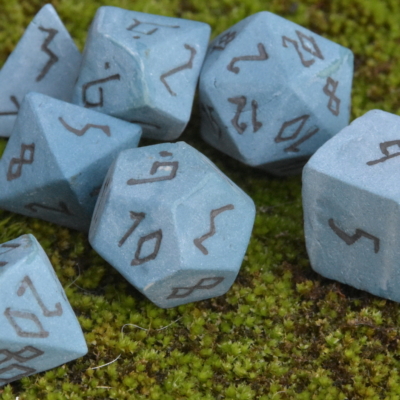
Your high initiative roll from that dexterity bonus feels even better when you’re rolling with the Meatshield Ceramic Dice Set‘s reliable weight distribution.
Why Dexterity Works for Fighters
Dexterity affects more systems than any other ability score. Your AC improves whether you’re wearing light or medium armor. Your initiative bonus increases, letting you act first in combat. You gain proficiency benefits in Acrobatics, Sleight of Hand, and Stealth—skills that matter far more often than Athletics in most campaigns. And perhaps most importantly, dexterity saves are the most common save type in the game, triggered by fireballs, lightning bolts, and dragon breath.
Fighters already get more ability score improvements than any other class, so you’ll cap your dexterity at 20 well before other characters max their primary stats. This leaves room for feats that define your combat style. The Action Surge and extra attacks inherent to the fighter class multiply the value of every attack bonus and damage modifier you can stack.
Core Mechanics of the Dexterity Fighter Build
Your attack and damage rolls use dexterity when wielding finesse weapons—rapiers, shortswords, scimitars, whips, and daggers. Ranged weapons like longbows and hand crossbows also key off dexterity. Light armor (studded leather maxing at 12+Dex AC) and medium armor (half-plate maxing at 15+2 Dex AC) both benefit from your high dexterity modifier.
The mechanical heart of this build revolves around maximizing attacks per round while maintaining accuracy. Fighters get four attacks at 20th level, plus Action Surge for eight attacks in a single turn. Every point of attack bonus matters when you’re rolling that many dice. Archery fighting style adds +2 to ranged attacks. Dueling adds +2 damage with one-handed weapons. Two-Weapon Fighting lets you add your ability modifier to bonus action attacks.
Start with 16 or 17 dexterity at character creation if possible. Use your first ASI at 4th level to cap it at 18 or 20. After that, pivot to feats that multiply your effectiveness rather than chasing marginal stat improvements.
Best Fighter Subclasses for Dexterity Builds
Battle Master
Battle Master remains the gold standard for dexterity fighters. Maneuvers like Riposte, Precision Attack, and Feinting Attack directly benefit from high dexterity and multiple attacks. Precision Attack effectively grants you advantage on demand by adding a superiority die to your attack roll—critical when you need to land that fourth attack in a round. Riposte turns your high AC into offensive capability by punishing missed attacks against you. The Battle Master gives you tactical flexibility no other martial class can match.
Samurai
Fighting Spirit grants advantage on all weapon attacks for a turn, three times per long rest. This synergizes beautifully with dexterity builds because it ensures your multiple attacks land, and it stacks with Elven Accuracy if you’re playing an elf. Advantage also mitigates the accuracy penalty from Sharpshooter or the need to attack heavily armored enemies. The Samurai’s 10th level feature adds your Wisdom modifier to Persuasion checks, giving you surprising face utility.
Echo Knight
Echo Knight does things no other subclass can. Your echo acts as a teleportation point, effectively giving you incredible mobility on the battlefield. You can attack from your echo’s position, meaning you threaten a huge area without exposing yourself. Unleash Incarnation grants an additional attack from your echo when you take the Attack action, and it scales with your Constitution modifier—which you’re already investing in for hit points. This subclass turns positioning from a minor consideration into your primary tactical advantage.
Champion
Champion gets dismissed as boring, but the math doesn’t lie. Improved Critical at 3rd level doubles your crit range, which matters significantly more when you’re attacking four to eight times per turn. By 15th level, you’re critting on 18-20, and crits bypass resistance to nonmagical damage. If you’re playing in a campaign that doesn’t offer many magic items, Champion’s 7th level Remarkable Athlete feature—adding half your proficiency bonus to Strength, Dexterity, and Constitution checks—makes you competent at nearly everything physical.
Stat Priority for Dexterity Fighters
Dexterity is your obvious primary stat, but Constitution comes second. Fighters have d10 hit dice but you’re still a frontliner who gets hit. Aim for 14 Constitution at creation, preferably 16 if your race and point buy allow it. After dexterity hits 20, consider boosting Constitution or taking feats—never let Con drop below 14.
Wisdom affects your most common save after Dexterity, and Perception is the most-rolled skill in the game. A 12-14 Wisdom keeps you relevant. Intelligence, Strength, and Charisma can dump to 8-10 unless you have specific multiclass plans. Strength determines jump distance and carrying capacity, but these rarely matter compared to combat effectiveness.
Point buy recommendation: Dex 15+1 racial, Con 14, Wis 12, everything else 10 or dump to raise Con to 15. Standard array: Dex 15+1 racial, Con 14, Wis 13, Str 12, Int 10, Cha 8.
Race Selection for Dexterity Fighters
Several races provide meaningful advantages for dex-based martial characters. Wood elves get +2 Dex/+1 Wis, perfect stat alignment, and 35-foot movement speed. The movement matters more than players realize—you can kite enemies, reach distant targets, and disengage from melee while still closing distance. Mask of the Wild lets you hide in light natural conditions, giving you advantage on attacks in forests and grasslands.
Variant humans gain a feat at first level plus +1 to two stats. Take Crossbow Expert or Sharpshooter immediately and you’re online with an optimized damage output before other classes get their subclasses. The early feat access compresses your build timeline significantly.
Halflings get +2 Dex and Lucky, which lets you reroll natural 1s on attacks, saves, and checks. This seems minor until you’re making eight attacks with Action Surge and would otherwise waste attacks on critical fumbles. Lightfoot halflings can hide behind medium creatures, making you exceptionally difficult to target with ranged attacks.
Aarakocra provide flight speed, the single strongest mobility option in low to mid-level play. Flying archers trivialize many encounters. However, many DMs restrict this race for good reason—discuss with your table first.
Essential Feats for Dexterity Fighter Builds
Sharpshooter
If you’re using ranged weapons, Sharpshooter is mandatory. The -5 attack/+10 damage trade becomes favorable when your attack bonus exceeds the enemy’s AC by 5 or more—which happens regularly with Archery fighting style and high dexterity. Use it selectively: activate it against low-AC targets, turn it off against heavily armored enemies. The feat also removes long range penalties and ignores half and three-quarters cover, solving common archer frustrations.
Crossbow Expert
Crossbow Expert removes the loading property from crossbows and eliminates disadvantage when making ranged attacks within 5 feet of enemies. Most importantly, it lets you attack with a hand crossbow as a bonus action when you take the Attack action with a one-handed weapon. This translates to five attacks at 11th level (four attacks plus bonus action), six at 20th level. Combine with Sharpshooter and Archery fighting style for devastating sustained damage.
Piercer
Piercer adds two benefits for rapier and crossbow fighters: reroll one damage die per turn, and add one extra damage die on critical hits. The damage die reroll provides consistent value across every combat, and the crit bonus makes your 18-20 crit range (if Champion) or advantage (if Samurai) hit noticeably harder. It also provides +1 Dex, making it a strong half-feat choice when you have odd dexterity.
Elven Accuracy
For elf or half-elf fighters, Elven Accuracy turns advantage into super-advantage, rolling three d20s instead of two. This increases your effective hit rate and critical chance substantially. Combine with Samurai’s Fighting Spirit, the Precision Attack maneuver, or any party member who grants advantage. It also provides +1 Dex.
Alert
Alert adds +5 to initiative, virtually guaranteeing you act first in combat. Fighters benefit more from going first than most classes because Action Surge lets you eliminate key enemies before they act. The feat also prevents you from being surprised and negates unseen attacker advantages against you—relevant when fighting invisible or heavily obscured enemies.
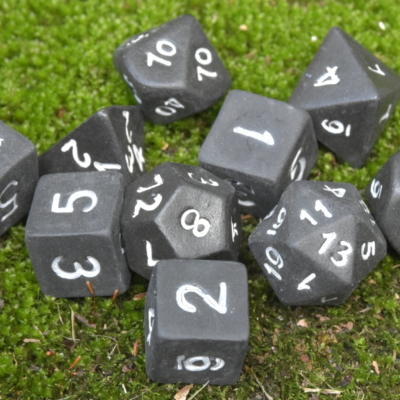
The Dark Castle Ceramic Dice Set captures the shadowy, quick-strike aesthetic that defines a rogue-adjacent dexterity fighter’s playstyle and character fantasy.
Fighting Style Selection
Archery fighting style adds +2 to ranged attack rolls, the mathematically strongest fighting style in the game. The bonus applies to every attack and stacks with magic weapon bonuses, making your attacks land reliably even with Sharpshooter’s penalty.
Dueling adds +2 damage when wielding a single one-handed weapon, ideal for rapier builds. The damage adds to every hit, scaling with your number of attacks. At four attacks per turn, that’s +8 damage per round before Action Surge.
Two-Weapon Fighting lets you add your ability modifier to bonus action attacks when dual wielding. Without this, your off-hand attack doesn’t add damage modifiers. This makes dual-wielding shortswords or scimitars viable, though it’s generally weaker than Dueling once you have multiple Extra Attacks.
Defense adds +1 AC while wearing armor. Simple, effective, and consistently valuable. The difference between 18 and 19 AC changes how often you’re hit by roughly 5%, which adds up over a campaign. Consider this if you’re not committed to ranged combat or dual wielding.
Recommended Backgrounds for Dexterity Fighters
Criminal or Urchin backgrounds provide Stealth and proficiency with thieves’ tools, letting you scout ahead and disarm traps when your party lacks a rogue. The Criminal Contact feature occasionally provides useful story hooks.
Outlander grants Athletics and Survival, making you competent at physical challenges and wilderness navigation. The Wanderer feature ensures you can always find food and water for your party, eliminating survival logistics in exploration-heavy campaigns.
Soldier provides Athletics and Intimidation plus a military rank that can open doors in civilized areas. The equipment kit includes an insignia of rank that signals your past service.
Folk Hero grants Animal Handling and Survival plus the Rustic Hospitality feature—commoners will shelter and hide you. This matters more in campaigns with political intrigue where you need to avoid authority figures.
Spell and Ability Considerations
Fighters don’t cast spells unless you choose Eldritch Knight, but that subclass works poorly with dexterity builds since most bladesinging benefits favor strength weapons. Skip it unless you have a specific multiclass plan involving wizard levels.
Action Surge is your most powerful ability. Use it when you need to eliminate a dangerous enemy immediately, or when the party needs a massive damage spike to end combat quickly. Don’t waste it on minor fights—two full rounds of attacks at high level can output 200+ damage with the right build.
Second Wind provides self-healing without consuming actions. Use it liberally—it recharges on short rests, and you should be taking short rests after every two or three combats in an adventuring day.
Indomitable lets you reroll a failed save three times per day at high levels. Save it for Wisdom and Charisma saves, since you’ll likely succeed on Dexterity saves naturally.
Playing a Dexterity Fighter in Combat
Win initiative and eliminate dangerous targets first. Your high dexterity and Alert feat mean you act before most enemies. Identify spellcasters, archers, and controllers—kill them before they reshape the battlefield. Action Surge on your first turn can remove two threats before they act.
Position carefully if you’re using ranged weapons. Stay at maximum effective range against melee enemies. Stand behind half-cover whenever possible. If you’re using a rapier and shield, position to protect squishier party members while threatening enemy backlines with your movement speed.
Manage your resources across the adventuring day. You have short rest abilities (Action Surge, Second Wind, superiority dice) and long rest abilities (Indomitable, Fighting Spirit). Use short rest abilities more liberally—you should average three short rests per long rest in well-designed campaigns.
Against single powerful enemies, activate Sharpshooter or use Precision Attack to ensure your hits land. Against groups of weaker enemies, use Cleaving Attack or Sweeping Attack maneuvers to damage multiple targets. Against enemies with legendary resistance, save your save-or-suck effects for after they’ve burned their resistances.
Multiclassing Considerations
Dexterity fighters multiclass well with rogues, gaining expertise, Sneak Attack, and Cunning Action. Three levels of rogue provides 2d6 Sneak Attack damage on one attack per turn plus bonus action Dash/Disengage/Hide. This works especially well with Samurai since Fighting Spirit grants advantage, guaranteeing Sneak Attack.
Ranger multiclassing provides Hunter’s Mark and other useful spells plus a fighting style. Two levels grants you spellcasting and another fighting style (take Archery and Dueling for flexibility). Three levels adds a subclass—Gloom Stalker’s first turn nova combines beautifully with Action Surge.
Avoid multiclassing before 5th level. Delay your Extra Attack progression and you’ll feel significantly weaker than single-classed martials. If you multiclass, do it after 5th, 11th, or 20th level—after you’ve gained your next Extra Attack or capstone ability.
Most dexterity fighters need the 10d6 Assorted Ceramic Dice Set handy for calculating sneak attack damage, fireball saves, and the occasional spell scrolls they’ll pick up.
The dex fighter won’t turn heads with flashy abilities, but it delivers something more valuable: consistent output from level 1 through level 20. When your party’s damage dealers are out of resources or bleeding out, you’re still moving first in combat, still landing attacks with frequency, and still shaping fights through reliable high damage. That reliability is what makes the build genuinely powerful.