
Barbarians get a bad rap. People hear “rage, hit thing, repeat” and assume you’re playing the class for players who can’t read their character sheet. Those people are wrong, and they’re also the ones who die first when the displacer beast shows up and you’re still standing after eating three attacks that would’ve dropped the wizard twice over.
Here’s the actual deal: a Barbarian is the most durable martial in 5e, full stop. Rage gives you resistance to bludgeoning, piercing, and slashing damage, which covers maybe 80% of what monsters throw at you. Reckless Attack hands you advantage on every Strength-based weapon attack you want it on, and Danger Sense bails you out of the Dex saves that usually torch frontliners. Pair that with Unarmored Defense scaling off Constitution and you’ve got a character who can tank, control space, and dump out damage without ever touching a spell slot.
The challenges are real, though. Rage eats your bonus action and locks you out of concentration-style utility. You’re hungry for ASIs but desperate for feats like Great Weapon Master, Polearm Master, or Sentinel. Your subclass choice — Zealot, Totem, Beast, Wild Magic, Path of the Giant — changes your playstyle more than almost any other class in the game. And if you don’t know how Reckless Attack interacts with the rest of your party’s tactics, you’re going to get yourself killed in tier 3.
Everything we’ve written on Barbarians lives here. Builds, subclass breakdowns, multiclass math, feat priorities — all of it, organized below.
You can spot a Barbarian player from across the convention floor, usually because they’re the one laughing the loudest and gesturing wildly while describing their last critical hit. When they swing by the Crit Hit Ceramics booth, the conversation almost always circles back to one word: RAGE! Barbarian players love the raw, unfiltered power of their class. They tell us stories about cleaving through enemies, soaking up damage that would drop anyone else, and being the unstoppable force their party desperately needs in a tight spot. There’s a refreshing honesty to Barbarian players. They aren’t usually scheming or plotting their next political move at the table. They’re charging in, axe first, and figuring out the rest later. The personas they build tend to be loyal, fiercely protective of their party, and unapologetically themselves.
When it comes to dice, Barbarian players gravitate toward sets with bold contrast and a rugged, earthy feel. They want dice that look like they could survive being slammed onto a table after a big hit. Our Meatshield Ceramic Dice Set set tends to be a favorite because of its raw, stone-like appearance, and the Orc Blood Ceramic Dice Set set also gets snatched up quickly thanks to its fiery, intense coloring that matches that rage-fueled energy perfectly.
Featured Dice for Barbarian Players
Hand-picked ceramic dice sets from Crit Hit Ceramics that complement Barbarian characters at the table.
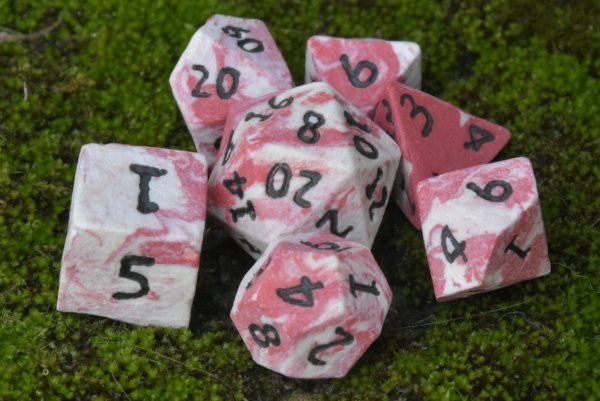
Meatshield Ceramic Dice Set
Hand-pigmented red and white English porcelain in a contrasted swirl with bold black numbering. A handmade ceramic dice set for fighters,…
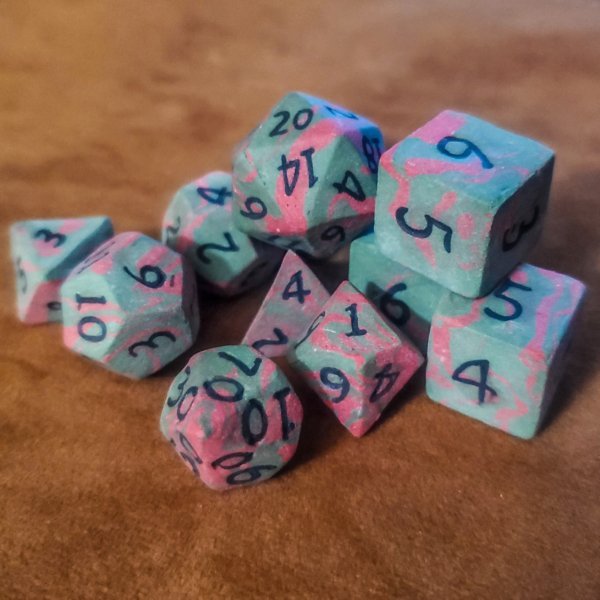
Coming Soon
Orc Blood Ceramic Dice Set
Hand-pigmented green and red English porcelain in a violent, contrasted swirl with bold black numbering. A handmade ceramic dice set for …
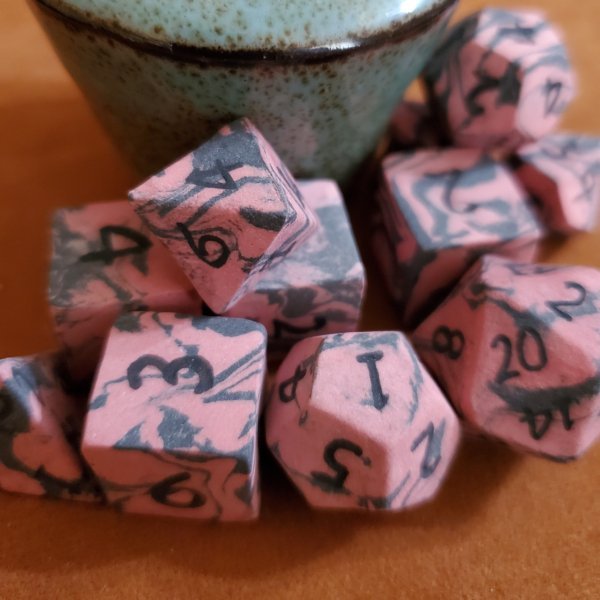
Coming Soon
Volcanic Sands Dice Set
Hand-pigmented black and red English porcelain in a violent, fiery fusion with bold black numbering. A handmade ceramic dice set for fire…
Barbarian Core Mechanics
The Barbarian is D&D 5e’s premier frontline bruiser, built around the simple but powerful Rage mechanic. With a d12 Hit Die, Strength and Constitution saving throw proficiencies, and Unarmored Defense (10 + Dex mod + Con mod), the Barbarian is designed to soak punishment and dish it back harder.
Rage is your defining resource. While raging, you gain:
- Bonus damage on Strength-based melee attacks (+2 at level 1, scaling to +4)
- Resistance to bludgeoning, piercing, and slashing damage (half damage from most weapon attacks)
- Advantage on Strength checks and saves
You start with only 2 rages per long rest, so new players should think of Rage as a “boss fight” button early on—not something to burn on every goblin. Rage lasts one minute but ends if you don’t attack or take damage each turn, so don’t rage and then hide.
Reckless Attack is the Barbarian’s signature gamble: you get advantage on Strength-based melee attacks this turn, but all attacks against you have advantage until your next turn. Combined with your damage resistance, this trade is usually worth it—you’re effectively trading “half damage taken twice” for vastly more reliable hits and crit fishing.
Danger Sense grants advantage on Dex saves against effects you can see (fireballs, traps), patching a traditional weak save. Later, Brutal Critical adds extra weapon dice on crits, Indomitable Might lets you treat Strength checks as your Strength score minimum, and Persistent Rage (level 15) means Rage no longer ends from inactivity.
What surprises experienced players: Rage resistance doesn’t apply to spell damage or psychic damage—casters still hurt. Also, Rage requires you to be not wearing heavy armor, which trips up multiclass builds. Finally, Reckless Attack only works with Strength melee weapons—no ranged shenanigans.
Choosing Your Primal Path
Your Primal Path defines how your Barbarian channels their rage, and 5e offers a wealth of flavorful options. If you want inspiration for combining these subclasses with race and feat choices, check out our guide to Fun Barbarian Builds for D&D 5e.
Path of the Berserker (PHB) is the classic blood-soaked warrior. Frenzy lets you make a bonus action attack each turn while raging, though the exhaustion cost makes it situational at best.
Path of the Totem Warrior (PHB) grants animal spirit blessings. Bear Totem at 3rd level gives resistance to every damage type except psychic, making you arguably the tankiest character in the game.
Path of the Ancestral Guardian (Xanathar’s) summons spectral ancestors to protect your allies. Enemies you hit have disadvantage attacking anyone but you, and your friends gain resistance to that enemy’s damage — incredible party utility.
Path of the Storm Herald (Xanathar’s) wraps you in an elemental aura of desert, sea, or tundra. Each option deals automatic damage or grants buffs while raging, turning you into a walking weather system.
Path of the Zealot (Xanathar’s) channels divine fury. You add radiant or necrotic damage to attacks, and dying while raging is barely an inconvenience since allies can revive you cheaply.
Path of the Battlerager (SCAG) is the dwarf-only spiked armor specialist. You deal bonus piercing damage on grapples and unarmed strikes, though it’s widely considered the weakest path mechanically.
Path of the Beast (Tasha’s) transforms you into a feral hybrid with claws, a bite, or a tail. The natural weapons reshape each rage, and the tail’s reactive AC boost is genuinely excellent.
Path of Wild Magic (Tasha’s) infuses your rage with chaos. A random magical effect triggers each time you rage, ranging from teleports to damage auras to ally buffs — endlessly fun at the table.
Path of the Giant (Glory of the Giants) lets you grow Large and hurl boulders or improvised weapons. Elemental damage and increased reach make this a thematic powerhouse for big-stick enthusiasts.
Path of the World Tree (2024 PHB) draws on Yggdrasil-like cosmic roots. You gain temporary hit points, teleportation, and the ability to yank allies out of danger, blending tank and support beautifully.
Best Race Combinations for Barbarian
The Barbarian thrives on raw Strength and bulky Constitution, so the best racial pairings amplify those stats while reinforcing the class’s tank-and-smash identity. Here are the top combinations to consider:
- Goliath: With +2 Strength, +1 Constitution, Powerful Build, and Stone’s Endurance, Goliaths are arguably the textbook Barbarian race. Stone’s Endurance stacks beautifully with Rage resistance. Dive deeper with How to Build a Goliath Barbarian or explore Stacking Damage Resistance.
- Half-Orc: +2 Strength, +1 Constitution, Relentless Endurance, and Savage Attacks turn every crit into a bloodbath. Rage-fueled crits become devastating. See the full breakdown in How to Build a Half-Orc Barbarian.
- Dragonborn: +2 Strength and +1 Charisma plus a breath weapon gives Barbarians a ranged AoE option when foes cluster. Start with Building a Dragonborn Barbarian or the detailed build guide.
- Gold Dragonborn: Fire breath and fear immunity through Draconic ancestry options reinforce frontline dominance. Check out How to Build a Gold Dragonborn Barbarian.
- Black Dragonborn: Acid breath punches through fire-resistant foes, covering a gap in Barbarian damage types. Learn more at How to Build a Black Dragonborn Barbarian.
- Gem Dragonborn: Psionic breath weapons and short-range flight give surprising mobility to a melee class. Explore the Gem Dragonborn Barbarian build.
- Warforged: +2 Constitution, +1 to another stat (dump into Strength), and +1 AC make this the tankiest Barbarian possible. Rage resistance plus armored chassis is brutal. Read How to Build a Warforged Barbarian.
- Centaur: 40 ft. movement, Powerful Build, and hoof attacks fit Reckless Attack play perfectly. See How to Build a Centaur Barbarian.
- Aasimar (Fallen): Necrotic damage on melee hits and intimidating presence pair shockingly well with Rage. Details at How to Build an Aasimar Barbarian.
- Gnome: An unconventional but viable pick leveraging Constitution and advantage on mental saves. Builds in Playing a Gnome Barbarian and Gnome Barbarian Build.
- Yuan-Ti: Magic resistance compounds with Rage’s physical resistance for absurd survivability. See the Yuan-Ti Barbarian guide.
Barbarian Build Archetypes
The Barbarian class offers remarkable build diversity, with each subclass shifting your role at the table dramatically. Whether you want to soak hits, deal devastating damage, shield your allies, or laugh in death’s face, there’s a path for you.
1) Bear Totem Tank: The Path of the Totem Warrior (Bear) is the gold standard for damage mitigation, granting resistance to every damage type except psychic while raging. Pair this with high Constitution and a shield to become a nearly unkillable frontline anchor. Key features: damage resistance, high HP pool, taunt potential through Compelled Duel multiclass dips. Learn more in How to Build a Barbarian in D&D 5e.
2) GWM Reckless Striker: This build pushes raw damage to absurd heights by combining Great Weapon Master, Reckless Attack, and Rage bonus damage. Advantage on every swing offsets the -5 to-hit penalty, turning your greataxe into a meat grinder. Key features: massive single-target damage, crit fishing, Half-Orc synergy with Savage Attacks. See How to Build the Strongest Barbarian in D&D 5e for the full optimization guide.
3) Ancestral Guardian: Path of the Ancestral Guardian transforms you into a guardian angel for your party, imposing disadvantage on attacks against allies and granting resistance to anyone you’ve struck. It’s the ultimate support tank for parties with squishy casters. Key features: ally protection, spirit shield reaction, consult the spirits divination. Try pairing it with a stealthy race in How to Build a Tabaxi Barbarian Warlock Multiclass.
4) Zealot Damage Sponge: Path of the Zealot adds bonus radiant damage and makes resurrection spells cost zero material components, so death is merely an inconvenience. Divine Fury procs every turn while raging for reliable extra damage. Key features: free revives, bonus radiant dice, Rage Beyond Death at level 14. Explore unconventional pairings in How to Build a Warforged Barbarian-Monk Multiclass.
Combat Tactics & Action Economy
Rage is your most precious resource at low levels: PHB Barbarians get 2 rages at level 1, scaling slowly. Enter rage as a bonus action on round one only if you’re certain combat lasts 3+ rounds and you’ll take or deal damage every round (rage drops if you don’t attack or take damage). For ambushes or single-target executions in 1-2 rounds, skip it—you’ll burn a daily resource for negligible benefit.
Reckless Attack is almost always correct on your turn: advantage roughly doubles your crit chance and stacks with Great Weapon Master/Brutal Critical. The downside (enemies attack you with advantage) is mitigated by resistance to bludgeoning/piercing/slashing while raging. Don’t use Reckless when fighting casters with save-or-suck spells, when you’re below half HP without healing nearby, or when the enemy has Sneak Attack riders.
Frightful Presence (Ancestral Guardian/Berserker subclass adjacent) and Path of the Berserker’s Intimidating Presence cost an action—use it only on legendary or single high-threat targets where suppressing one turn is worth losing your Attack action. Position so multiple enemies are within 30 feet before triggering.
Don’t rage if: you need to grapple/shove without dealing damage, you’re scouting or parleying, or you only have ranged options. Rage damage bonus requires Strength-based melee in 5e 2014—throwing a handaxe works, drawing a longbow does not. Keep javelins handy for forced ranged turns.
For role-play depth, see How to Play a Barbarian in D&D 5e and Non-Combat Encounters for Barbarian Tortles.
Frequently Asked Questions About Barbarians
Is Barbarian good for new players?
Absolutely. Barbarians are one of the most beginner-friendly classes in 5e thanks to their straightforward mechanics. You hit things hard, activate Rage for damage resistance and bonus damage, and benefit from a massive hit point pool. There are no spell slots to track, no complex resource management, and few decisions to make in combat. New players can focus on learning the game’s core systems while still feeling powerful and contributing meaningfully to every encounter.
What’s the best Barbarian subclass?
Path of the Zealot (Xanathar’s Guide) is widely considered the strongest, offering bonus radiant or necrotic damage and resurrection discounts that synergize with the Barbarian’s reckless playstyle. Path of the Totem Warrior (Bear Totem) is a close second, granting resistance to nearly all damage types while raging. Path of the Ancestral Guardian excels at tanking and party protection. Your best choice ultimately depends on whether you want damage, durability, or utility for your campaign.
How does Rage actually work?
Rage is activated as a bonus action and lasts up to one minute (10 rounds). While raging, you gain resistance to bludgeoning, piercing, and slashing damage, bonus damage on Strength-based melee attacks, and advantage on Strength checks and saves. However, Rage ends if you don’t attack a hostile creature or take damage each turn, and you can’t cast or concentrate on spells. You regain expended rages after a long rest (or short rest at higher levels).
Should I play a Strength or Dexterity Barbarian?
Strength is strongly recommended. Rage’s bonus damage only applies to Strength-based melee attacks, and key features like Reckless Attack work best with heavy weapons. Dexterity Barbarians sacrifice the class’s core damage output for marginal AC gains. If you want a finesse-focused warrior, consider a Rogue or Ranger instead. That said, a moderate Dexterity score (14) is useful for Unarmored Defense and initiative, but Strength should always be your primary stat.
What’s the best race for a Barbarian?
Half-Orc is the classic choice, offering Strength and Constitution bonuses, plus Savage Attacks which adds an extra damage die on critical hits—amazing with Brutal Critical. Goliath provides Strength, Constitution, and Stone’s Endurance for extra damage reduction. Mountain Dwarves get +2 Strength and +2 Constitution, the best stat spread possible. Bugbears excel due to their reach and Surprise Attack damage. Any race with Strength bonuses and durability features will serve a Barbarian well.
How do you roleplay a smart Barbarian?
Low Intelligence doesn’t mean stupid—it means lacking formal education or book knowledge. Your Barbarian can be wise, cunning, and emotionally intelligent while being illiterate or unfamiliar with arcane theory. Play them as street-smart, intuitive, or deeply philosophical about nature and combat. Conan the Barbarian is shrewd and tactical despite his “savage” reputation. Focus on practical wisdom, sharp observational skills, and direct problem-solving rather than scholarly knowledge, and your character will feel intelligent and three-dimensional.
Browse All Barbarian Content
Our complete library:
By Race Combination (134)
- Mastering Goliath Barbarian in D&D 5e: A Guide
- How to Build a Dragonborn Barbarian
- How to Build a Gnome Barbarian
- How to Build a Dragonborn Barbarian (Detailed Build)
- How to Build a Half-Orc Barbarian
- How to Build a Goliath Barbarian in D&D 5e
- How to Build a Gold Dragonborn Barbarian in D&D 5e
- How to Build a Black Dragonborn Barbarian
- How to Build a Warforged Barbarian in D&D 5e
- How to Build a Gnome Barbarian in D&D 5e
- How to Build a Dragonborn Barbarian in D&D 5e
- How to Build a Gem Dragonborn Barbarian
- How to Build a Centaur Barbarian in D&D 5e
- How to Build an Aasimar Barbarian in D&D 5e
- Goliath Barbarian: Stacking Damage Resistance
- How to Build a Triton Barbarian in D&D 5e
- Warforged Barbarian Tank: Durability Through Synergy
- How to Build a Kenku Barbarian in D&D 5e
- Rock Gnome Barbarian Build Guide for D&D 5e
- How to Build an Aarakocra Barbarian in D&D 5e
- Triton Barbarian: Underwater Fury and Coastal Combat
- How to Build a Copper Dragonborn Barbarian
- Goliath Barbarian Tips: Reckless Power and Stone Endurance
- Goliath Barbarian Tank: Why This Race Dominates
- How to Build a Rock Gnome Barbarian in D&D 5e
- How to Build a White Dragonborn Barbarian
- How To Leverage White Dragonborn Traits For Barbarians
- How to Weaponize Cold Breath on Your Dragonborn Barbarian
- How to Build a White Dragonborn Barbarian in D&D 5e
- How To Leverage White Dragonborn Traits For Barbarian Power
- White Dragonborn Barbarian: Frozen Fury Over Optimization
- How to Build a Bugbear Barbarian
- How to Build a Bugbear Barbarian in D&D 5e
- Bugbear Barbarian: Sneaky Ambush Predator Build
- Bugbear Barbarian: Tactical Reach and Rage Fury
- Bugbear Barbarian: Turn Ambusher Into Bruiser
- Bugbear Barbarian: Reach, Surprise, and Tactical Control
- How to Build a Grung Barbarian in D&D 5e
- Grung Barbarian Poison Damage and Party Logistics
- Grung Barbarian: Tactical Skirmisher In Verticality
- Grung Barbarian: Why Poison And Rage Actually Synergize
- Grung Barbarian: Surviving The Poison Glass Cannon
- The Grung Barbarian's Poison-Fueled Skirmisher
- Kenku Barbarian: Building Beyond Strength
- Kenku Barbarian: Tactical Fury Over Raw Strength
- Kenku Barbarian: Making Mimicry Work In Combat
- Gnome Barbarian: Turning Weakness Into Fury
- Gnome Barbarian: Turning Weakness Into Cunning
- Gnome Barbarian: Embracing Chaotic Inefficiency
- Gnome Barbarian: Defying Expectations In Combat
- How to Play a Barbarian Tortle in Social and Exploration Encounters
- Centaur Barbarian Charge: Tactical Advantage Guide
- Centaur Barbarian: Charge, Mobility, And Carrying Power
- Building a Centaur Barbarian: Race and Class Guide for D&D 5e
- How to Build a Barbarian Dragonborn Character
- Building a Dragonborn Barbarian: Character Guide
- How to Roleplay a Firbolg Barbarian Beyond Combat
- How to Run Non-Combat Encounters for Firbolg Barbarians
- How to Run Non-Combat Encounters for a Firbolg Barbarian
- Playing a Firbolg Barbarian Outside Combat
- How to Build a Dragonborn Barbarian for Combat
- How to Build a Dragonborn Barbarian for War Campaigns
- Dragonborn Barbarian: Concept Over Optimization
- Dragonborn Barbarian: Scaling Breath Weapons and Rage
- How to Play an Evil Goliath Barbarian
- How to Play an Evil Goliath Barbarian in D&D 5e
- How to Play an Evil Goliath Without Derailing
- Warforged Barbarian: The Unkillable Tank Build
- Warforged Barbarian: The Beginner's Path to Unstoppable Rage
- Warforged Barbarian: Why This Race Excels
- Warforged Barbarian: Unbreakable AC And Damage Resistance
- Warforged Barbarian Tank Build for D&D 5e
- Grung Barbarian Artifacts: Overcoming Mechanical Challenges
- Grung Barbarian Poison Builds for D&D 5e
- Grung Barbarian: Poison and Mobility Over Power
- Grung Barbarian: Poison Immunity And Vertical Mobility
- Grung Barbarian: Building Around Racial Constraints
- How to Build a Grung Barbarian for Wilderness Campaigns
- How to Build a Blue Dragonborn Barbarian in D&D 5e
- Blue Dragonborn Barbarian: Lightning Resistance Tactics
- Blue Dragonborn Barbarian: Synergy And Trade-Offs
- Blue Dragonborn Barbarian: Lightning Resistance and Synergy
- Goliath Barbarian: Race-Class Synergy Explained
- Goliath Barbarian's Mechanical Synergy Explained
- Dragonborn Barbarian: Combat Without Complexity
- Dragonborn Barbarian: Why This Combo Actually Works
- Dragonborn Barbarian: Synergy and Survivability
- Warforged Barbarian AC Stacking for Unkillable Tanks
- Warforged Barbarian Synergies For Unforgettable Moments
- Warforged Barbarian's Mechanical Edge in Combat
- Triton Barbarian: Aquatic Fury Beyond The Obvious
- How to Play a Gnome Barbarian in D&D 5e
- Gnome Barbarian: Why Small Size Doesn't Matter
- How to Build a Gnome Barbarian for One-Shot Adventures
- How To Play A Gnome Barbarian In One-Shot Games
- How to Build a Locathah Barbarian in D&D 5e
- Locathah Barbarian: Unconventional Synergies Unveiled
- Locathah Barbarian Synergies in Aquatic D&D
- Building a Locathah Barbarian: Lore and Character Development
- Warforged Barbarian: Mechanical Synergy and Durability
- Warforged Barbarian: Tank Without Sacrificing Damage
- Warforged Barbarian: Building an Unkillable Tank
- Warforged Barbarian: Why This Build Never Breaks
- How to Build a Half-Orc Barbarian in D&D 5e
- Half-Orc Barbarian: Why This Race Excels
- Time Travel Mechanics for Half-Orc Barbarians
- Half-Orc Barbarian Build for Time Travel Campaigns
- How to Play a Goliath Barbarian: Death, Resurrection, and Survival
- How to Build a Goliath Barbarian for Resurrection-Heavy Campaigns
- Goliath Barbarian: Why They're Nearly Unkillable
- Half-Orc Barbarian: Why This Combo Actually Works
- Half-Orc Barbarian Combat Synergies
- Half-Orc Barbarian: Synergy Between Race And Class
- How to Play a Half-Orc Barbarian in Combat
- How to Build a Tortle Barbarian in D&D 5e
- Goliath Barbarian Synergy: Why This Combo Dominates
- How to Play a Goliath Barbarian in D&D 5e
- Goliath Barbarian: Synergizing Race And Class
- Kenku Barbarian: Building Past The Mechanical Awkwardness
- How to Run a Kenku Barbarian as DM
- Grung Barbarian: Why This Build Works Against Itself
- Goliath Barbarian: Raw Power And Tactical Simplicity
- White Dragonborn Barbarian: Rage and Frost
- How to Build a Half-Elf Barbarian/Paladin Multiclass
- How to Build a Firbolg Barbarian in D&D 5e
- How to Build a Gem Dragonborn Barbarian in D&D 5e
- Gem Dragonborn Barbarian: Leverage Flight And Battlefield Control
- How to Build a Scourge Aasimar Barbarian in D&D 5e
- Tortle Barbarian: Tank Without Armor Upgrades
- Triton Barbarian: Building An Aquatic Defensive Powerhouse
- How To Optimize Gem Dragonborn Barbarian Builds
- Goliath Barbarian: Damage Reduction Through Race
- How to Build a Goblin Barbarian in D&D 5e
- Dragonborn Barbarian Synergy: Race and Class Alignment