Choosing Gemstone Dice for Your D&D Table
Gemstone dice are simultaneously practical gaming tools and collectible objects—a dual nature that explains both their appeal and their cost, which can range from moderately priced to genuinely expensive depending on the stone and how it’s been worked. If you’ve stood in front of a game shop’s dice wall and wondered whether those polished agate or amethyst sets are worth the premium over standard plastic, you’re asking the right questions. The answer depends on what matters to you as a player and what trade-offs you’re willing to accept.
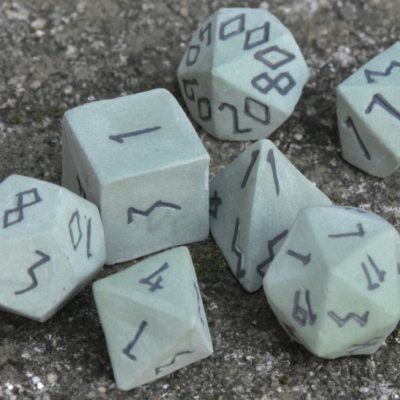
The Sandstorm w/ Red/Blue Ceramic Dice Set demonstrates how color contrast actually improves readability during long campaign sessions at crowded tables.
Before dropping significant cash on a stone dice set, it’s worth understanding what you’re actually getting, how they perform at the table, and whether the investment matches your gaming needs.
What Gemstone Dice Actually Are
True gemstone dice are carved from natural or synthetic stone materials, then tumbled and polished to create the standard polyhedral shapes used in D&D. Common materials include obsidian, jade, aventurine, amethyst, bloodstone, tiger’s eye, and various agates. Each set contains the standard seven dice (d4, d6, d8, d10, d%, d12, d20) needed for Fifth Edition gameplay.
The term “gemstone” can be misleading. You’re not rolling diamonds and rubies—most affordable stone dice use semi-precious materials or synthetic alternatives. Genuinely precious stones would price a single die into the hundreds or thousands of dollars. What you’re typically buying is polished mineral carved into gaming dice, which is still legitimately impressive craftsmanship.
The Manufacturing Process
Creating stone dice requires significantly more effort than producing resin or acrylic sets. Each die starts as a rough stone block that gets cut into approximate shape, then ground through multiple stages to achieve the proper geometry. The numbers are typically engraved rather than painted, since paint would wear off the hard stone surface too quickly. Finally, each piece receives extensive polishing to achieve that characteristic gemstone luster.
This labor-intensive process explains why stone dice cost considerably more than plastic alternatives. You’re paying for both material costs and skilled manufacturing time.
Performance Characteristics of Stone Dice
Stone dice handle differently than standard gaming dice, and not all differences are improvements. Here’s what changes when you switch from resin to rock.
Weight and Feel
Stone dice are noticeably heavier than plastic. A standard resin d20 weighs roughly 4-5 grams; a stone d20 typically weighs 8-15 grams depending on material density. This added heft provides satisfying tactile feedback when you pick them up and makes rolls feel more substantial.
The trade-off is fatigue during long sessions. If you’re making dozens of attack rolls during a combat-heavy night, repeatedly handling heavy dice can tire your hand. The weight also means these dice hit the table harder, which brings us to the next consideration.
Surface Damage Risk
Stone is harder than wood, and stone dice will absolutely damage unprotected wooden tables over time. Every roll creates micro-impacts that gradually mar the surface. Many gaming groups solve this by using dice trays or rolling mats specifically when stone dice come out.
The dice themselves can also chip. While stone is hard, it’s often brittle—drop a stone d20 on tile or concrete and you might see edge chips or corner breaks. This is especially true for materials like obsidian or fluorite that have natural cleavage planes. More durable options like agate or jasper hold up better to accidental drops, but nothing is indestructible.
Balance and Randomization
This is where things get controversial. Natural stone contains inclusions, density variations, and structural irregularities that can theoretically affect roll distribution. A perfectly balanced die has its center of mass exactly at its geometric center—stone dice rarely achieve this.
Does this matter for casual play? Probably not. The variations are small enough that they’re unlikely to meaningfully skew results over the course of a campaign. For tournament play or situations where absolute fairness matters, precision-manufactured resin dice remain the gold standard. But for home games, stone dice are functionally fine.
Material Guide for Stone Dice
Different stones offer different aesthetics and durability characteristics. Here’s what to expect from common options.
Obsidian
Natural volcanic glass produces stunning black dice with occasional brown or rainbow shimmer. Obsidian takes an excellent polish and looks dramatically elegant. However, it’s brittle and prone to chipping—handle these with care and always use a padded rolling surface. Best for display and special occasions rather than weekly session workhorses.
Amethyst and Quartz Varieties
Purple amethyst, yellow citrine, pink rose quartz, and clear quartz all offer translucent beauty with decent durability. These materials resist chipping better than obsidian while still showcasing the classic “gemstone” appearance. The translucency means numbers can sometimes be harder to read depending on lighting and engraving depth.
Jade and Aventurine
These green stones provide good durability with opaque coloration that makes numbers easy to read. Jade in particular has been used for carved objects for millennia because it’s tough and resistant to breakage. If you want stone dice for regular use rather than occasional display, jade and aventurine are solid choices.
Bloodstone and Jasper
Opaque stones with interesting patterns and coloration. Jasper varieties (red, yellow, picture jasper, etc.) offer excellent durability and unique aesthetics. Bloodstone—dark green with red flecks—has traditional gaming associations from its historical use in seals and amulets. These workhorse materials handle regular play well.
Tiger’s Eye
Chatoyant stones like tiger’s eye produce a distinctive shimmer effect as light catches fibrous internal structures. This creates visual interest while maintaining decent durability. The golden-brown coloration works well with fantasy themes and the shimmer effect looks excellent under game room lighting.
Practical Considerations Before Buying
Stone dice look impressive in photos but require honest assessment of how they’ll fit your actual gaming situation.
Storage and Transport
Stone dice are heavy and will damage each other if rattled together in a bag. You need padded storage—either individual compartments or a dice case with foam inserts. This adds to the total investment and makes casual transport more involved than tossing plastic dice in your backpack.
Reading the Numbers
Engraved numbers on stone can be difficult to read depending on lighting, stone color, and whether the engravings are inked. Dark stones with uninked engravings become nearly illegible in dim gaming room lighting. Before purchasing, consider whether you’ll be able to actually read your rolls—beautiful dice that nobody can parse aren’t functionally useful.
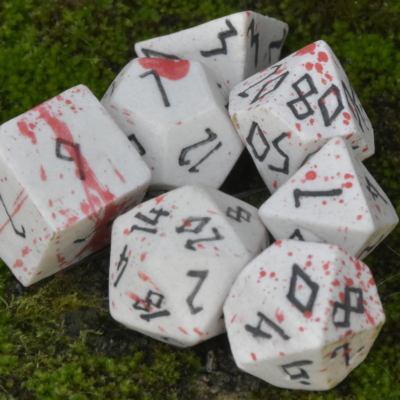
For players building darker characters or running gothic campaigns, the Blood Skeleton Ceramic Dice Set carries enough thematic weight to justify the investment.
Some manufacturers offer painted numbers, but paint wears off stone surfaces relatively quickly with regular handling. The best solution is deeply engraved numbers with contrasting ink or metallic fill that can be refreshed as needed.
Cost Analysis
Stone dice sets typically range from $30 for basic materials to $200+ for premium stones with elaborate engraving. Compare this to quality resin dice at $15-30 per set. You’re paying a significant premium for aesthetics and collectibility.
For that investment, consider how often you’ll actually use them. If stone dice become display pieces that rarely see table time, standard dice might serve you better. If you genuinely enjoy the experience of rolling stone and will use them regularly, the premium becomes easier to justify.
Alternatives Worth Considering
If you’re attracted to premium dice but want different trade-offs, several alternatives exist.
Metal Dice
Metal offers even more heft than stone, with better durability and easier number reading. Zinc alloy dice with enamel inlay provide premium feel without brittle chipping risks. The main downside is noise—metal dice are loud and definitely require padded rolling surfaces. They’re also the hardest on tables.
Resin with Stone Inclusions
Some manufacturers embed small gemstone chips in clear or colored resin, creating dice with stone aesthetics but resin handling characteristics. You get visual interest without the weight, fragility, or reading difficulty of solid stone. This compromise works well for players who want the gemstone aesthetic without practical complications.
High-End Resin Sets
Premium resin dice with complex color blends, metallic inclusions, and sharp edges can rival stone aesthetics while maintaining better balance, lighter weight, and lower fragility. Sharp-edge resin dice in particular have become increasingly sophisticated in recent years.
Making Stone Dice Work at Your Table
If you decide stone dice fit your gaming style, several practices will maximize their utility and lifespan.
Invest in a quality dice tray with padded surfaces—leather, felt, or neoprene all work well. This protects both your table and the dice themselves. Wooden trays with felt lining are particularly popular because they look good as permanent table fixtures.
Establish a careful handling culture. Stone dice shouldn’t be fidgeted with, spun, or tossed casually. Treat them as the semi-precious objects they are. This might sound precious, but a single careless drop can chip a die you paid $50 for.
Use stone dice for meaningful rolls. Some groups reserve premium dice for death saves, final boss encounters, or other dramatically significant moments. This preserves the special feeling while avoiding the fatigue of using heavy dice all session.
Keep backup standard dice available. Sometimes you need to make fifteen attack rolls quickly, or someone needs to borrow dice, or the lighting makes your beautiful obsidian d20 impossible to read. Having standard dice as fallback option means stone dice enhance rather than complicate your game.
Inspect dice periodically for damage. Small chips can propagate into larger cracks if dice continue being used. Catching damage early lets you retire a die before it shatters during a roll. Many stone dice collectors maintain “retired” dice as display pieces even after they’re no longer suitable for play.
The Collection Aspect
For many players, stone dice become collectibles first and gaming tools second. Each set has unique patterning from the natural stone, making them genuinely one-of-kind pieces. This feeds the collector impulse similarly to art or memorabilia.
If you’re approaching stone dice as collectibles, condition and presentation matter more than playability. Display cases, proper lighting, and careful storage become important considerations. Some collectors never roll their premium stone sets, keeping them as showpieces while using standard dice for actual play.
The secondary market for stone dice is thin compared to collectibles with established resale infrastructure. Don’t expect to easily recoup your investment if you later decide to sell. Buy stone dice because you want to own and use them, not as investment pieces.
Choosing Your First Stone Set
For players new to stone dice, starting with a durable mid-priced option makes sense. Jasper, aventurine, or jade in the $40-60 range provides the stone dice experience without excessive financial risk or fragility concerns. These materials are forgiving of new owner mistakes and work well for regular play.
Select a darker stone with light-colored ink in the numbers, or a lighter stone with dark numbers. This maximizes readability under typical gaming conditions. Avoid translucent or very dark stones for your first set—save those for later purchases once you understand how to light and display them effectively.
Purchase from established manufacturers with good reviews regarding durability and number legibility. Cheaper stone dice sometimes have shallow engraving that becomes impossible to read quickly, or poor balance from rushed manufacturing. Spending slightly more for known quality pays dividends in actual usability.
A 10d6 Assorted Ceramic Dice Set becomes invaluable once you start tracking damage rolls, resource counters, and multiple enemy initiative simultaneously.
The decision to buy gemstone dice ultimately comes down to whether the tactile satisfaction and visual appeal outweigh the practical downsides. Stone dice are heavier, more prone to chipping, trickier to read at a glance, and demand careful storage and handling—compromises that plastic simply doesn’t ask you to make. They work best for players who’ll actually treat them with the respect the material requires and who genuinely enjoy the weight and feel at the table. If that’s you, a good stone set becomes something you’ll own for years. If not, that’s a perfectly valid reason to stick with what works.