How to Maintain Your Dice With Proper Care Kits
Your dice collection probably shows signs of regular use: fingerprints on the edges, dust settling in the number engravings, maybe some micro-scratches from years in your dice bag. The good news is that dice are tougher than they look, and a few simple maintenance habits can keep them rolling smoothly and looking sharp without requiring any special expertise or expensive tools.
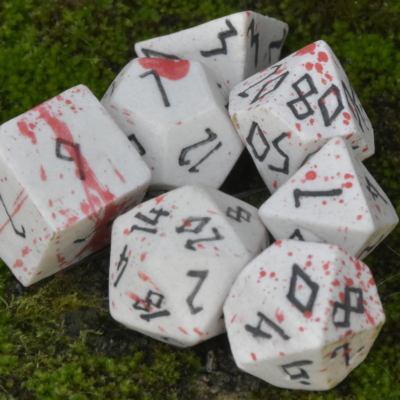
Ceramic dice like the Runic Forgotten Forest Ceramic Dice Set demand gentler handling than standard resin, as their fired clay composition makes them more susceptible to chipping at corners.
Understanding Dice Materials and Maintenance Needs
Different dice materials require different approaches to care. Resin dice—the standard acrylic sets most players use—are relatively durable but can develop cloudiness from oils and dirt. Metal dice can tarnish or oxidize depending on their composition. Stone dice like amethyst or obsidian are prone to chipping if stored carelessly. Knowing what your dice are made from determines how you should maintain them.
Resin dice benefit from occasional cleaning with mild soap and water, while metal dice may need specific polishing techniques to maintain their finish. Sharp-edged precision dice require extra care since their corners are more vulnerable to damage than standard rounded dice. Glass dice should be stored individually to prevent contact damage.
Basic Dice Cleaning Methods That Actually Work
For standard resin dice, the most effective cleaning method is surprisingly simple: lukewarm water with a drop of dish soap. Place your dice in a small bowl, let them soak for a few minutes, then gently scrub with a soft toothbrush or microfiber cloth. This removes the accumulated oils from handling and any grime that’s settled into engraved numbers.
Rinse thoroughly and dry with a lint-free cloth. For dice with painted numbers, be gentle—harsh scrubbing can fade or remove the paint over time. If you have dice with liquid cores or glitter suspended in resin, avoid hot water entirely, as temperature changes can cause separation or cloudiness inside the dice.
Metal dice require a different approach. Brass and copper dice develop a patina that some collectors prefer, but if you want them shiny, use a metal polish appropriate to the material. Aluminum dice stay bright with just soap and water. Never use abrasive cleaners on dice with plated finishes, as you’ll strip the coating.
Dealing with Stubborn Residue
Sometimes dice accumulate sticky residue from gaming mats, spilled drinks, or adhesive from packaging. Isopropyl alcohol on a cotton swab can remove these without damaging most dice materials. Test on an inconspicuous spot first—some dyes and finishes react poorly to alcohol. For dice with foil inclusions or metallic elements, stick to soap and water to avoid chemical reactions.
Storage Solutions for Different Collection Sizes
Proper storage prevents most dice damage before it happens. For a small collection—seven to twenty dice—a basic dice bag with soft lining provides adequate protection. Velvet, microfiber, or soft leather bags prevent scratches during transport while keeping sets together.
Medium collections of 50-200 dice benefit from compartmentalized storage. Tackle boxes, bead organizers, and dedicated dice cases with foam inserts keep individual sets separated and protected. This prevents metal dice from scratching softer materials and keeps sharp-edged dice from damaging each other or standard sets.
Large collections exceeding 200 dice require more elaborate solutions. Display cases with individual compartments let you organize by color, material, or set while keeping them visible. Stackable storage drawers work well for dice you use regularly but don’t need to display. Whatever storage you choose, avoid extreme temperatures and direct sunlight—both can cause discoloration and material degradation over time.
Travel Storage Considerations
If you regularly transport dice to game sessions, invest in padded cases or hard-shell containers. A dropped bag of metal dice can shatter stone dice or chip resin sets. Individual dice tubes work well for protecting expensive or fragile dice during transport, though they’re impractical for large collections.
The 10d6 Assorted Ceramic Dice Set brings an earthy aesthetic to damage rolls, and their glazed surface actually resists fingerprint oils better than unglazed alternatives when properly maintained.
When Dice Need Professional Attention
Most dice maintenance is straightforward, but some situations require careful judgment. Cracked or chipped dice with sharp edges should be retired from play—they’re safety hazards and won’t roll fairly. Dice with damaged liquid cores that have leaked or developed air bubbles are essentially ruined and can’t be repaired.
Precision dice with damaged edges lose their balanced rolling properties. While you might try sanding and polishing sharp-edged dice, it’s nearly impossible to restore true balance once edges are damaged. Metal dice that develop significant corrosion or pitting are difficult to restore without professional metalworking equipment.
For valuable or rare dice, sometimes the best maintenance is minimal intervention. Vintage dice from discontinued lines or limited edition releases often gain value from their original condition, even with signs of wear. Over-cleaning or attempting repairs can reduce collector value.
Building Your Dice Care Kit
A practical dice maintenance setup doesn’t require specialty products. Here’s what actually proves useful over time:
- Microfiber cloths (multiple, so you always have clean ones)
- Mild dish soap and lukewarm water
- Soft-bristled toothbrush or small detailing brush
- Isopropyl alcohol (70% concentration) for stubborn residue
- Metal polish appropriate to your dice collection materials
- Lint-free drying cloths
- Individual dice tubes or small bags for prized pieces
- Organized storage system appropriate to collection size
Avoid harsh chemicals, abrasive cleaners, ultrasonic jewelry cleaners (which can damage resin), and anything that generates heat. These do more harm than good and can permanently damage dice.
Preventing Damage Through Smart Gaming Habits
The best maintenance is prevention. Rolling surfaces matter—hard surfaces like bare wood or glass can chip dice edges over time, especially on metal and stone dice. Dice trays with felt, leather, or foam bottoms protect dice and reduce noise.
Keep drinks away from your play area. Spilled liquids can permanently stain certain dice materials or damage painted numbers. If you’re handling snacks during play, wipe your hands before touching dice—the oils transfer and accumulate surprisingly fast.
Store dice away from windows and heat sources. UV exposure fades colors and can yellow clear resins. Temperature extremes cause expansion and contraction that can crack dice or cause liquid cores to separate.
Maintaining Your D&D Dice Collection Long-Term
Regular dice care doesn’t mean obsessive daily maintenance. A quarterly cleaning for regularly-used sets, proper storage between sessions, and immediate attention to spills or damage covers most needs. Special or expensive dice benefit from individual storage and gentle handling, but standard gaming sets are designed for regular use and hold up well with basic care.
A Single D20 Die Ceramic Dice Set stored separately in a padded pouch ensures your most-rolled die stays protected from the micro-scratches that accumulate in larger collection boxes.
You’re not trying to preserve museum pieces here—you just want dice that stay functional and look decent across multiple campaigns. A little regular cleaning and smart storage will keep your collection in reliable shape for as long as you keep rolling them.