D&D Dice Brands Comparison: What Actually Matters When Choosing Dice
Walk into any game store and you’ll face shelves of dice sets ranging from $8 to $80. The materials vary wildly—resin, metal, gemstone, ceramic, wood. Some brands have been around since the hobby’s early days, while others launched last year on Kickstarter. For new players especially, figuring out which dice brands deliver quality versus which are riding hype requires looking past marketing and understanding what actually affects your game experience.
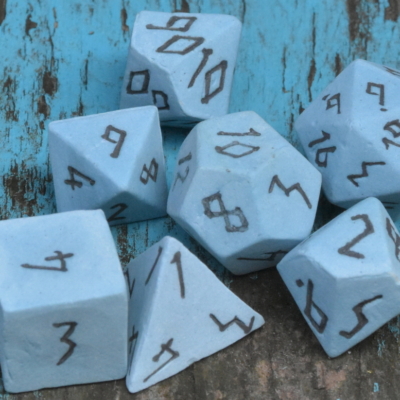
Ceramic materials like those in the Ancient Scroll Ceramic Dice Set offer excellent durability and consistent rolling, making them a reliable mid-range choice for serious players.
This isn’t about recommending one perfect brand. Different dice suit different priorities—budget, aesthetics, readability, durability, feel. What matters is understanding what you’re actually paying for and what separates a functional dice set from one that’ll spend most of its life in a drawer.
What Makes Dice Quality Different Across Brands
Before diving into specific manufacturers, it helps to know what actually varies between dice brands and why those differences matter at the table.
Material consistency affects both durability and rolling fairness. Resin dice with air bubbles or inconsistent density won’t roll true over hundreds of games. High-quality resin should be uniformly mixed and properly cured. Metal dice need balanced weight distribution—cheaper metal sets sometimes have filing imperfections that create bias.
Edge sharpness and number readability directly impact gameplay flow. Dice with poorly contrasted numbers or shallow engravings force players to squint or pick up the die to verify results. Sharp edges on metal dice look beautiful but can damage table surfaces and other dice. Rounded edges prevent damage but may feel less satisfying to roll for some players.
Sizing standards matter more than most players realize. A d20 should measure roughly 20mm. Some boutique brands make oversized dice that don’t fit standard dice trays or bags. Undersized dice can be hard to read across a table.
Established Brands in the D&D Dice Market
Chessex
The default recommendation for new players since the 1980s. Chessex manufactures mass-market resin dice in Wisconsin, offering hundreds of color combinations at typically $5-10 per set. Their Vortex, Gemini, and Speckled lines cover most aesthetic preferences without breaking budgets.
The advantages: consistent quality control, readily available at virtually every game store, affordable enough to own multiple sets for different characters. The downsides: somewhat generic appearance compared to boutique options, and their standard d20s use a specific number arrangement that some players find non-optimal for visual balance.
Koplow Games
Another long-standing manufacturer producing budget-friendly dice primarily for educational and gaming markets. Koplow specializes in unique shapes and sizes beyond standard polyhedral sets—d16s, d24s, d30s, oversized foam dice for conventions.
Quality sits slightly below Chessex in terms of color saturation and edge crispness, but pricing runs 10-20% lower. Good choice for DMs who need bulk dice for lending to players or running large groups.
Q-Workshop
Polish manufacturer known for ornate themed dice with Celtic knots, steampunk gears, dragon scales, and licensed sets for games like Call of Cthulhu and Pathfinder. Their dice function as conversation pieces as much as gaming tools.
The intricate detailing comes with tradeoffs. Numbers can be harder to read quickly, especially in dim gaming room lighting. Pricing runs $12-20 per set. Players who prioritize aesthetics over pure functionality appreciate Q-Workshop’s craftsmanship.
Premium and Boutique Dice Options
Metal Dice
Multiple manufacturers produce metal dice sets, typically in zinc alloy, aluminum, or occasionally copper or brass. These weigh 3-5 times more than resin dice, creating a noticeably different rolling experience—some players love the heft and sound, others find them impractical.
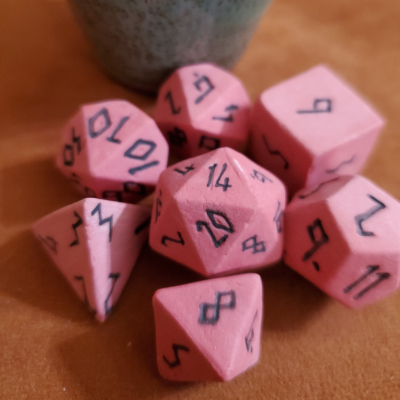
The Dark Heart Dice Set demonstrates how aesthetic design choices—darker finishes and gothic styling—can reinforce character mood and table atmosphere beyond mere functionality.
Quality varies enormously between metal dice brands. Budget metal sets ($20-30) often have rough edges, inconsistent anodizing, and may actually chip or dent softer dice or tables. Premium metal dice ($40-60) feature smooth edges, protective coatings, and come with padded rolling trays to prevent damage.
Metal dice work best for players who game at home with proper rolling surfaces. They’re problematic for games at hobby stores with shared wooden tables or for travel gaming.
Gemstone and Mineral Dice
Real gemstone dice carved from materials like obsidian, jade, amethyst, or tigers eye range from $50 to over $200 per set. These are collector items more than practical gaming tools. The stones are brittle—dropping a gemstone d20 on tile or concrete can chip or crack it permanently.
The appeal is entirely aesthetic and tactile. Rolling real stone dice creates a connection to older gaming traditions when dice were carved from bone, stone, or wood rather than molded plastic. Gemstone dice work best displayed in shadow boxes or reserved for special campaign moments rather than weekly grinding through combat encounters.
Artisan Resin Dice
Small-batch dice makers selling through Etsy, personal websites, or Kickstarter occupy the fastest-growing segment of the dice market. These typically feature complex color combinations, embedded foils, dried flowers, miniature landscapes, or other artistic elements impossible with mass manufacturing.
Pricing runs $30-80 per set. Quality control varies significantly since these are often one-person operations without industrial manufacturing capabilities. Reading reviews and examining photos carefully matters more than with established brands. The best artisan dice makers clearly photograph their number contrast and openly discuss any readability limitations.
D&D Dice Brands Comparison: Practical Recommendations
For new players: Start with Chessex or Koplow in your favorite color. Spend $8-12 on a reliable set rather than $30 on boutique dice before you know your preferences. Own your first set long enough to discover whether you prefer larger numbers, sharper edges, certain color contrasts, or specific feels in hand.
For players on tight budgets: Bulk dice lots from online retailers offer 5-10 complete sets for $20-30. Quality will be mixed, but you’ll have backup dice for when your d20 betrays you three sessions in a row and needs to go in dice jail.
For players who prioritize readability: Look for high-contrast combinations—white numbers on black, gold on dark blue, silver on deep purple. Avoid white-on-clear, yellow-on-orange, or other low-contrast pairings. Larger font sizes help if you game in dim lighting or have any vision difficulties.
For collectors and aesthetic-focused players: Premium resin or metal dice from established boutique brands offer better quality control than artisan dice at similar price points. Check manufacturer warranties and return policies before spending $50+ on a single set.
What This D&D Dice Brands Comparison Reveals
The dice market has exploded with options over the past decade, but the fundamentals haven’t changed. You need seven polyhedrals that roll fairly, display numbers clearly, and survive regular use. Everything beyond that comes down to personal preference—whether you value budget, beauty, tradition, or uniqueness.
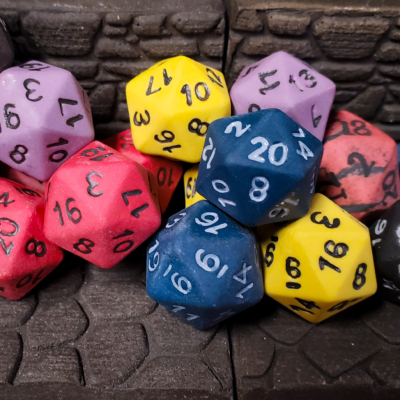
Newcomers often grab a 10d6 Assorted Ceramic Dice Set since the extra dice cover most mechanical needs without forcing a second purchase later.
Most players end up owning multiple sets across different quality tiers. A reliable Chessex set for weekly games. A premium metal or gemstone set for special characters. Maybe an artisan set that perfectly captures a character’s personality. You’ll learn what matters most by building your collection gradually and testing dice at the table rather than buying expensive sets based solely on how they look in photos.