Blue Dragonborn Cleric Combat Tactics
Blue dragonborn clerics pack an underrated punch in combat. You get a character who can wear heavy armor, cast powerful divine magic, and unleash lightning damage without sacrificing either capability—the Wisdom you need for spellcasting doesn’t conflict with the physical stats dragonborn naturally emphasize. If you’ve been eyeing clerics but worried they’re stuck in the back row, this combination lets you hold your ground on the front line while controlling the battlefield.
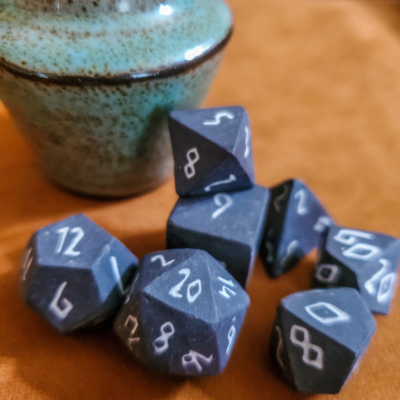
Rolling lightning damage on a Dark Heart Dice Set captures the menace of your blue dragonborn’s draconic fury in tactile form.
Why Blue Dragonborn Works for Cleric
Blue dragonborn bring two key racial traits that matter for clerics: lightning resistance and a breath weapon. The resistance isn’t flashy, but it comes up more often than you’d expect—blue dragons, behirs, djinn, and storm-themed encounters all feature lightning damage. Your cleric won’t need to burn spell slots on Absorb Elements when lightning starts flying.
The breath weapon (a 5-by-30-foot line dealing 2d6 lightning damage, scaling with level) gives you a damage option that doesn’t compete with your spell slots. At early levels, this breath weapon can soften up clustered enemies before you wade into melee. The Dexterity save means it’s less reliable than spell attack rolls, but it recharges on a short rest, making it a renewable resource.
The +2 Strength and +1 Charisma from the base dragonborn chassis means you’re not getting Wisdom directly, which hurts. You’ll need to prioritize Wisdom in point buy or standard array, but the Strength bonus supports melee cleric builds—particularly War, Tempest, and Forge domains that expect you in heavy armor.
Blue Dragonborn Racial Traits Breakdown
Breath Weapon: 5-by-30-foot line, Dexterity save, 2d6 lightning damage (scales to 3d6 at 6th level, 4d6 at 11th, 5d6 at 16th). Once per short rest. This is tactical positioning practice—you want to catch multiple targets without clipping your allies. Line effects require thought, unlike cone breath weapons.
Damage Resistance: Lightning damage resistance matters against specific enemies. Don’t overvalue it, but recognize it as a defensive layer your typical cleric lacks.
Draconic Ancestry: This is flavor, but also determines your breath weapon damage type. Blue specifically gives you lightning, which ties into certain cleric domain choices thematically and mechanically.
Best Cleric Domains for Blue Dragonborn
Not all cleric domains synergize equally with dragonborn traits. Here’s what actually works.
Tempest Domain
This is the obvious pairing, and for good reason. Tempest clerics get heavy armor proficiency, martial weapons, and Wrath of the Storm—a lightning or thunder reaction damage feature. Your breath weapon deals lightning damage, and Tempest’s Channel Divinity: Destructive Wrath lets you maximize thunder or lightning damage once per short rest. At 6th level, you can use it to turn your breath weapon into guaranteed maximum damage (20 points at 6th level, 24 at 11th, 30 at 16th).
The domain spell list includes Call Lightning, Thunderwave, and Destructive Wave—all thematic with your draconic heritage. This is the blue dragonborn cleric build with the clearest mechanical and narrative identity.
War Domain
War clerics get heavy armor and martial weapons, making them frontline fighters. The bonus action attack from War Priest (Wisdom modifier uses per long rest) gives you action economy for mixing weapon attacks with spellcasting. Your breath weapon adds an area damage option that War clerics otherwise lack—they’re typically single-target focused.
The Strength bonus from dragonborn supports melee combat here. You’ll function as a durable striker who can switch between weapon attacks, spells, and breath weapon depending on tactical needs.
Forge Domain
Forge clerics get heavy armor proficiency and Blessing of the Forge, which lets you enhance a weapon or armor piece each long rest. This domain turns you into a heavily armored tank with solid AC. Your breath weapon provides an offensive tool that doesn’t require you to maintain concentration or burn spell slots, freeing you to cast buff spells like Bless or Spirit Guardians while contributing damage.
Forge clerics lack native area damage options in their domain spell list, so the breath weapon fills a gap.
What Doesn’t Work as Well
Life Domain wants you focused on healing and support—the Strength bonus goes unused, and the breath weapon rarely matters when you’re positioned behind your allies. Knowledge and Trickery domains lean heavily into skill usage and infiltration, which doesn’t leverage dragonborn traits. Light Domain gives you area damage already through Radiance of the Dawn and Fireball, making your breath weapon redundant.
Ability Score Priority for Blue Dragonborn Clerics
Wisdom comes first—it governs your spell save DC and spell attack modifier. Aim for 16 Wisdom at character creation if possible. With point buy, consider 15+1 from a custom lineage if your DM allows Tasha’s optional rules, or accept starting with 15 Wisdom and boosting it with your first ASI.
Constitution is second. Clerics often maintain concentration on spells like Bless, Spirit Guardians, or Spiritual Weapon. You need hit points to survive melee range if you’re playing a martial domain.
Strength matters if you’re playing Tempest, War, or Forge domain and using heavy armor. The dragonborn +2 Strength means you can start with 16-17 Strength, which is sufficient for melee attacks and heavy armor without speed penalty.
The Dawnblade Ceramic Dice Set‘s radiant aesthetic mirrors how divine clerics channel storm magic with righteous purpose rather than raw destruction.
Charisma is your dump stat for mechanical purposes, though the +1 bonus means you’ll be decent at social interaction. Dexterity and Intelligence typically get whatever points remain.
Example point buy for Tempest Domain: Str 15+2, Dex 10, Con 14, Int 8, Wis 15, Cha 10+1. This gives you 17 Strength (heavy armor capable), 15 Wisdom (boost to 16 with first ASI or a half-feat), and 14 Constitution for survivability.
Recommended Feats for Blue Dragonborn Cleric Builds
War Caster
Essential if you’re playing a martial domain. War Caster gives you advantage on concentration saves and lets you cast spells as opportunity attacks. When you’re maintaining Spirit Guardians and swinging a mace in melee, you’ll take hits—advantage on Constitution saves keeps your concentration active. Most cleric builds should prioritize this feat after maxing Wisdom.
Resilient (Constitution)
Alternative to War Caster if you have odd Constitution. This rounds out your Constitution score and grants proficiency in Constitution saves, which helps maintain concentration. It’s mathematically better than War Caster at higher levels when you’re making saves against larger damage values, but War Caster’s casting-as-reaction feature is uniquely powerful.
Tough
If you’re frontline tanking, Tough gives you 2 hit points per level retroactively. This stacks with your Constitution modifier and makes you significantly harder to drop. Not flashy, but effective for clerics who draw aggro.
Elemental Adept (Lightning)
Only consider this if you’re playing Tempest Domain and heavily invested in lightning damage spells. Elemental Adept lets you treat any 1s on lightning damage dice as 2s, and ignores resistance to lightning damage. Combined with Destructive Wrath, you’re a lightning specialist. This is a luxury feat—take it after War Caster and maxing Wisdom.
Heavy Armor Master
Reduces incoming nonmagical physical damage by 3. Excellent at early-to-mid levels before magic weapons become common among enemies. If you’re playing a melee domain and frequently in the thick of combat, this feat extends your survivability noticeably.
Tactical Considerations for Blue Dragonborn Cleric Play
Your breath weapon requires positioning awareness. The 5-foot width means you can’t just aim it at a cluster—you need enemies lined up. In practice, this happens more often than you’d expect: enemies advancing down corridors, ranged enemies grouped behind cover, or creatures flanking an ally in a straight line. Don’t force it—use the breath weapon when the positioning is right, not every encounter.
Lightning resistance means you can wade into area effects that would punish other clerics. If an enemy spellcaster drops a Call Lightning or Chain Lightning, you’re taking half damage before any saves. This makes you a good candidate for disrupting enemy casters while your party hangs back.
As a cleric, your primary combat role is maintaining concentration on a powerful spell—usually Spirit Guardians, Bless, or a domain-specific concentration spell. Your breath weapon and weapon attacks are secondary actions you take when your concentration spell is already active. Don’t overthink trying to maximize damage per round—keep your buff or control spell running and contribute steady damage while supporting your party.
Multiclassing Considerations
Most blue dragonborn clerics don’t need to multiclass—cleric is a complete package with strong features at every level. However, a 1-level dip into Fighter gives you a fighting style (Defense or Dueling), Second Wind, and heavy armor proficiency if your domain doesn’t provide it. This delays your spell progression by one level, which hurts, but it can work if you’re building a particularly martial-focused cleric.
Storm Sorcerer multiclass is thematic (lightning damage, tempest flavor) but mechanically questionable. You’d need 13 Charisma, which you have, but delaying cleric spell progression for sorcerer features rarely pays off. Avoid multiclassing unless your table uses milestone leveling and you’re confident you’ll reach high levels to recover from the spell slot delay.
Recommended Backgrounds
Acolyte is the default cleric background, providing Insight and Religion proficiency. It’s never wrong, though it’s not exciting. The Shelter of the Faithful feature gives you free lodging at temples, which matters in campaigns with resource tracking.
Soldier works for martial domain clerics, especially War or Tempest. Athletics and Intimidation fit a battle-focused cleric, and the Military Rank feature helps with social interaction among soldiers and guards.
Folk Hero pairs well with a cleric from a blue dragonborn community who defended their people. Animal Handling and Survival aren’t optimal cleric skills, but Rustic Hospitality (free lodging from commoners) has similar utility to Acolyte’s temple access.
Most players keep a Single D20 Die Ceramic Dice Set within arm’s reach for frequent breath weapon recharges and saving throws.
Building Your Blue Dragonborn Cleric
The blue dragonborn cleric shines when you commit to Tempest Domain, which gives you heavy armor, martial weapons, and a direct synergy between your breath weapon and your Destructive Wrath feature. War and Forge domains are solid alternatives if you prefer a tankier approach with additional utility. Build around Wisdom first, then Constitution and Strength, and grab War Caster early to keep your spells online during melee. Your breath weapon becomes a useful tactical tool rather than your primary damage output, but that’s fine—your spellcasting handles the heavy lifting while the lightning adds flavor and flexibility to a cleric that can match the fighter stride for stride.