How to Optimize Yuan-Ti Monks in Combat
Yuan-Ti Purebloods already bring magic resistance and deception to the table, but pair one with the monk class and you get something that punches well above its weight in actual play. The combination lets you leverage serpentine cunning alongside ki-fueled mobility and control options—meaning you’re not just infiltrating; you’re doing it while staying mobile enough to lock down priority targets in combat. This works especially well if your campaign favors positioning and crowd control over raw damage output.
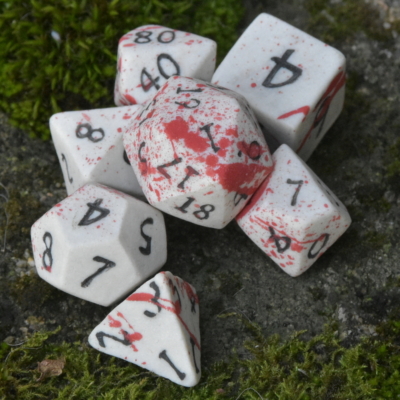
When tracking multiple ki point expenditures and bonus action sequences, the Windcaller Ceramic Dice Set‘s layout helps you manage the Yuan-Ti monk’s complex turn economy without fumbling.
Yuan-Ti Pureblood Traits and Monk Synergy
Yuan-Ti Purebloods bring several traits to the table that complement the monk chassis exceptionally well. Their +2 Charisma and +1 Intelligence don’t align perfectly with the monk’s Dexterity and Wisdom priorities, but the racial features more than compensate for this stat distribution quirk.
Magic Resistance gives you advantage on saving throws against spells and magical effects—an enormous defensive boost for a class that’s already proficient in all saves at higher levels. Combined with Evasion and Stillness of Mind, you become one of the hardest characters to lock down with magic. Poison immunity eliminates an entire damage type and condition that frequently targets melee combatants, and your darkvision extends to 60 feet for dungeon exploration.
The innate spellcasting (Poison Spray cantrip, Animal Friendship on snakes at will, and Suggestion once per long rest) adds utility beyond what the base monk offers. Suggestion, in particular, gives you a powerful control option that doesn’t require a ki point investment. The Charisma casting may seem odd, but Suggestion targets a Wisdom save, so your casting stat matters less than the spell’s inherent power.
The Ability Score Challenge
The elephant—or snake—in the room is that Yuan-Ti boost Charisma and Intelligence when monks desperately want Dexterity and Wisdom. This makes the race less optimal than something like Wood Elf or Tabaxi if you’re purely min-maxing. However, using point buy or standard array, you can still achieve a functional 16 Dexterity and 16 Wisdom at character creation by placing your highest scores there before racial modifiers. The Charisma boost actually enables multiclassing options and makes you a better party face than most monks.
Best Monk Subclasses for Yuan-Ti
Choosing the right monastic tradition matters significantly for maximizing your Yuan-Ti’s potential.
Way of Shadow
Shadow monks are already the infiltration specialists of the monk class, and Yuan-Ti racial traits amplify this role. Suggestion combines beautifully with Shadow Step and ki-fueled stealth to create a character who can appear from darkness, plant a mental command, then vanish before combat even begins. Pass Without Trace makes your entire party benefit from your snake-like stealth, and Minor Illusion gives you another deception tool alongside your natural shapeshifting lore (though that’s not mechanically represented in 5e). This is the most thematically cohesive option.
Way of the Open Hand
Open Hand remains the most mechanically solid monk subclass, and it works well when you want to lean into control. Your Flurry of Blows options (knock prone, push, or prevent reactions) combine with Stunning Strike to make you a lockdown specialist. Magic Resistance ensures you won’t get controlled yourself while you’re busy controlling enemies. Wholeness of Body at 6th level gives you self-healing, which extends your already impressive survivability.
Way of Mercy
Mercy monks from Tasha’s Cauldron bring healing and status effect manipulation, which plays interestingly with poison immunity and Magic Resistance. Hand of Harm lets you add necrotic damage to your strikes, diversifying your damage types beyond bludgeoning. Hand of Healing makes you a secondary healer, which helps parties lacking a dedicated cleric. The subclass gives you more versatility, though it doesn’t synergize as tightly with Yuan-Ti traits as Shadow does.
Way of the Drunken Master
This one’s harder to justify mechanically, though it has roleplaying potential—a Yuan-Ti who feigns intoxication while being completely immune to most toxins is amusing. Mechanically, you get extra mobility and better crowd control survivability, but you’re not leveraging your racial features as effectively as other options.
Yuan-Ti Monk Build Path
Starting at level 1, prioritize Dexterity and Wisdom in that order. Aim for 16 in both if possible, accepting that your 14 Charisma will be unusual for a monk. Constitution should be your third priority since monks have a d8 hit die and spend significant time in melee range.
At level 4, take the Ability Score Improvement to boost Dexterity to 18. At level 8, boost Wisdom to 18. This puts your key stats in competitive territory by tier 2 play. Some players prefer taking feats instead, but monks benefit enormously from hitting more often and increasing their ki save DC.
Alternative Feat Considerations
If you’re using a rolled stats campaign or have access to better starting scores, Mobile is the standout feat for monks. The extra 10 feet of movement and ability to avoid opportunity attacks without Disengaging frees up your bonus action for Flurry of Blows more often. For a Yuan-Ti specifically, Mobile enhances your ability to strike, suggest, and retreat.
The serpentine nature of this build calls for dice that match its shadowy aesthetic, and the Duskblade Ceramic Dice Set captures that cold-blooded mystique perfectly.
Alert makes you even harder to catch off-guard, preventing surprise and boosting your initiative modifier. Combined with high Dexterity, you’ll frequently act first, letting you Stunning Strike priority targets before they threaten your party.
Skill Expert or Skilled can round out your infiltration capabilities, especially if you’re playing Way of Shadow. Expertise in Stealth or Deception turns you into a true specialist.
Campaign Settings for Yuan-Ti Monks
Your character’s background and the campaign setting matter significantly for Yuan-Ti Purebloods. These serpent folk originated as yuan-ti who interbred with humans, and they typically serve in yuan-ti society as spies, infiltrators, and agents in human lands. This gives you rich roleplaying opportunities in the right setting.
Jungle or tropical settings like Chult work naturally—your character might be a refugee from a fallen yuan-ti temple, or an agent working against the serpent empire from within. Urban campaigns in cities like Waterdeep or Baldur’s Gate let you lean into the infiltrator angle, with your monastic training providing cover for your true heritage.
The most interesting option narratively is playing a Yuan-Ti who has genuinely rejected the yuan-ti worldview. Monasteries in D&D often take in outcasts and teach them to master themselves, which fits perfectly with a pureblood seeking to overcome their heritage’s emotional coldness and cruelty. Your ki manipulation could represent your struggle to cultivate the emotions and empathy that yuan-ti typically lack.
Backgrounds and Character Motivation
The Acolyte background fits if your monastery has religious ties, though Haunted One from Curse of Strahd better captures a yuan-ti fleeing their past. Criminal or Charlatan works for purebloods who leaned into their deceptive nature before finding monastic discipline.
Your character motivation should address why a Yuan-Ti learned monastic arts. Were you raised in a monastery after being abandoned as a child? Did you seek out training to gain power beyond your innate magic? Are you a spy for the yuan-ti empire, using monk abilities to infiltrate other societies more effectively? Each answer creates a different character despite identical mechanics.
Playing the Yuan-Ti Monk Effectively
In combat, your role is control and disruption. Open with Stunning Strike on priority targets—spellcasters and enemy controllers who would otherwise threaten your party. Your Magic Resistance means you can safely engage mages that would shut down other melee characters. Use Patient Defense when you’ve drawn too much attention, letting your ki points fuel Dodge instead of attacks until your party repositions.
Out of combat, leverage Suggestion creatively. The spell lasts 8 hours and allows reasonably broad commands. You can convince guards to forget they saw you, persuade merchants to close shop early, or get witnesses to misremember events. The limit is that the suggestion must sound reasonable—you can’t command someone to act completely against their nature.
Your high mobility (eventually reaching 50-60 feet per turn with Unarmored Movement) makes you excellent at objective-based combat. You can Dash to the lever, Stun the guard, or carry the macguffin out of danger while your party holds the line. Don’t fall into the trap of just trading attacks with the biggest enemy—monks excel at tactical flexibility.
Most D&D players keep a Single D20 Die Ceramic Dice Set on hand for those crucial saving throws where Magic Resistance determines combat outcomes.
What makes this build work in practice is how the racial features shore up the monk’s durability while the class abilities turn you into a control nightmare. You’ll sacrifice some raw damage numbers and hit the typical ability score constraints, but the defensive layers and threat neutralization more than make up for it in games where you’re not just trying to out-DPS the barbarian.