
Running D&D is the best seat at the table. It’s also the chair that breaks first. You’re the world and the weather, the villain monologue and the tavern keeper who remembers the party’s tab, the rules lawyer who has to overrule themselves at 11pm on a Wednesday. Nobody tells you that the hard part isn’t learning the Monster Manual — it’s running session 14 when your players have skipped the dungeon you spent six hours mapping and decided the real adventure is overthrowing the duke you invented in a single offhand sentence.
This is the hub for everything we’ve written about doing that job well. You’ll find guides on the stuff that actually eats your week: cutting prep time without cutting quality, building encounters that don’t collapse the second a paladin rolls a 19 on initiative, keeping a campaign coherent past level 5 (where most tables quietly die), and improvising with confidence when the wizard polymorphs the BBEG into a goat.
There’s material here on session zero and table problems — the player who derails every scene, the one who won’t engage at all, the rules disputes that go nuclear over a grapple check. There are deep dives on homebrew, narrative pacing, lair actions, treasure pacing, and why most published modules need surgery before they run cleanly.
Pick what you need. Bookmark what you don’t yet. Every link below leads to something we wrote because we needed it ourselves, behind our own screen, on a real Tuesday night.
DMs are a different breed of customer entirely, and we love every conversation we have with them at our booth. While most players come up excited about their character, Dungeon Masters approach the table with a completely different energy — usually with a notebook tucked under one arm and a thousand-yard stare that says they’ve been awake plotting since 3 AM. When we ask what they love most about running games, the answer almost always comes back to one word: WORLDBUILDING! These folks are the architects, the storytellers, the people who voice every shopkeeper and every dragon. They tend to be patient, creative, and just a little bit mischievous. There’s a particular gleam in a DM’s eye when they talk about a session where their players went completely off the rails, and honestly, that gleam is one of our favorite things about conventions.
When it comes to dice, DMs usually want something with presence — sets that feel weighty and dramatic when rolled behind the screen. They gravitate toward darker, moodier sets that match the gravity of a boss encounter or a secret roll. Our Runic Necromancer Ceramic Dice Set set tends to be a quick favorite, and we sell a lot of Pyschic Shadow Ceramic Dice Set to DMs who want something that looks as ominous as the fate they’re about to deliver.
Featured Dice for DM Players
Hand-picked ceramic dice sets from Crit Hit Ceramics that complement DM characters at the table.
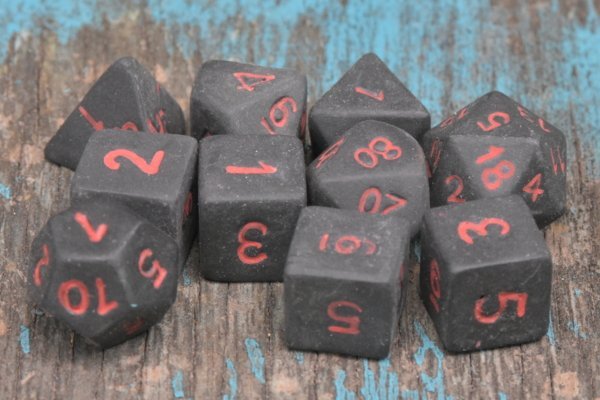
Necromancer Ceramic Dice Set
Pure black hand-pigmented English porcelain with crisp white numbering. A standout fantasy dice set for necromancers, warlocks, and shado…
Coming Soon
Dark Castle Ceramic Dice Set
Hand-pigmented black and deep blue English porcelain swirled by hand with bold black numbering. A handmade ceramic dice set for dark pala…
Coming Soon
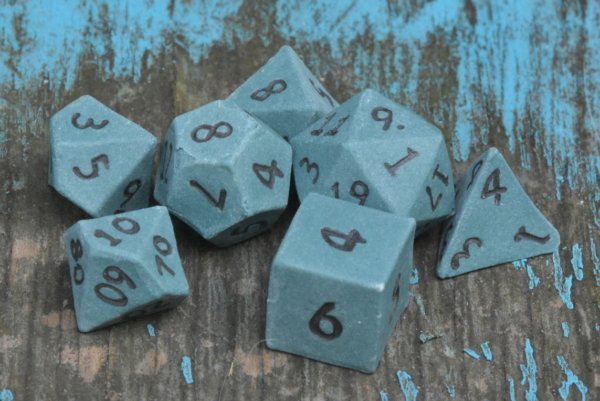
Ancient Mariner Ceramic Dice Set
Soft, muted lighter-green hand-pigmented English porcelain with bold black numbering. A handmade ceramic dice set for sea captains, water…
Starting Your First D&D Campaign
Running your first campaign is equal parts thrilling and terrifying. The good news: you don’t need to memorize the Monster Manual or build a Tolkien-tier world to deliver a great first session. You need a setting, a starting adventure, players who actually want to play, and a session zero that prevents 80% of the problems new DMs run into.
Pick a setting that does the work for you. Homebrew is tempting, but for your first campaign, lean on something established. The Forgotten Realms (Sword Coast, specifically) is the default for a reason — there’s a published adventure, NPC, or map for nearly any situation. Eberron rewards mystery and noir; Ravenloft handles horror; Wildemount suits players coming in from Critical Role. The setting shapes tone, party composition, and what kinds of stories land, so choose deliberately. If you want to dig deeper into how setting drives play, read how campaign settings shape your D&D game and the role setting plays at the table.
Run a published adventure first. Seriously. Lost Mine of Phandelver and Dragon of Icespire Peak exist specifically for new DMs. They give you encounters, maps, stat blocks, and a sandbox structure. You’ll learn pacing, improvisation, and rules adjudication faster running someone else’s module than building from scratch. Save the homebrew epic for campaign two — and when you get there, our worldbuilding guide for DMs will be waiting.
Recruit deliberately. Four players is the sweet spot. Five works. Six is hard. Seven is a part-time job. Prioritize reliability over enthusiasm — the friend who shows up consistently beats the one who’s hyped for two sessions and ghosts.
Run a real session zero. This is non-negotiable. Cover:
- Tone and content: What’s on the table — horror, romance, gore, politics — and what’s off?
- Scheduling: Frequency, start/end times, cancellation policy. Write it down.
- Character creation together: Party connections built at the table beat backstories written in isolation.
- Safety tools: Lines and veils, the X-card, or just an open conversation. Pick one.
- Expectations: Is this a roleplay-heavy character drama or a tactical dungeon crawl? Both are valid. Confusion about which kills campaigns.
Once you’re rolling, the rest of this pillar covers what comes next — pacing, villains, music, and the table dressing that turns a good campaign into one your players still talk about years later.
Managing Difficult Players & Table Dynamics
Every DM eventually faces it: the player who derails sessions, monopolizes spotlight, or turns combat into a rules debate. Ignoring these dynamics is how campaigns die. Addressing them — directly, early, and with a framework — is how you build tables that last years.
Most problem players fall into recognizable archetypes:
- The Rules Lawyer: Knows the PHB better than you and will say so mid-encounter. Useful in moderation; toxic when they weaponize RAW to override rulings.
- The Spotlight Hog: Turns every NPC interaction into their solo monologue. Often unaware they’re doing it.
- The Disruptor: Meta-jokes, phone scrolling, chaotic-stupid characters who steal from the party “because it’s what my rogue would do.”
- The Ghost: Disengaged, doesn’t take turns seriously, slows combat to a crawl.
The single most effective tool you have is Session Zero. Treat it as a contract, not a vibe check. Establish tone, content limits, expectations around attendance, phones, PvP, and how rules disputes get resolved (hint: DM rules now, looks it up after the session). A written document everyone agrees to gives you something to point at when behavior drifts. For deeper frameworks on this, see How to Handle Problem Players at Your D&D Table and How to Handle Problem Players Before They Wreck Your Table.
When issues arise, talk privately and quickly. Don’t ambush players in front of the group, and don’t passive-aggressively target their character in-game. A five-minute conversation before next session — “Hey, I noticed X, here’s what I need to change” — solves 80% of problems. The other 20% need escalation. Communication-first approaches work because most problem players don’t know they’re a problem.
Kicking a player is sometimes the right call. If behavior is harmful, repeated, or violates session zero agreements after a direct conversation, remove them. The rest of your table will thank you. A bad player poisons the whole campaign; protecting the group is your job.
For engagement balance, track spotlight time mentally — give each PC a scene every 1-2 sessions tied to their backstory. Quiet players often need invitations, not pressure. Ask their character directly: “What does Kael think about this?” For more tactical advice on reading your table, Practical Solutions for DMs breaks down session-by-session diagnostics.
Healthy tables aren’t accidents. They’re built.
Encounter Design & Combat
The DMG’s encounter-building math is a starting point, not gospel. The CR system famously breaks down at both ends — a CR 1/4 enemy is a speed bump to a level 5 party, while a single CR-equal-to-party-level boss usually gets shredded in two rounds thanks to action economy. The real currency of combat isn’t hit points; it’s turns. Four PCs versus one monster means the boss eats four times the damage before it acts again. Build accordingly.
A useful rule of thumb: for a memorable fight, aim for a total monster XP budget around the “Hard” threshold, then split it across 2–4 creatures with varied roles (bruiser, controller, ranged threat, skirmisher). Solo bosses need legendary actions, lair actions, or minions to survive — otherwise you’re running a piñata.
Multi-stage encounters are where combat stops feeling like a math problem and starts feeling like a story. Try:
- Phase shifts: The boss hits 50% HP and the ceiling collapses, splitting the party. Reinforcements arrive. The villain transforms.
- Objective-based combat: Hold the gate for 5 rounds. Destroy the ritual circle before turn 4. Escape the sinking ship. PCs stop optimizing DPR and start making interesting choices.
Terrain is the cheapest way to make any encounter better. A flat 30×30 room with four goblins is forgettable. The same four goblins on a rope bridge over a chasm, with archers on the far ledge and a brazier that can be tipped, is a story. Bake in three terrain features minimum: something to climb, something to break, something dangerous to push enemies into. Not every encounter needs to be a fight — see our pieces on non-combat encounters beyond the dice roll and non-combat encounters that actually matter for ways to vary the rhythm.
On fudging rolls: I’ll be opinionated. Fudge sparingly, fudge early, and never fudge to kill a PC. If your “deadly” encounter is steamrolling the party because you rolled three crits in round one, dropping a die roll behind the screen to keep someone conscious is fine. Fudging to save your cool villain from a lucky crit, however, breaks the contract — those moments are why we play. Better to give bosses a “second wind” mechanic upfront than to cheat dice in the moment.
Specific monster types deserve specific tactics — our guides on running goblin encounters and divine dragon encounters go deeper on making iconic foes feel iconic.
NPCs, Villains & Memorable Characters
Here’s the uncomfortable truth: your players won’t remember the dragon’s AC or how many legendary actions it had. They’ll remember that the dragon called the rogue by their childhood nickname before incinerating their hometown. Characters drive campaigns, not combat math. Whether you’re prepping a one-shot or running a five-year megacampaign, the NPCs your players love (and love to hate) are what they’ll be quoting at the table years from now.
Start with motivation, not stat block. Every memorable villain wants something specific, believes they’re justified, and has a reason they can’t just walk away. A lich hoarding souls because “evil” is boring. A lich hoarding souls because she’s trying to resurrect the apprentice she accidentally killed three centuries ago? That’s a character. Our guide on creating memorable villains digs deeper into the motivational frameworks that actually land at the table, and the companion piece on triton cleric villains shows how race and class choices can reinforce backstory rather than just decorate it.
For recurring NPCs and antagonists, lean into specificity over complexity:
- One physical tic — they crack their knuckles, refuse to make eye contact, always smell faintly of cloves
- One verbal signature — a catchphrase, a specific way they address the party, a language quirk
- One unresolved tension with at least one PC — a debt, a shared history, a secret
On voice acting: you don’t need a drama degree. Pick a pitch (higher or lower than yours), a pace (faster or slower), and one quirk. That’s it. Three NPCs with three distinct voices beats ten NPCs who all sound like you doing a vague British accent. If voices aren’t your thing, describe how they speak instead — “she clips her consonants like she’s late for something” works just as well.
Don’t sleep on antagonist variety. A tiefling ranger stalking the party through wilderness hits differently than a courtly schemer, and drow characters wrestling with moral dilemmas can blur the villain line in productive ways. For stat blocks, reskin liberally — a Knight with a different name and one custom ability is faster prep than building from scratch, and your players will never know.
Tie villains to your campaign’s themes and worldbuilding. A villain who embodies what your campaign is about becomes unforgettable.
Worldbuilding & Setting
Your setting is the stage every encounter, NPC, and plot twist stands on. Get it right and players lean in; get it wrong and even great combat feels like it’s happening in a vacuum. The good news: you don’t need a Tolkien-sized appendix to run a memorable campaign. You need just enough world to make choices matter.
The first decision is structural: sandbox or linear? Sandboxes hand players a map and let them chase their own goals — great for emergent storytelling, brutal on prep if you over-detail regions they’ll never visit. Linear (or “path”) campaigns funnel the party through a curated narrative, which is easier to prep but can chafe if your table loves agency. Most veteran DMs land somewhere in the middle: a critical path with sandboxed side regions. Our worldbuilding fundamentals guide and practical tips for DMs dig deeper into hybrid structures.
When building cities, regions, and cosmologies, work outside-in for tone, inside-out for detail. Decide the vibe of a place before you stat its guard captain. A port city defined by “salt, debt, and old gods” writes its own NPCs. For cosmology, only canonize what the party can interact with — pantheons matter when a cleric prays, planes matter when a warlock’s patron calls. Speaking of which, how magic shapes society and the deeper magic systems article are essential if you want spells to feel cultural, not just mechanical.
Balancing detail and flexibility is the eternal tightrope. A few rules of thumb:
- Prep nouns, not narratives. Three NPCs, two locations, one rumor — let the session arrange them.
- Leave 30% blank. Empty space on the map is room for player backstory hooks and improvisation.
- Name things you’d hate to improvise. Gods, noble houses, currency. Players ask about these constantly.
Don’t sleep on published settings. Forgotten Realms, Eberron, Ravenloft, Spelljammer, and Theros each come with baked-in assumptions about magic, technology, and morality that shape everything from class flavor to faction politics. A human fighter in Eberron plays nothing like one in Barovia, and warlocks especially thrive or wither depending on the cosmology. If you’re weighing options, see how settings shape your game and our broader campaign settings overview.
Whether you’re homebrewing from scratch or hacking a published world, remember: the goal isn’t completeness. It’s memorability. Build the world your table will talk about between sessions — not the one that wins an encyclopedia contest.
Homebrew Content & House Rules
Every long-running table eventually drifts from the rules-as-written, and that’s a feature, not a bug. The official 5e rules are a starting point — a robust, playtested framework you’re expected to bend once you understand why each piece exists. The trick is knowing what you’re trading away when you change something.
Start with house rules, the lowest-risk customization. The classics earn their popularity:
- Max damage on the first crit die, roll the second — keeps crits feeling crunchy without the 2d6 = 4 letdown.
- Inspiration as a token you can hand out freely, rather than the binary “do you have it?” version most tables forget about by session three.
- Potions as a bonus action or auto-max healing when self-administered — see our deeper dive on healing potion variants for why this matters more than it looks.
- Flanking via positioning, not a flat +2, especially if you’re running gritty urban campaigns where grappling and chokepoints dominate combat.
Break official rules when they actively work against the table you want. If your players love cinematic combat, the strict action economy may need loosening. If you’re running mystery or intrigue, lean into non-combat encounter structures and stop forcing initiative for every confrontation. The rules serve the game; the game doesn’t serve the rules.
Homebrew content is where things get dangerous — and rewarding. Custom monsters are the easiest entry point: reskin a stat block, swap a damage type, give it one signature ability that telegraphs its identity. Magic items are next; just remember that an item granting permanent +1 AC or advantage on a save is doing real mechanical work, even if it “feels small.”
Subclasses, races, and full classes are the deep end. Before publishing anything to your table, read our guides on approaching homebrew content and building balanced homebrew races and classes. The Artificer is a particularly fun sandbox — our guide to inventions beyond the rules shows how to give players creative latitude without breaking the action economy.
Balancing custom content comes down to three checks: compare to existing options at the same level, identify the strongest possible build using your homebrew, and playtest it against a real encounter, not a theoretical one. If your new subclass outclasses Battlemaster at every tier, it’s not balanced — it’s just better, and your other martial players will notice.
Finally, don’t underestimate presentation. Distinct specialty dice or custom dice for signature moments — a villain’s saving throws, a homebrew crit table — turn rule changes into table rituals players actually remember. The same goes for non-traditional campaign themes: when the setting breaks the mold, your house rules feel earned rather than arbitrary.
Frequently Asked Questions
How do I get started as a new DM?
Run the D&D Starter Set’s Lost Mine of Phandelver or the free Stormwreck Isle adventure. Both include pre-made characters, maps, and encounter guidance. Read only the first chapter before session one—don’t try to memorize the whole book. Watch one episode of a streamed game (not Critical Role; try Dimension 20’s shorter campaigns) to see pacing in action. Tell your players upfront you’re learning. Most rules questions can be resolved with “we’ll roll a d20, DC 15” and looked up later.
How do I handle a disruptive player?
Talk to them privately between sessions, not at the table. Be specific: “When you scroll TikTok during other players’ scenes, it kills momentum.” Most disruption stems from boredom, social anxiety, or unclear expectations—diagnose before prescribing. If behavior continues after one direct conversation, give a clear final warning. If it persists, remove them. A bad player damages the table more than an empty chair. Use a Session Zero and written table expectations to prevent most issues before they start.
How do I balance combat encounters?
The DMG’s CR system is unreliable; use Kobold Fight Club or the 2024 DMG’s revised XP budgets as starting points, then adjust. Action economy matters more than CR—four CR 1/2 monsters threaten a level 5 party more than one CR 4 boss. Track your party’s average damage per round; an encounter should last 3-4 rounds. For deadly encounters, add terrain hazards or reinforcements rather than inflating HP. Always know how each monster behaves when bloodied or when allies fall.
Should I run a published adventure or homebrew?
Run published for your first three campaigns minimum. Curse of Strahd, Tomb of Annihilation, and Wild Beyond the Witchlight teach different DM skills: gothic pacing, hexcrawl logistics, and theater-of-the-mind whimsy respectively. Homebrew burns 5-10 hours of prep per session and most new DMs underestimate how much published modules teach about encounter design, NPC variety, and story structure. Even veterans benefit from modules as scaffolding—reskin enemies, swap locations, but let someone else handle the load-bearing plot beats.
How much should I prep for each session?
Cap prep at twice your session length until you’re experienced—four hours for a four-hour session. Prep in this order: the opening scene, three potential encounters (combat, social, exploration), two NPCs with clear wants, and a list of names/places you might need. Don’t script outcomes; prep situations. Use the “Lazy DM” approach from Sly Flourish: a strong start, secrets and clues, fantastic locations, and relevant monsters. Over-prep is the leading cause of DM burnout.
When should I fudge dice rolls?
As rarely as possible, and never to punish players. The two defensible cases: a single bad roll in session one would TPK before players are invested, or a string of monster crits would feel arbitrary rather than dramatic. Roll in the open when stakes are high—it builds trust and makes victories real. If you find yourself fudging often, your encounters are mis-tuned. Better solutions: have monsters retreat, let NPCs intervene, or design encounters where defeat advances the story rather than ending it.
Browse All Content
Our complete library:
- How To Create Artificer Inventions Beyond The Rules
- How to Write a Sorcerer Backstory That Actually Matters
- How to Create Memorable Villains for Your D&D Campaign
- How to Choose Music for Your D&D Sessions
- How to DM for a Tiefling Sorcerer in Your Campaign
- Fighter Backstories: Building Depth Beyond the Blade
- How to Build a Fighter with Integrated Player Backstory
- How to Build Triton Cleric Villains That Players Won't Forget
- How to Manage Large D&D Groups: DM Strategies That Actually Work
- Non-Combat Encounters for D&D Parties: Beyond the Dice Roll
- Non-Combat Encounters for Barbarian Tortles
- How to Play Chromatic and Metallic Dragons in D&D 5e
- Best D&D Podcasts Worth Your Time in 2024
- Building Dragonborn Cities and Settlements in D&D 5e
- How to Build a Dragonborn City in D&D
- Building Atmosphere: Dark Tone Campaigns in D&D 5e
- Unexpected Origins Shape Paladin Characters Best
- Breaking the Fantasy Mold: Non-Traditional RPG Campaign Themes
- Running Non-Traditional D&D Campaigns: Beyond Medieval Fantasy
- Building a Functional Fantasy Economy for Your D&D Campaign
- Building a Functional D&D Economy System
- How to Build Cities and Settlements for D&D Campaigns
- Running Time-Pressured D&D Campaigns
- Building a Campaign Around a Heroic Quest
- How to Play an Evil Character in D&D Without Destroying Your Party
- Drow High Magic: Legendary Items and Artifacts in D&D 5e
- How to Make D&D Combat More Cinematic
- How to Handle Character Death in D&D 5e
- How to Create Cinematic Combat Moments in D&D
- How to Run a Tiefling Warlock Campaign on a Budget
- How to Run a Budget-Friendly D&D Campaign
- Playing Paladins with Secret Agendas in D&D 5e
- Playing a Paladin with Hidden Motives
- How to Play a Paladin With Hidden Motives
- How Magic Shapes Paladin Worldbuilding in D&D 5e
- How Paladins Shape Magic in Your D&D World
- How to Run a D&D Campaign on a Budget
- How to Run Goblin Encounters as a Dungeon Master
- How to Run Goblin Fighters as a Dungeon Master
- Goblin Fighter Tactics: DM Tips for Small Skirmishers
- How to Run Fun Non-Combat Encounters in D&D
- How to DM Large Groups with Red Dragonborn Fighters
- How to Run D&D for Large Groups: A DM's Guide
- How to DM for a Party of Red Dragonborn Fighters
- How to DM for Large Groups in D&D 5e
- How Music Transforms Your D&D Campaign
- How Music Transforms Your D&D Sessions
- How to Use Githzerai Lore in Your D&D Campaign
- How Music Enhances Your Paladin Campaign
- How Music Enhances Your D&D Sessions
- Building Prophecy-Driven D&D Campaigns That Matter
- Building a Prophecy-Driven D&D Campaign
- How to Run a Prophecy-Based D&D Campaign
- Oath of Hexes: Running Hex-Focused Paladins at Your Table
- Essential D&D Resources Every Dungeon Master Needs
- Campaign Themes That Work and Best Ranger Backgrounds in D&D 5e
- Building Rangers Around D&D Campaign Themes
- Building D&D Campaign Themes That Actually Work
- How to Run a Dark Campaign with a Tiefling Paladin
- How to Handle Character Death as a Fire Genasi Ranger
- How to Build a Tabaxi Monk Villain for Your D&D Campaign
- How to Craft a Lethal Tabaxi Monk Villain
- How to Build a Tabaxi Monk Villain for D&D
- How to Build Moral Dilemmas for Your Halfling Rogue
- How Setting Shapes Your D&D Campaign
- How Campaign Settings Shape Your D&D Game
- How to Play a Human Fighter in Different D&D Settings
- How to Run Wilderness Survival in D&D Campaigns
- How to Run a Wilderness Survival Campaign in D&D
- Building Moral Depth for Bronze Dragonborn Fighters
- How to Build Warforged Into Your D&D World
- How to Build Memorable D&D Worlds: Worldbuilding Tips for Dungeon Masters
- Worldbuilding Tips for DMs Running D&D Campaigns
- Best Campaign Settings for Warlock Characters in D&D 5e
- How to Run an Epic D&D Campaign on a Budget
- How Magic Shapes Society in D&D: A DM's Guide
- Dragons in D&D: A Complete Guide for Rangers and Dungeon Masters
- Dragons in D&D Lore: History, Types, and Campaign Roles
- D&D Planes of Existence: A Guide to the Multiverse
- How to Create Balanced Homebrew Races and Classes
- Essential Resources for Dungeon Masters in D&D 5e
- Hex-Based Mechanics and Resources for D&D Dungeon Masters
- How to Build a Paladin Campaign Around Legendary Artifacts
- Building Artifact-Centered Campaigns for Paladins in D&D 5e
- Legendary Artifacts for D&D 5e Campaigns
- Building a Paladin Artifact Campaign in D&D 5e
- How to Run a Comedy D&D Campaign
- How to Run a West Marches Campaign with an Aasimar Bard
- Running a West Marches Campaign with an Aasimar Bard
- Essential Resources Every Dungeon Master Needs
- Essential Dungeon Master Resources for D&D 5e
- How to Run High-Stakes D&D Campaigns
- How to Play a Paladin Without Derailing Your Campaign
- How to Handle Problem Players at Your D&D Table
- How to Handle Problem Players as a Paladin
- How to Handle Problem Players at Your Table
- Building Moral Dilemmas for Fighters in D&D 5e
- Moral Dilemmas for Fighters: Building Character Through Hard Choices
- How to Build Moral Complexity into Your D&D Fighter
- How to Run a Half-Elf Warlock as a Dungeon Master
- D&D Planes of Existence: A DM's Guide to Planar Travel
- Props and Visual Aids for Your D&D Table
- How to Use Props and Visual Aids for Your D&D Game
- How Props and Visual Aids Transform Your D&D Sessions
- Artificer Subclasses: A DM's Guide to Balancing Innovation at the Table
- Character Growth in D&D: Beyond the Experience Points
- How Campaign Settings Shape Your D&D Experience
- How to Use Guilds and Organizations in Your D&D Campaign
- How Guilds and Organizations Enhance D&D Campaigns
- How to Build Guilds and Organizations in Your D&D Campaign
- How to DM for Large Groups Without Losing Pace
- How to Use Props and Visual Aids for Better D&D Sessions
- How to Run a Gnome Wizard Campaign for New Players
- Time Travel Mechanics for Half-Orc Barbarians
- Half-Orc Barbarian Build for Time Travel Campaigns
- How to Introduce New Players to D&D
- How to Introduce D&D to New Players
- How to Handle Problem Players at the D&D Table
- How to Handle Problem Players in D&D 5e
- Worldbuilding for Dungeon Masters: Building Campaign Settings That Work
- Worldbuilding for D&D 5e: Building Campaign Settings That Matter
- How to Use Puzzles in Your D&D Campaign
- Building Tiefling Ranger Villains for Your D&D Campaign
- How to Build Tiefling Ranger Villains That Players Will Remember
- How to Build a Tiefling Ranger Villain
- How to Play a Sorcerer in Multi-DM Campaigns
- Running Multi-DM Campaigns and Best Sorcerer Backgrounds in D&D 5e
- How to Run Multiple DM Campaigns in D&D
- How to Run a D&D Campaign with Multiple DMs
- How to DM for New Players: A Practical Guide
- Building Dynamic D&D Cities: A DM's Blueprint
- Building Dynamic Cities for Your D&D Campaign
- How Campaign Pacing Changes with a Triton Paladin
- How to Pace a D&D Campaign Without Losing Your Players
- How to Control Campaign Pacing in D&D
- Essential D&D Resources Every DM Should Master
- How to Pace a D&D Campaign With Tension and Release
- How to Pace a D&D Campaign With Proper Rhythm
- How to Run Multi-DM Campaigns in D&D 5e
- How to Run a Multi-DM Campaign in D&D
- How to Run Multi-DM Campaigns Without Chaos
- How to Run a Multi-DM Campaign in D&D 5e
- How to Build a Tiefling Shadow Sorcerer Villain
- Building a Tiefling Shadow Sorcerer Villain for Your D&D Campaign
- Building a Tiefling Shadow Sorcerer Villain for Your Campaign
- Building a Tiefling Shadow Sorcerer Villain
- Magic in D&D Worldbuilding: Systems, Societies, and Sacred Oaths
- How to Run Improvised D&D Sessions: A DM's Guide
- Paladin Travel and Exploration Tips for D&D 5e
- How to Make Non-Combat Encounters Fun in D&D 5e
- How Warlock Patrons Create Non-Combat Encounters
- How to Run Non-Combat Encounters That Actually Matter
- How to Design Memorable Warlock Patrons in D&D 5e
- How To DM For Large Groups Without Losing Pacing
- How to Run Large Groups with a Tortle Barbarian Tank
- How to Manage Large D&D Groups: Combat, Spotlight, and Table Control
- How to Play a Drow Ranger with a Secret Agenda
- Dragonborn Fighter Build for West Marches Campaigns
- How to Run a West Marches Campaign with Dragonborn Players
- Dragons in D&D Lore: A Cleric's Divine Perspective
- Dragons in D&D: A Cleric's Guide to Divine Encounters
- Dragons in D&D: Lore, Types, and How to Use Them
- How to Handle Problem Players Before They Wreck Your Table
- Handling the Ranger Problem Player at Your D&D Table
- How to Handle Problem Players as a DM: Practical Solutions
- How to Handle Problem Players Through Communication
- Non-Combat Encounters for Tiefling Warlocks
- How to Build Ranger Backgrounds into Your D&D Campaign
- Ranger Backgrounds and Storytelling in D&D 5e
- How to Integrate Player Choices Into Your D&D Campaign
- Running Betrayal in D&D: When to Use It and How to Pull It Off
- How to Run a Diplomacy-Focused D&D Campaign
- Worldbuilding for DMs: Creating Campaigns with Kenku Characters
- How to Run a Political D&D Campaign
- How Religion Enhances Ranger Gameplay in D&D Campaigns
- Religion and the D&D Ranger: Building Spiritual Depth
- Religion and the Ranger: Building Faith-Driven Wilderness Champions
- Building Mystery Campaigns in D&D 5e
- How Human Fighters Shape D&D Worldbuilding
- Campaign Pacing in D&D: How to Keep Your Table Engaged
- How to Run a Budget-Friendly Artificer Campaign
- Building an Aberrant Mind Sorcerer for West Marches Campaigns
- How to Build Balanced Homebrew Races and Classes in D&D 5e
- How to Run Political Intrigue Campaigns in D&D
- How to Run a Campaign with Multiple DMs
- How to DM for Large Groups Without Losing Control
- Building a Drow Mage Campaign in D&D 5e
- How to Handle Character Death in D&D
- Running Urban Paladin Campaigns in D&D 5e
- Grappling Rules for Urban D&D Campaigns
- Building Religion into Your D&D Campaign
- Running a Low-Prep D&D Campaign with a Paladin
- Building Moral Dilemmas for Drow Characters in D&D
- How to DM for Dragonborn Paladins
- How to Run a D&D Exploration Campaign
- How to Run a Multiverse D&D Campaign
- How to Run a Multiverse Campaign in D&D 5e
- Non-Combat Encounters in D&D: Beyond the Battle Grid
- How to Run a Comedy D&D Campaign That Actually Works
- How Guilds and Organizations Shape Your D&D Campaign
- DM Improvisation Tips: How to Run Sessions Without Overpreparing
- Best D&D Adventure Modules for Clerics
- Running Guilds and Organizations in D&D Campaigns
- How to Use D&D Modules in Your Campaign
- How To Pace A D&D Campaign By Reading Your Table
- How Artifacts Work in D&D 5e
- The Role of Dragons in D&D: Lore, Mechanics, and Campaign Integration
- How to Run a Horror Campaign in D&D 5e
- Building Planar Campaigns for Rangers in D&D 5e
- How to Pace Your D&D Campaign Without Losing Player Engagement
- How to Handle Splitting the Party in D&D
- Improvisation at the Table: A DM's Guide to Thinking on Your Feet
- Building a Grung Wizard NPC: Lair Design and Adventure Hooks
- How To Run A D&D Campaign For Under $20
- How to Host a Multiclass D&D Party
- How To Handle Character Death As A Player
- How to Run Cinematic RPG Combat in D&D 5e
- Running D&D for Large Groups: Proven DM Strategies
- Best D&D Podcasts for Players and Dungeon Masters
- Playing Characters with Dark Pasts in D&D
- Dragon Lore in D&D: How It Shapes Your Campaign
- Building Character Growth Into Your D&D Campaign
- How to Run a Multi-DM Campaign That Works
- Running Political Intrigue Campaigns for Artificers
- The Best D&D Podcasts Worth Your Time in 2024
- Legacy and Inheritance in D&D: Building Campaigns with History
- Running the False Hydra in D&D 5e
- Why Every D&D Table Needs a Dice Rolling Tray
- Essential Accessories for RPG Miniatures
- Metal Dice Sets: Weight, Balance, and Table Impact
- Why Dice Rolling Trays Matter for Your TTRPG Table
- Custom D&D Accessories: What Actually Matters at the Table
- Essential D&D Accessories for New Players: What You Actually Need
- Best RPG Miniatures and Dice Bundles for Your Campaign
- The Case for Specialty Dice: When Standard Polyhedrals Aren't Enough
- Best D&D Gifts for Players and Dungeon Masters
- How to Buy Bulk D&D Dice: Quality, Pricing, and What to Look For
- How Ceramic Tabletop Accessories Enhance Your D&D Sessions
- RPG Dice Comparison: Which Type Belongs at Your Table?
- Best D&D Dice for Kids: Choosing Safe, Fun Dice Sets
- Custom D&D Dice for Memorable Gaming Moments
- Sustainable Gaming: Building an Eco-Conscious RPG Table
- Metal vs Plastic D&D Dice: Making the Right Choice
- Choosing Gemstone Dice for Your D&D Table
- 10 D&D Gift Sets Worth Giving in 2024
- Choosing Themed Dice Sets for Your D&D Campaign
- D&D Gift Ideas That Actually Matter to Players
- How to Choose Bulk D&D Dice Suppliers
- Essential D&D Accessories That Actually Improve Your Game
- Why Buying Dice in Bulk Makes Sense for D&D Groups
- How to Buy Bulk D&D Dice for Your Gaming Group
- How to Choose Quality D&D Dice Sets
- Why Themed Dice Sets Actually Matter at Your Table
- How to Buy Dice in Bulk for Your D&D Group
- Holiday D&D Dice: Choosing Festive Sets for Your Gaming Table
- Sustainable Gaming: D&D Dice Materials and Environmental Impact
- D&D Inventions: Magical Items and Gadgets for Your Campaign
- How to Approach D&D Homebrew Content
- Healing Potions in D&D 5e: Rules, Variants, and Table Strategy
- How to Use Artisan's Tools in D&D 5e
- How the Grappled Condition Works in D&D 5e
- How to Use Healing Potions in D&D 5e
- How Healing Potions Work in D&D 5e
- Gothic and Horror Aesthetics for Your D&D Campaign
- Gothic Horror Campaign Aesthetics: Skulls and Macabre Decor for Your Gaming Table
- Lycanthropes and Werewolf Encounters in D&D 5e
- Scent and Atmosphere: Using Fragrance at Your D&D Table
- Running Pirate-Themed D&D Campaigns: Treasure, Ships, and Seafaring Adventure
- Running a Pirate Campaign in D&D 5e
- How to Use Magical Gems and Jewels in D&D Campaigns
- How to Source D&D Products for Your Gaming Store
- Fey-Themed Currency and Treasure in D&D Campaigns
- Running a Pirate-Themed D&D Campaign
- Purple Dragons and Aberrations: Using Color Psychology at Your D&D Table
- Using Obsidian and Stone Elements in Fantasy Tabletop Gaming
- Using Prop Coins in D&D: Enhancing Immersion at the Table
- How to Use Treasure and Coins in Your D&D Campaign
- Ritual Coins and Tokens in Fantasy Tabletop Gaming
- Treasure Chests and Loot Storage for Your D&D Campaign
- Building a Treasure Hoard: Wooden Chest Props for Your D&D Table
- Using Coin Props and Currency in D&D Campaigns
- Gothic Aesthetics for Dark Fantasy D&D Campaigns
- Lycanthropes and Silver Pieces: Wolf-Themed Currency in D&D